
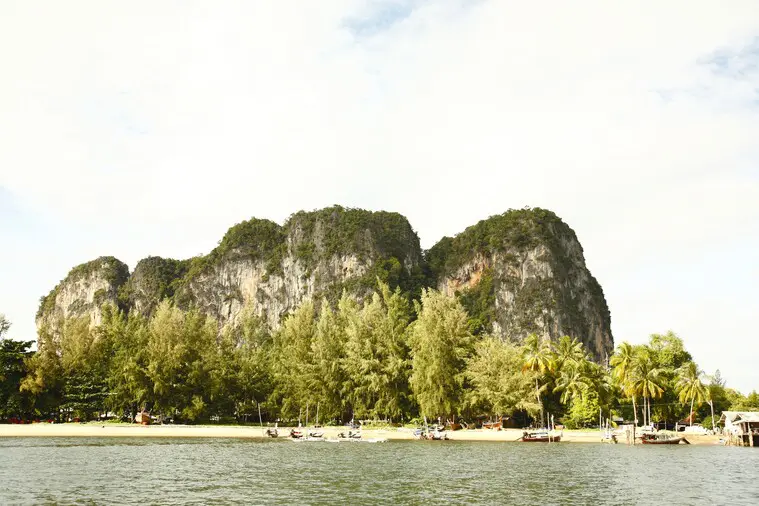
Ko Libong is Trang’s largest island and part of the Libong Archipelago Wildlife Reserve. Its beaches, mangroves and extensive seagrass beds support one of Thailand’s best-known dugong habitats, while Muslim fishing and rubber-growing communities give the island a lived-in character far removed from a resort enclave. Visitors come for quiet days, local homestays, birdlife and the possibility—not the promise—of seeing a dugong.
Travel slowly and stay at least two nights. Boats from Hat Yao Pier generally operate during daylight, with the Tourism Authority listing service around 8am to 5pm, a journey of roughly 20 to 30 minutes and fares starting near THB 40. Treat those figures as a planning baseline and confirm locally before arrival. Late flights, rough weather and tides can change the final connection.
Why Libong Matters
Seagrass is the foundation of the island’s marine importance because dugongs feed on it. Mangroves, beaches and shallow water also support fish, birds and community livelihoods. This makes Libong more than a wildlife-viewing platform. Every boat wake, discarded wrapper and damaged meadow affects a connected system. Choose operators and accommodation that recognise conservation as daily practice, not just a slogan beside a dugong illustration.
Dugong Expectations
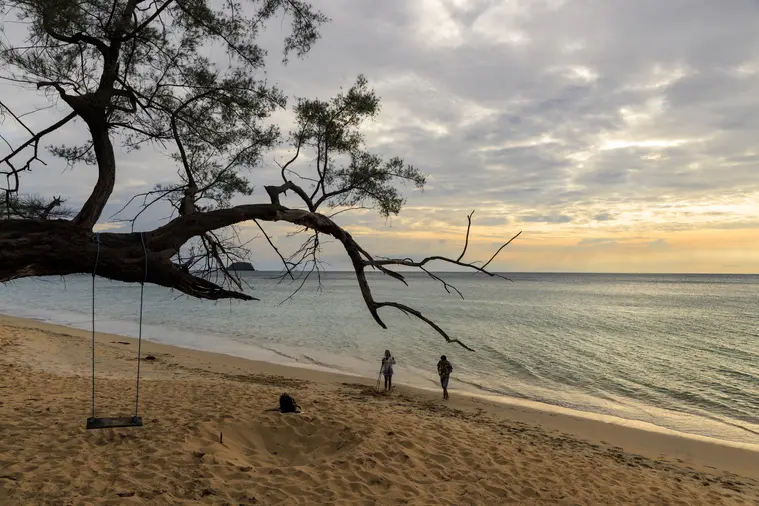
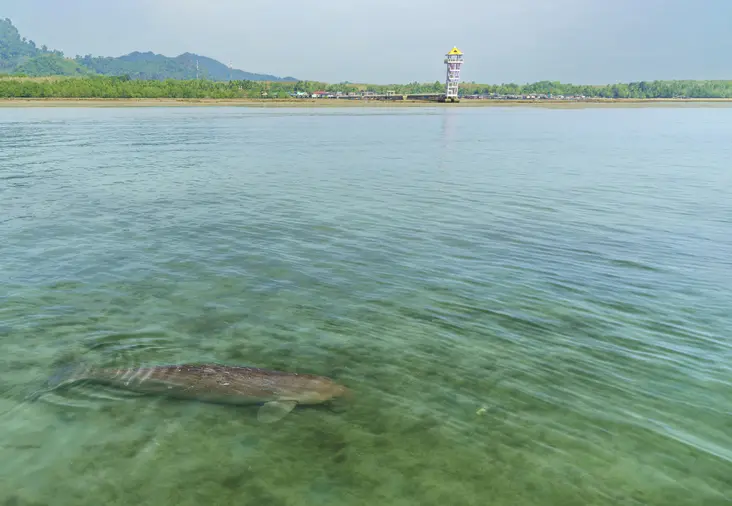
Dugongs are rare, shy and highly sensitive to engine noise. No responsible operator can guarantee a sighting. Refuse trips that chase, surround, feed or crowd an animal, and keep voices low when one appears. Do not ask the driver to approach for a photograph. A distant shape surfacing over seagrass is a privilege; the absence of a sighting is not a failed tour.
Observation Points
The tower near Leekpai Bridge and the high ground at Khao Batu Putei are noted places to scan the shallows without following animals by boat. Bring binoculars and patience, and ask local guides about tide and light. Paths can be steep, hot or slippery after rain, so use proper footwear and carry water. Never leave a marked route to get closer to wildlife or a cliff edge.
Beaches And Tides
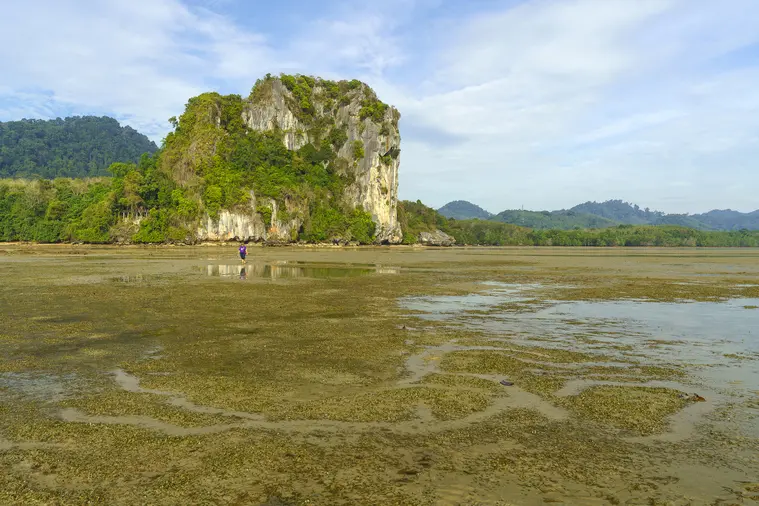
Libong’s coast changes visibly with the tide. A beach that looks broad in the morning may become shallow mudflat or seagrass later, which is ecologically valuable even when it is not ideal for swimming. Ask the accommodation where and when swimming is safe. Wear reef-safe sun protection, avoid stepping on seagrass and never collect shells or living animals as souvenirs.
Community Stays
Homestays and small local properties can make the island experience meaningful. Confirm bathroom style, air-conditioning or fan, meals, transport and electricity before booking. Dress respectfully in villages, especially around religious spaces, and avoid alcohol where it is unwelcome. Ask before photographing residents, boats or homes. Buying local meals, guiding and transport keeps more value within the community than a rushed offshore excursion.
Getting There
Trang Airport is the common gateway, followed by a road transfer to Hat Yao Pier and a local boat. Coordinate the whole chain with the accommodation, not as separate optimistic estimates. Save the driver’s number, carry cash in small notes and protect electronics from spray. On the return, leave a wide buffer before a flight because sea conditions and vehicle delays cannot be controlled.
Getting Around
The island’s villages and beaches are spread out. Local motorcycle taxis, sidecars or arranged vehicles can be easier than renting a scooter. Ride only with a helmet and never drive without the correct licence and insurance. Roads may be dark at night, with animals and pedestrians sharing the surface. Plan dinner and the ride home before sunset rather than assuming transport will be waiting.
Birds And Nature
Libong also attracts migratory and wetland birds, giving non-divers another reason to carry binoculars. Early morning and late afternoon are comfortable, but nesting and feeding areas need distance. Keep playback calls off, stay out of roosts and follow guide instructions. A quiet observation session can reveal far more than a fast circuit in which every stop is treated as a photo backdrop.
Food And Supplies
Meals centre on local Thai cooking and seafood, with fewer choices than Trang town. Tell hosts about allergies and dietary needs before arrival, particularly because fish sauce, shrimp paste and shared kitchens are common. Bring essential medicines, sun protection and any specialist baby supplies. Avoid single-use plastic where possible and take difficult waste back to the mainland instead of burdening island disposal systems.
Who Should Go
Ko Libong suits patient wildlife watchers, couples, families comfortable with simple logistics and travellers interested in community life. It is less suitable for nightlife, luxury shopping or anyone who considers a dugong photograph a guaranteed product. The best visit accepts tides and weather, spends locally and leaves the animals undisturbed. That restraint protects the exact reason people hope to come.
At A Glance
- Province: Trang.
- Access: Boat from Hat Yao Pier, usually during daylight.
- Journey: Roughly 20 to 30 minutes under normal conditions.
- Wildlife: Dugongs, seagrass habitat and migratory birds.
- Official guide: Review Tourism Authority visitor details.
Keep Planning
Browse more TFT coverage in Travel, Travel and Deals.
Questions
Are dugongs guaranteed at Ko Libong?
No. They are rare wild animals and sightings cannot be promised.
How many nights should I stay?
At least two; three allows more flexibility for tides and weather.
Where do boats leave?
Hat Yao Pier on the Trang mainland is the usual route.
Is Ko Libong a party island?
No. It is a quiet community island centred on nature and local life.