
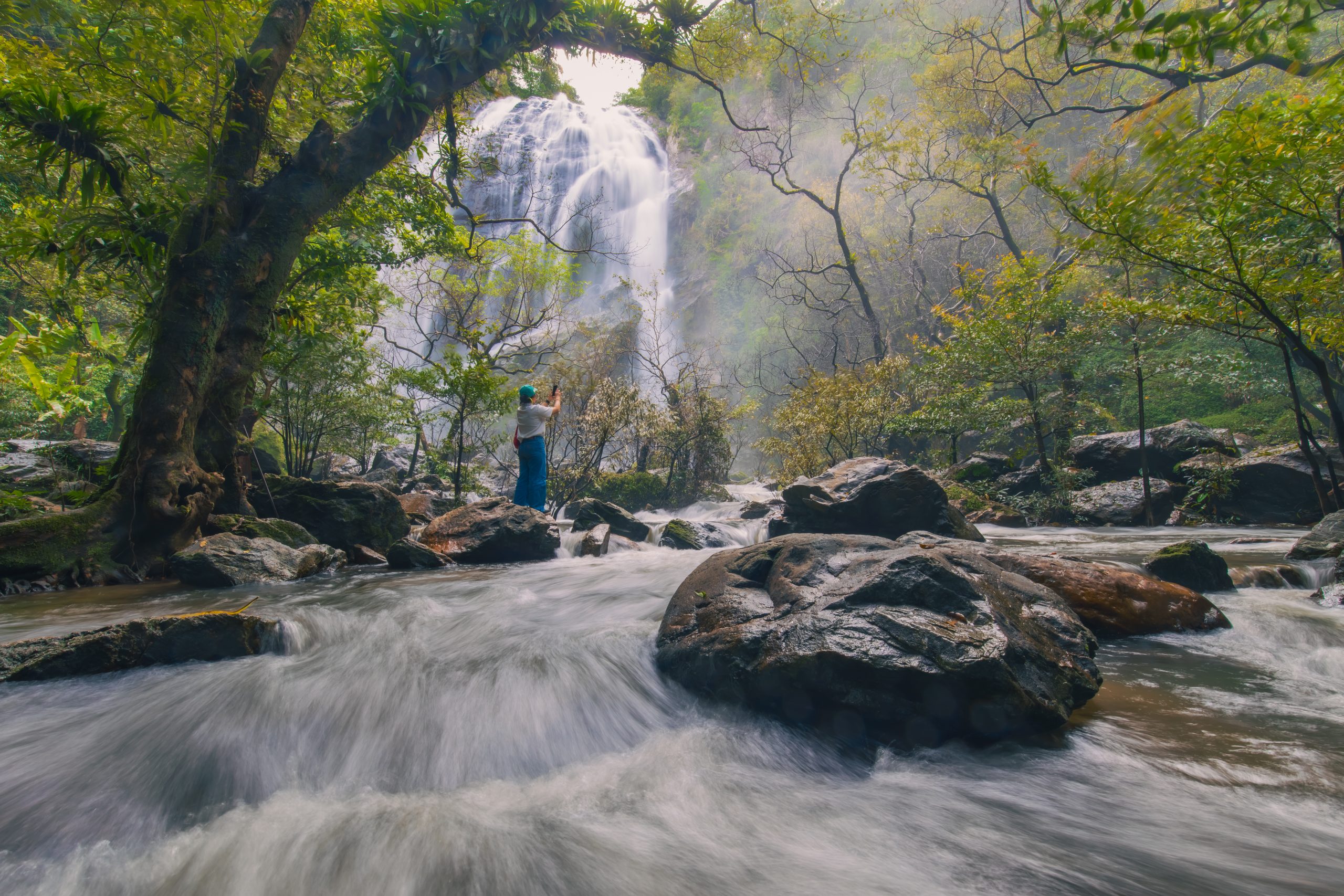
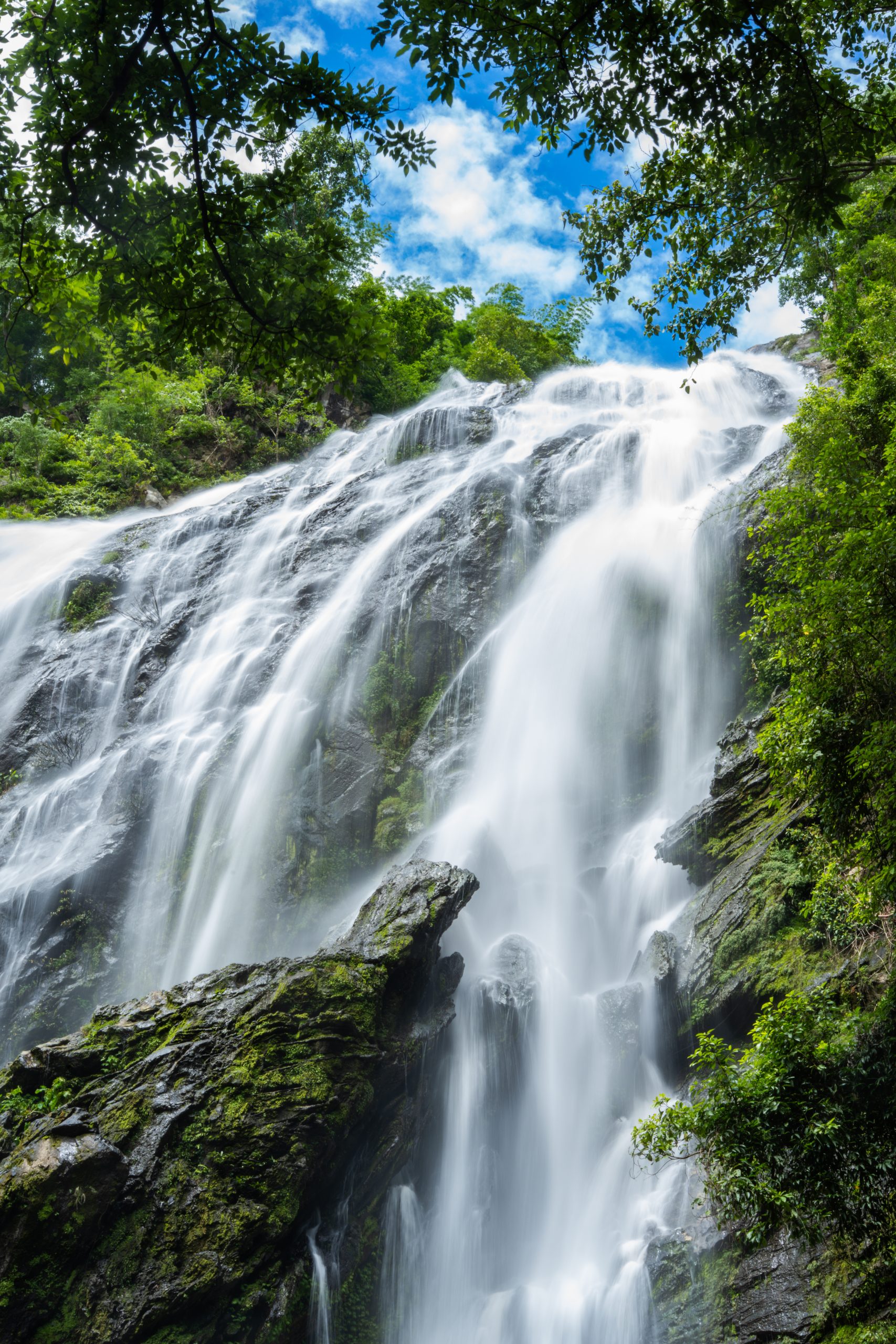
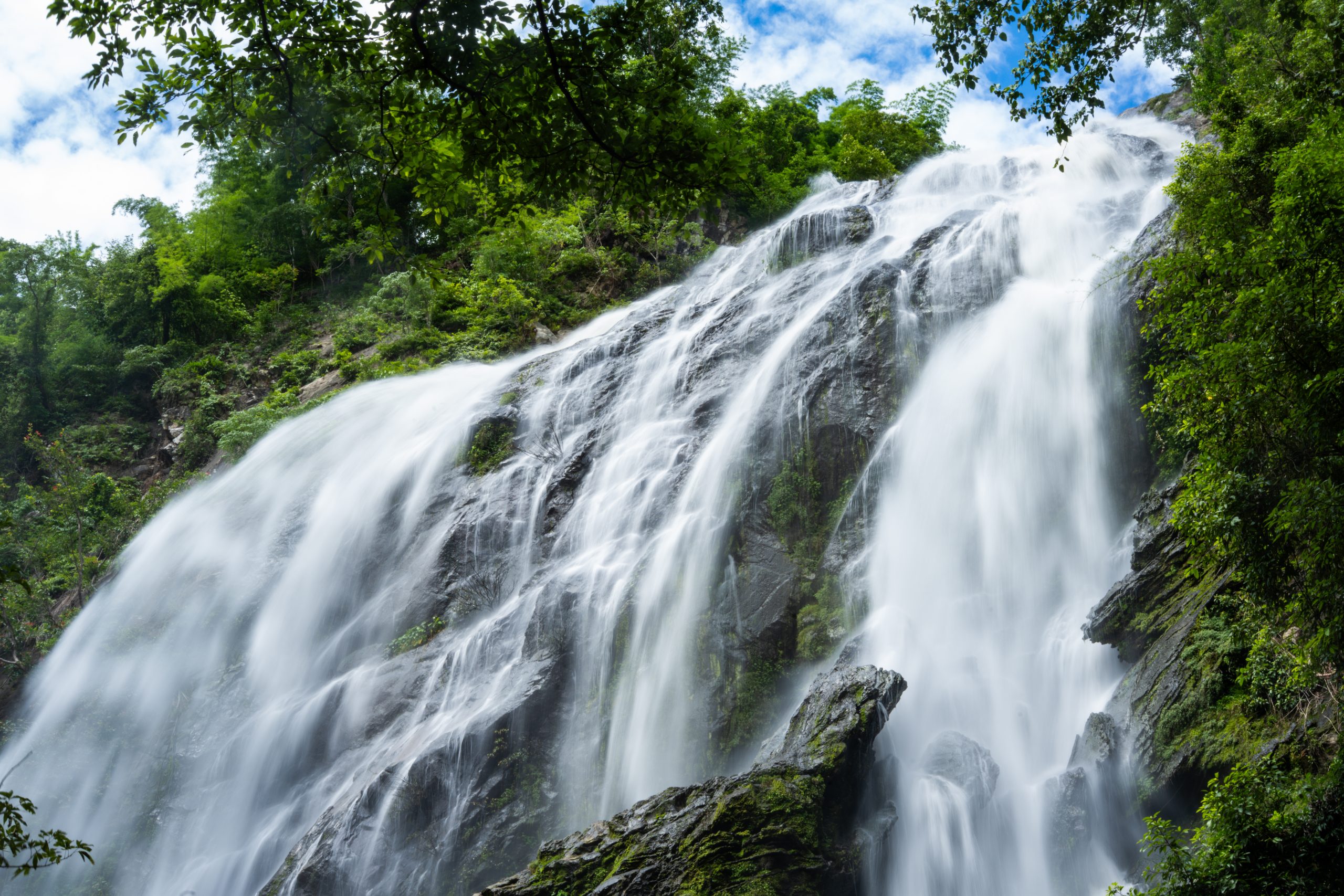
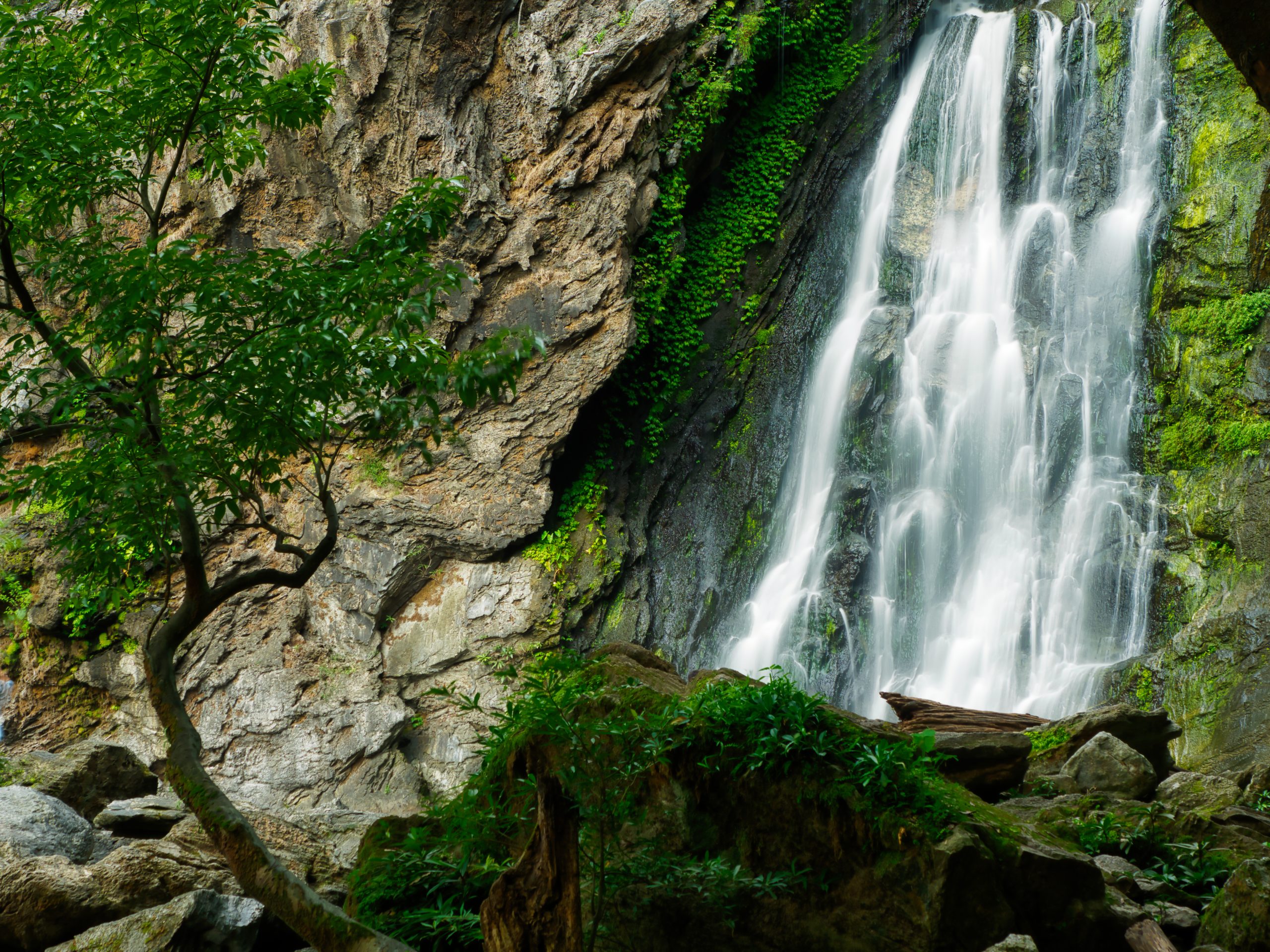
Khlong Lan Waterfall drops through forest on the edge of Khlong Lan National Park in Kamphaeng Phet, creating one of lower northern Thailand’s most forceful green-season sights. Rain gives the cascade its scale and cools the surrounding landscape, but it also raises the risk: water volume, slippery rock, road conditions and temporary park restrictions can change within hours.
Treat the waterfall as a weather-dependent outdoor visit, not a guaranteed swimming stop. Check the park’s current notice on the morning of travel, arrive during staffed hours and follow barriers even when other visitors cross them. Recent visitor information commonly lists access around 8am to 4.30pm, but the park can change hours, fees and safe zones without matching every older page online.
Choose The Season
The wet months usually bring stronger flow and greener forest, while late dry-season visits can be calmer and less dramatic. Neither is automatically better. Heavy rain may make the waterfall dangerous or inaccessible; a drier day can offer easier walking. Look at the local forecast, recent park photographs and official closure notices rather than using a national weather icon alone.
Check Park Status
Khlong Lan National Park’s public channel is the best place for same-day changes, closures and contact information. If a storm has passed overnight, call before a long drive. Ask whether the waterfall zone, approach road, parking and any nature trail are open. A gate marked open does not mean every pool, viewpoint or path inside the park is available.
Plan The Journey
The waterfall is in Khlong Lan District, well away from Kamphaeng Phet city. A private car or hired driver gives the most control, especially during rain. Confirm road and fuel conditions, download the map and keep the destination in Thai. Public transport may require several connections and a local vehicle whose return should be arranged before entering the park.
Wear Real Footwear
Shoes need grip on wet stone and should remain secure if splashed. Flip-flops are poor protection on algae, roots and uneven steps. Wear quick-drying clothing, carry a light rain shell and place electronics in a proper waterproof pouch. A wet phone inside a thin tote is not protected simply because the walk from the car park looks short.
Respect The Water
Do not enter water outside a clearly permitted zone. Flow that looks shallow can hide current, drop-offs, submerged branches and sudden surges. Stay behind barriers, keep children within arm’s reach and never climb the fall for a photograph. If staff ask visitors to leave, move immediately; upstream rainfall may arrive before the sky above the viewpoint changes.
Watch The Surface
Spray makes nearby stone slippery even without active rain. Test each step, use handrails and keep both hands free instead of filming while walking. Algae can turn a flat rock into the most dangerous part of the visit. Give older visitors space, avoid crowding narrow viewpoints and do not sit where runoff or falling material can reach.
Understand Fees
National-park admission commonly differs for Thai and international visitors, and vehicle charges may be separate. Older listings often cite THB 40 for Thai adults and THB 200 for international adults, with reduced child rates, but fees can change. Carry enough cash and confirm the live amount directly with the park rather than arguing from an archived screenshot.
Pack A Simple Day
Bring water, insect repellent, sun protection, a small first-aid kit and dry clothes for the vehicle. Food services can vary, so do not depend on a particular stall. Take litter out, including tissues and fruit packaging. Avoid feeding wildlife; a monkey or bird approaching people is not an invitation to turn lunch into a photograph.
Make Photos Safely
Use the designated viewpoint and accept mist on the lens. A wide frame can show the full drop without stepping onto an exposed boulder. Secure straps, keep drones grounded unless park permission and aviation rules explicitly allow them, and never block a path with a tripod. The strongest image is not worth forcing another visitor towards an edge.
Add Time In The Province
Kamphaeng Phet’s historical park and local town food can turn the waterfall into a two-day journey rather than a rushed highway detour. Keep the order flexible: visit the waterfall when conditions are safest and use the heritage site or city as the weather fallback. Avoid driving unfamiliar rural roads after dark when rain and fatigue combine.
Leave No Trace
Stay on hardened paths, do not remove plants or stones and keep soap, shampoo and food waste out of natural water. National parks protect catchments and habitat, not only scenic viewpoints. Buying from local businesses and following a conservative closure helps the area more than treating unrestricted access as a right purchased with an entrance ticket.
Keep Planning
Browse more TFT coverage in Travel, Travel and Deals.
Questions
When is Khlong Lan Waterfall strongest?
Rainy-season flow is often strongest, but heavy rain can also close access or make the area unsafe.
Can visitors swim?
Only enter water where current park staff and signs explicitly permit it.
What are the entrance fees?
Fees can change and differ by nationality, age and vehicle; confirm with the park before travelling.
Do I need a car?
A private car or hired driver is the most practical option for most visitors.
Practical Information
- Location: Khlong Lan National Park, Khlong Lan District, Kamphaeng Phet.
- Typical access: Recent listings commonly show about 8am-4.30pm; verify same-day park hours.
- Admission: Rates differ by nationality and age and can change; confirm directly before travel.
- Best preparation: Check rain and park notices, wear grippy shoes and keep electronics waterproof.
- Park updates: Check current park notices
- Map: Open in Google Maps