
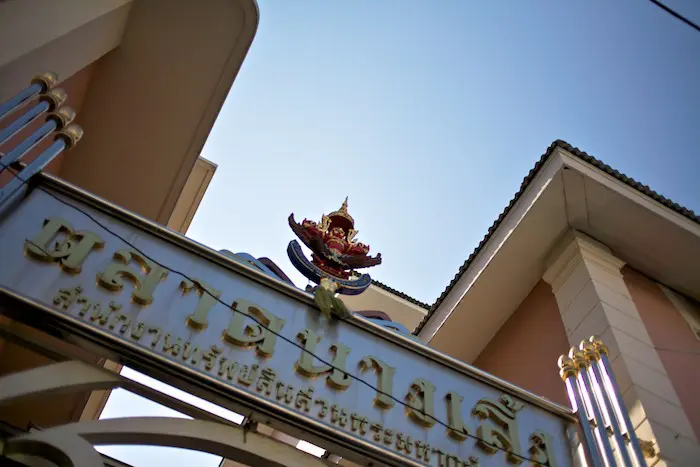
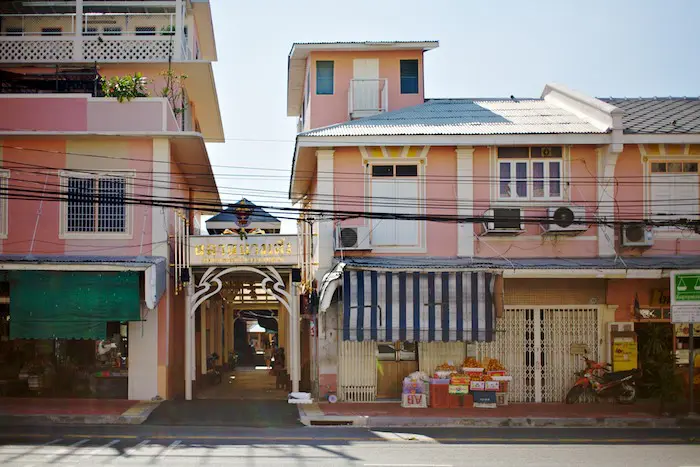
Nang Lueng Market is commonly described as one of Bangkok’s oldest land markets, with roots dating to 1900. The present market took shape after a major 1929 fire, and the surrounding two-storey shophouses still give the area a character different from polished food halls. This is a working neighbourhood lunch market first, not a staged night attraction.
Go for Hakka-style noodles, rice-and-curry plates, savoury snacks and traditional Thai sweets. The market’s general hours are often listed from morning into evening, but individual food vendors keep their own schedules and the best-known lunch trade peaks earlier. Arriving between roughly 9.30am and noon gives the strongest chance of finding signature dishes before sell-outs.
Arrive Before Lunch
Government offices and established neighbourhood businesses bring a strong local midday crowd. By 12.30pm, popular trays can be depleted and seating tight. Arrive earlier, walk one circuit without ordering and note where food is being cooked or replenished. Then return to the stalls that look strongest. An early visit also gives more room to see the architecture and shrine without blocking customers who are buying lunch on a short break.
Try Hakka Noodles
Hakka noodle dishes are closely associated with the market’s food identity. Ask the vendor which combination is most traditional that day and whether the bowl is dry or served with soup. Pointing is normal when English is limited. Start with the standard seasoning, taste first and then add chilli, vinegar, fish sauce or sugar. Condiment trays are designed for adjustment, but a heavy first pour can hide the balance the cook intended.
Build A Curry Plate
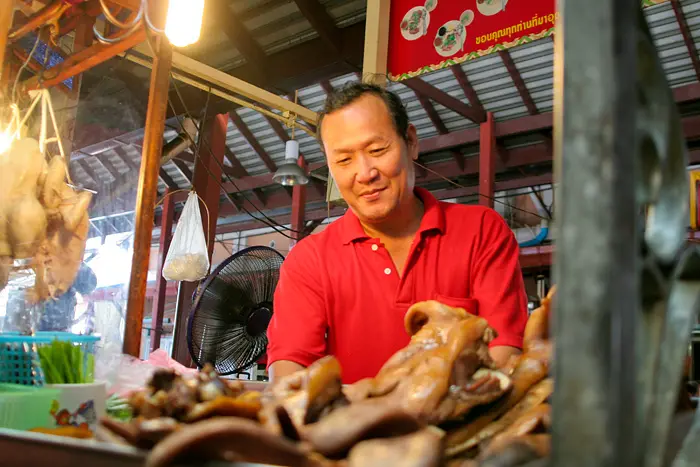
Rice-and-curry stalls offer the most efficient way to sample several preparations. Choose one richer curry, one vegetable or egg dish and perhaps a fried item for texture. Ask about chilli level and ingredients when allergies matter, because curry pastes may contain shrimp paste, fish sauce, peanuts or other components not obvious from appearance. Prices vary by the number and type of toppings, so confirm before the plate is assembled if you are budgeting tightly.
Save Room For Sweets
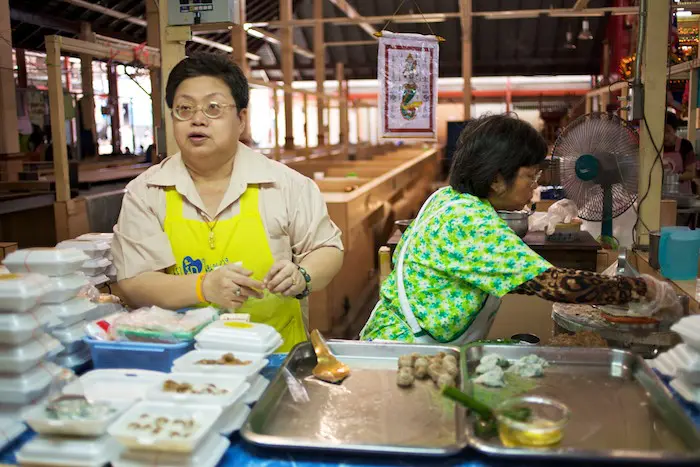
Traditional sweets are a major reason to linger. Look for vendors producing or portioning items on site, and ask which sweets are best eaten immediately. Coconut milk, sticky rice, eggs and palm sugar appear often, so sharing two small portions can be more rewarding than committing to one heavy dessert. Carry a reusable bag or small container if you plan to take items away, especially in hot weather when delicate coconut-based desserts should not sit for hours.
Carry Small Cash
Cash remains the safest default for a market visit, even when some stalls accept Thai QR payments. Bring small notes and coins so vendors do not need to break a large denomination during the rush. If paying by QR, verify the merchant name and amount before confirming. Keep phones and wallets secure in the crowd, and step aside after ordering so the next customer can reach the counter.
Respect The Market
This is not a photo set. Ask before taking a close portrait, do not lean across food and keep narrow paths clear. Return bowls or trays where directed and separate rubbish when bins provide categories. Clothing should suit heat and active food preparation rather than a formal attraction. A calm, observant visit supports the market better than rushing through a checklist of famous stalls while ignoring the people using it daily.
Plan The Route
Nang Lueng sits on Nakhon Sawan Road in Pom Prap Sattru Phai, away from a directly adjacent BTS station. A taxi or ride-hailing car is simplest, while buses suit travellers comfortable with Bangkok routes. Combine the market with nearby old-town sites only after allowing enough time to eat slowly. In midday heat, avoid planning a long exposed walk immediately after lunch. Pin the market entrance and agree on a pickup point away from the busiest curb.
Keep Planning
Continue with Street Food, Travel, Deals on The Finest Thai.
Questions
Is Nang Lueng Market a night market?
No. It is strongest as a morning and lunch market, even though general listings may show longer hours.
What should I eat first?
Hakka noodles and a small rice-and-curry plate are useful starting points, followed by a traditional sweet.
Do vendors accept cards?
Do not rely on cards. Small cash is the safest option, with Thai QR accepted by some stalls.
Is it beside a BTS station?
No. A taxi, ride-hailing car or suitable bus route is usually more direct.
Practical Information
- Address: Nakhon Sawan Road, Pom Prap Sattru Phai, Bangkok 10100.
- Best time: Morning to before noon for the widest lunch selection.
- Known for: Hakka noodles, rice-and-curry food, savoury snacks and traditional Thai sweets.
- Payment: Carry small cash; some vendors may accept Thai QR payment.
- Character: Historic neighbourhood market with shophouses rebuilt after the 1929 fire.
- Visitor page: Review the market overview