
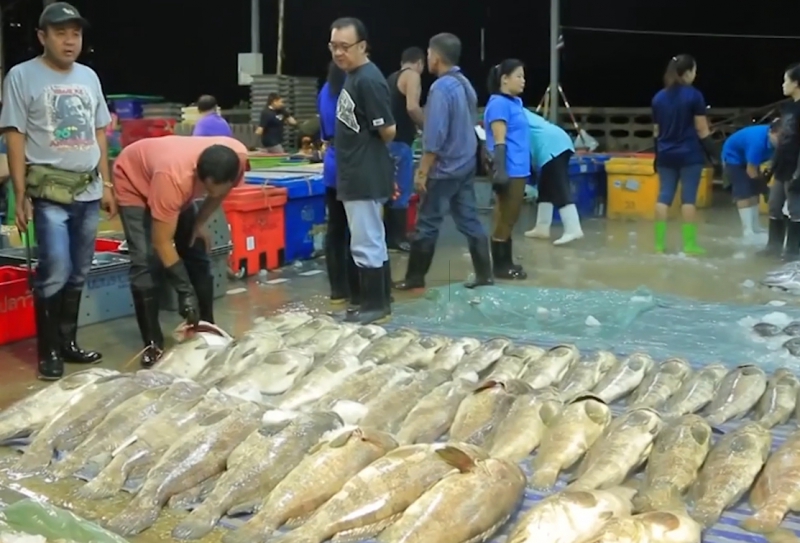
Bangkok Fish Market, often called Saphan Pla, is a working aquatic-products market at 149 Charoen Krung Soi 58 in Yan Nawa. It is not a polished food hall. The floor is wet, trade begins when most of the city is asleep, and restaurant buyers move quickly among boxes of marine and freshwater produce.
The Fish Marketing Organization separates the selling windows. Marine products are sold from midnight until about 6am, while freshwater products run from 8am until about 12:30pm. Those hours change the experience completely: the night session is faster and more wholesale-oriented, while the later morning window is easier for a first visit.
Choose The Right Session
Go after midnight if the aim is marine fish, prawns, squid, crab and the working rhythm of the wholesale trade. Arrive in the morning for freshwater fish and a gentler start. The stated finish times are approximate because stock moves according to landings and demand. Earlier usually means a wider choice, not necessarily a relaxed browse.
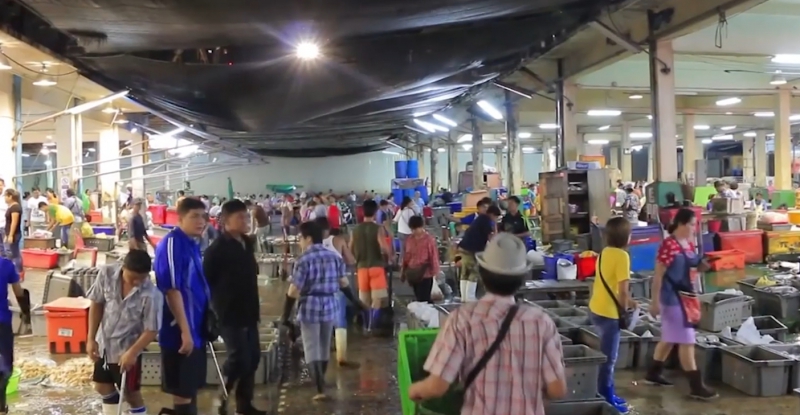
Dress For The Floor
Closed shoes with grip are essential. Waterproof boots are even better because meltwater, ice and wash-down can make the surface slippery. Wear clothes that can handle splashes and fish odour, keep valuables close to the body and leave bulky luggage at the hotel. A light layer helps if you are moving between humid streets and chilled handling areas.
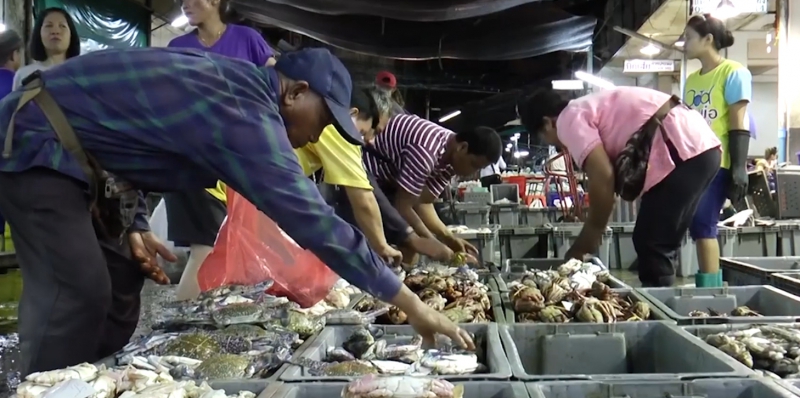
Buy Like A Cook
Decide what you can cook and store before asking prices. Look for clear eyes, bright gills, firm flesh and a clean sea smell in whole fish. Prawns should feel firm, while shellfish should be alive where that is the normal selling condition. Ask whether a quote is per kilogram, per tray, per box or for the entire lot.
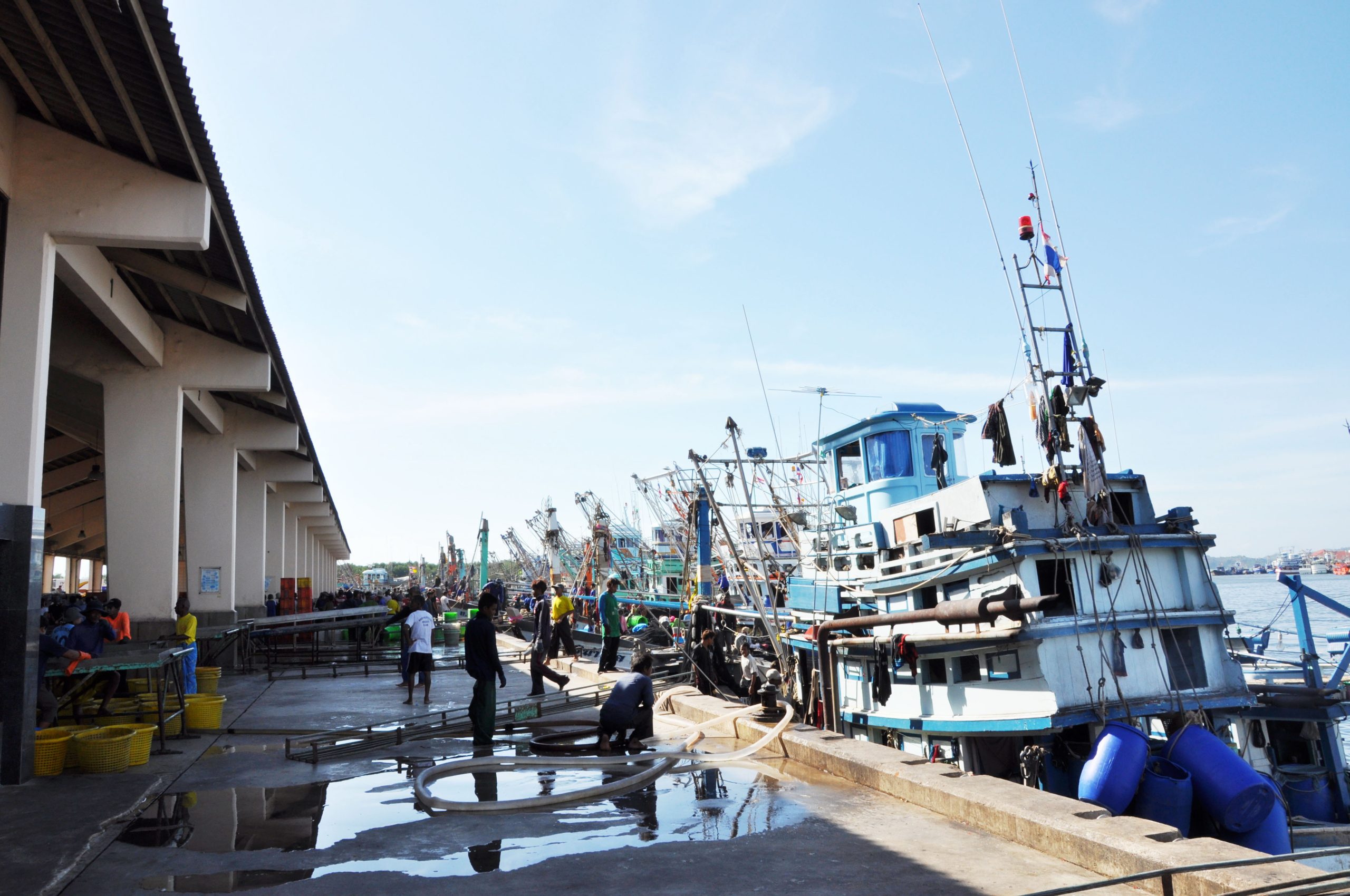
Understand The Scale
This market serves traders, restaurants and households, so some vendors work in wholesale quantities. A low-looking price may apply only to a full box. Ask politely whether smaller quantities are available and do not expect every seller to break a commercial pack. Carry cash in small denominations, while checking on-site whether a chosen vendor accepts a transfer or QR payment.
Keep Seafood Cold
Bring an insulated bag, ice packs and leak-proof containers if the seafood is travelling farther than a nearby kitchen. Raw seafood should not sit in a warm car while you have breakfast. Separate cooked and raw items, wash hands after handling packaging and refrigerate promptly. When in doubt about the cold chain, buy less and cook sooner.
Move Without Blocking Trade
Stand clear of trolleys, hoses, weighing stations and loading routes. Ask before photographing people or close-up commercial activity. The best visit respects that workers are completing time-sensitive jobs. Watch from the edge, step in only when invited to inspect a product and finish payment efficiently once a quantity and price are agreed.
Getting There
The market is on Charoen Krung Soi 58 beside the Chao Phraya River. Saphan Taksin BTS is the closest rail anchor, followed by a walk of roughly two bus stops or a short taxi ride. At midnight, use a booked car and share the exact pin. In the morning, public transport is easier, though bags of seafood can make the return awkward.
Pair The Visit
For a reader interested in food rather than bulk purchasing, the value lies in seeing where Bangkok kitchens source aquatic products. Plan a nearby breakfast after the market, not on the wet trading floor. Charoen Krung has many options later in the morning, but opening times vary, so save one confirmed café or rice shop rather than wandering with raw seafood.
Who Should Go
Cooks, market enthusiasts and travellers curious about food supply chains will find the visit rewarding. It is less suitable for young children at peak trade, people with mobility concerns on wet surfaces, or anyone expecting a night market with ready-to-eat stalls. The experience is practical, industrial and strongly tied to the needs of buyers.
The Bottom Line
Saphan Pla rewards preparation. Pick the session for the seafood you want, wear proper shoes, ask what unit is being priced and protect the cold chain. A short, observant visit can reveal more about Bangkok food than a long list of famous dishes because it shows the work that happens before ingredients reach a restaurant kitchen.
Practical Information
- Address: 149 Charoen Krung Soi 58, Yan Nawa, Sathon, Bangkok.
- Marine seafood: Midnight to about 6am.
- Freshwater products: 8am to about 12:30pm.
- Nearest BTS anchor: Saphan Taksin, followed by a walk or short road transfer.
- Best preparation: Closed non-slip shoes, small cash and an insulated bag.
Keep Planning
Continue with more guides in this category, compare Thailand travel planning and check current deals before building the rest of the trip.
Questions
Is this a ready-to-eat street-food market?
No. It is primarily a working aquatic-products market for wholesale and retail buyers.
What time should seafood buyers arrive?
Marine trade starts at midnight; freshwater products are sold in the morning.
Can visitors buy small quantities?
Some vendors may sell retail amounts, but others work by tray or box, so ask before choosing.
Is it suitable for casual sightseeing?
Yes for prepared market enthusiasts, but expect wet floors, fast trade and strong seafood smells.