
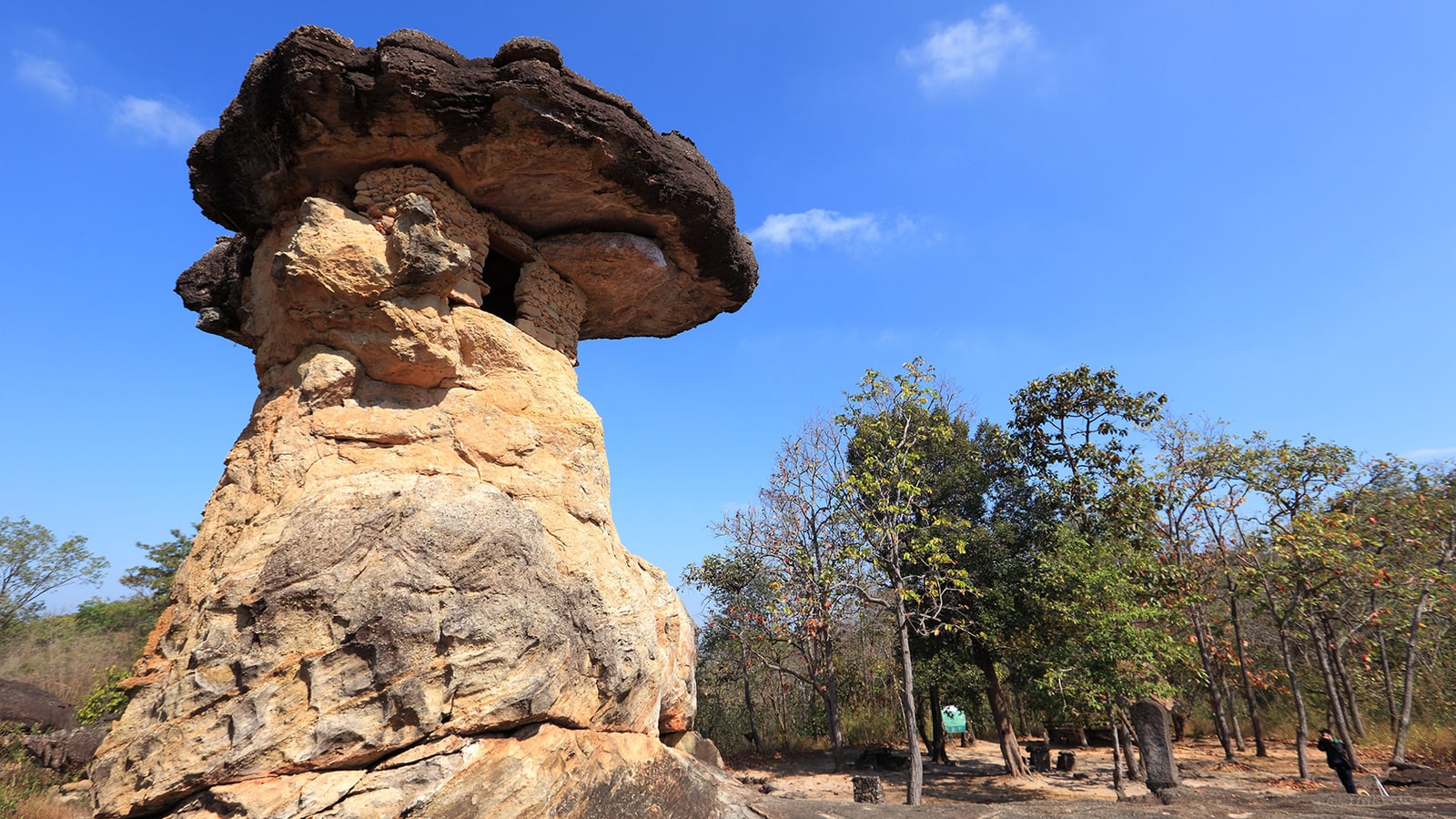
Phu Phrabat Historical Park in Udon Thani became a UNESCO World Heritage Site in 2024, recognising a landscape where natural sandstone shelters, ancient paintings and Buddhist boundary stones reveal long layers of human use. It is not one monument but a wide cultural terrain that needs time, context and comfortable walking shoes.
The park lies in Ban Phue district, about 54km from Udon Thani city. The tourism listing gives daily hours of 8am to 4:30pm and a THB 100 entry fee with a guide, but visitors should reconfirm current prices, transport and weather before setting out.
Why UNESCO recognised it
UNESCO inscribed the site under criteria iii and v. A central feature is the tradition of Sima stones, boundary markers connected with Buddhist sacred areas during the Dvaravati period, roughly the seventh to eleventh centuries.
Phu Phrabat preserves the world’s largest known corpus of Sima stones in place. Their relationship with altered rock shelters shows how people adapted a striking natural landscape into spaces for ritual and community life.
Look beyond the shapes
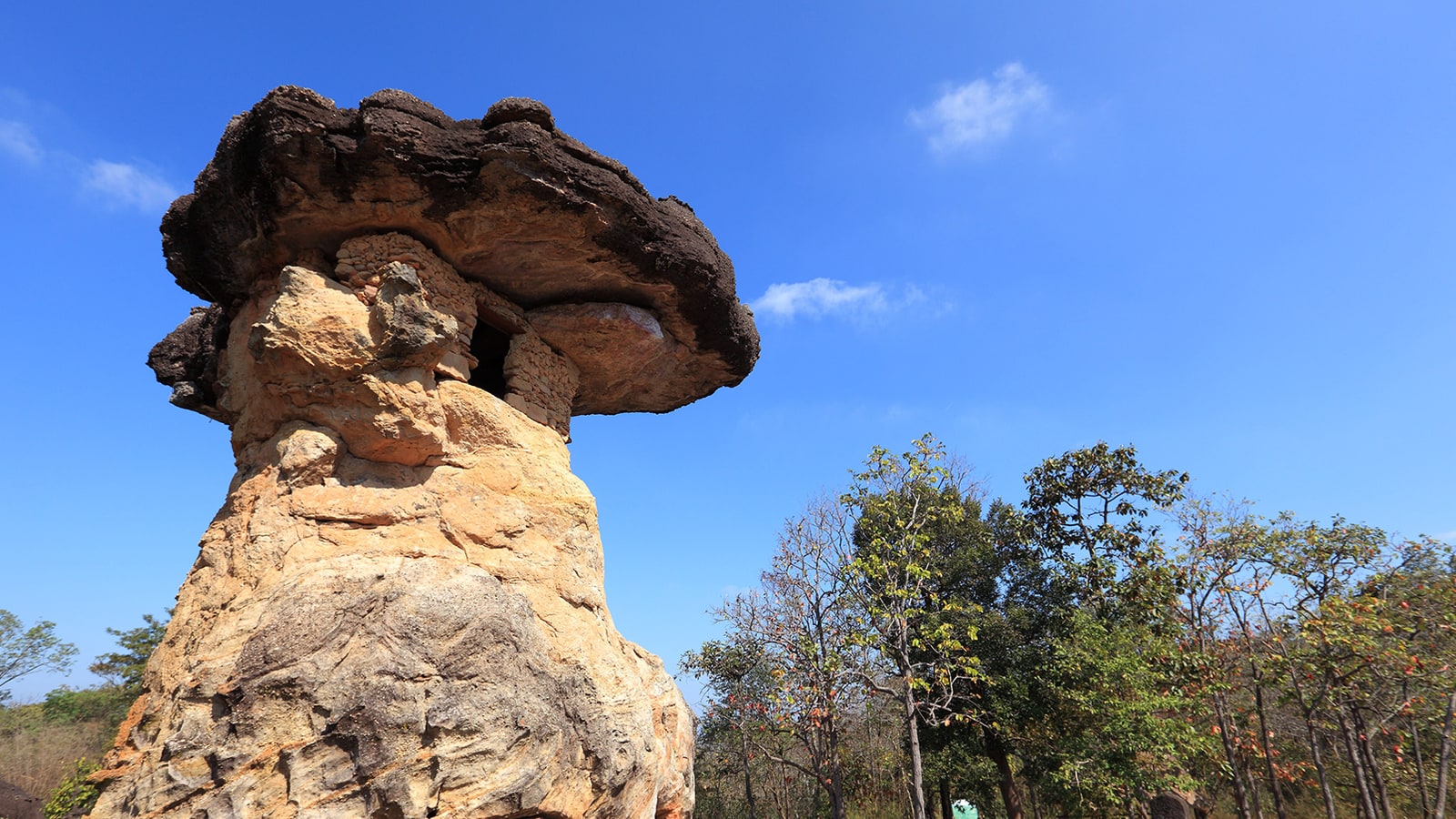
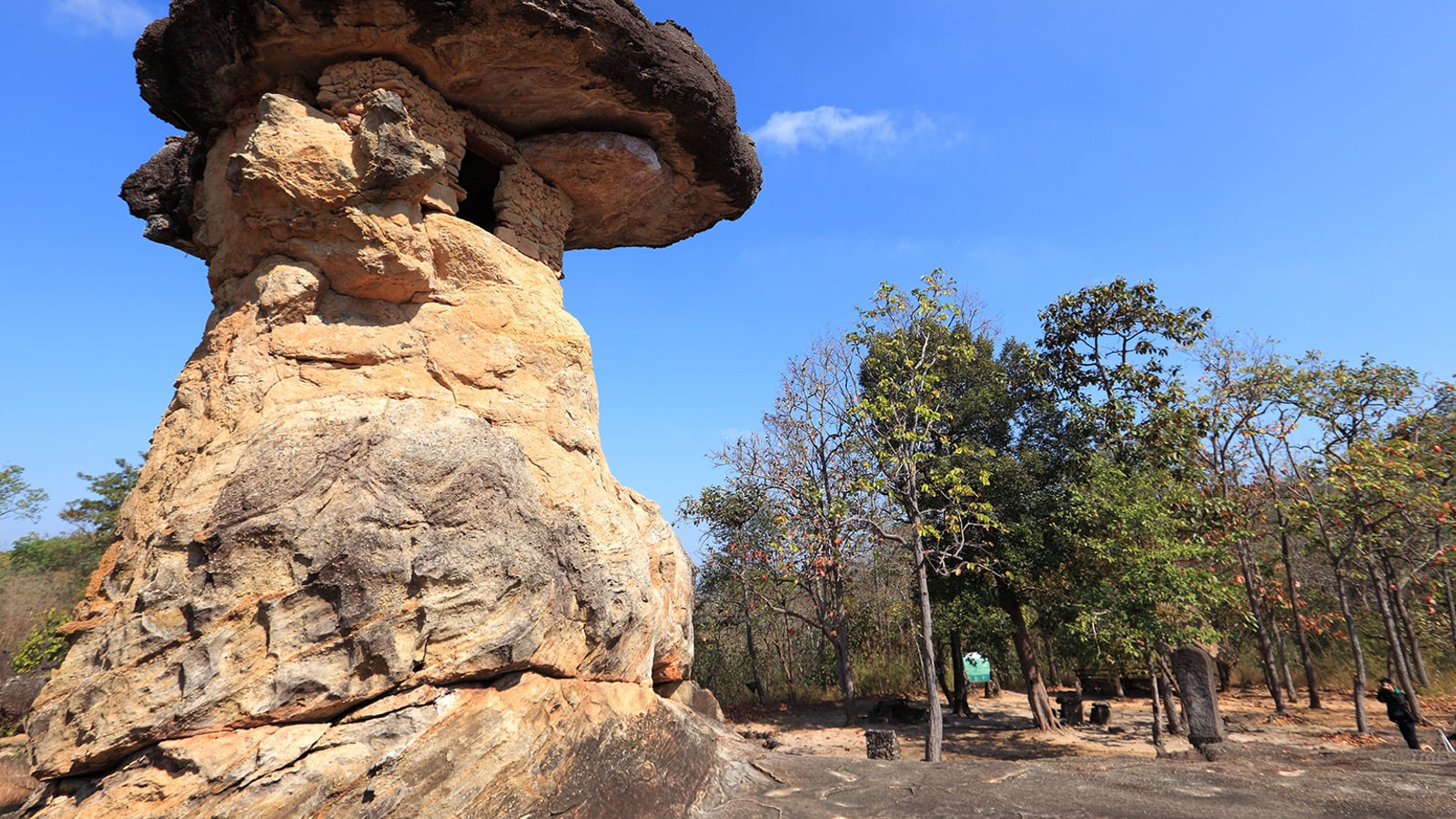
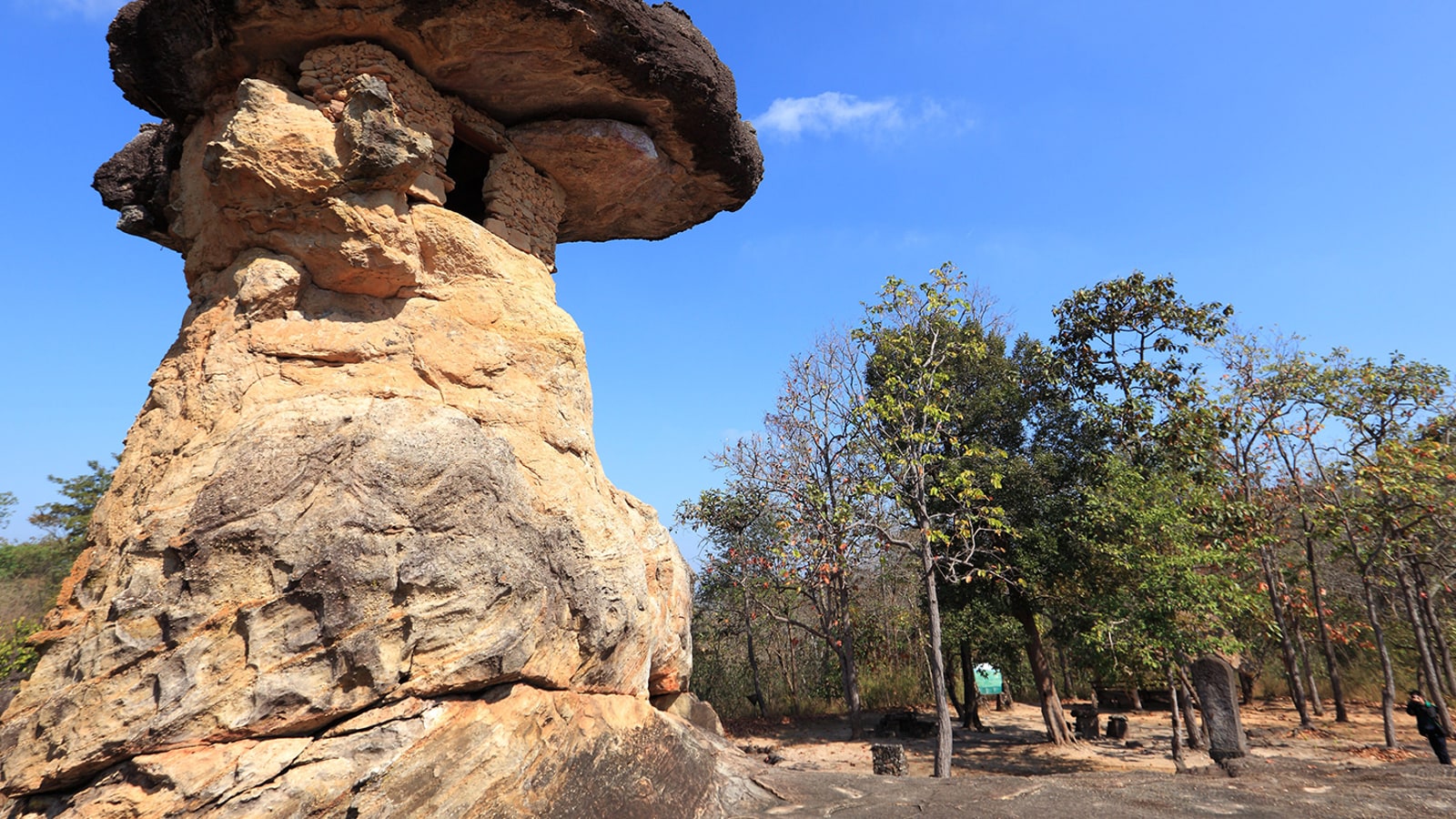
The mushroom-like rocks are immediately photogenic, but the heritage lies in more than geology. UNESCO records 47 rock shelters containing paintings, along with evidence that some shelters were modified and given ritual functions.
Slow down around markings, niches and placed stones. Never touch pigment, climb protected surfaces or move small objects. Even apparently bare rock can carry archaeological evidence that is difficult to see without guidance.
Use a guide
A guide can explain which features are natural, which were shaped by people and how boundary stones organise sacred space. That prevents the visit from becoming a series of disconnected legends or imaginative guesses.
Ask for the route length and key stops before beginning. If time or mobility is limited, identify a shorter circuit. The tourism listing also mentions an electric buggy at THB 100, but availability and access should be reconfirmed.
Prepare for the trail
Wear shoes with grip, carry drinking water and use sun protection. Sandstone and forest paths can be uneven or slippery after rain. A hat and breathable clothing help, while a light rain layer is useful in the wet season.
Start earlier for cooler conditions and better concentration. Do not rely on finding food and drinks at every stop. Visitors with knee, balance or heat concerns should ask staff which areas are easiest to reach.
Travel from Udon Thani
The park is about 1.5 hours from Udon Thani city under normal conditions. A private car or hired driver gives the most control, especially if combining the visit with Ban Phue or other provincial stops.
Agree on waiting time and return transport before departure. Mobile coverage and ride-hailing availability may be weaker than in the city. Save the park phone numbers, 042 251 350 to 2, and keep the Thai name available for drivers.
Respect a sacred landscape
Dress and behave as you would at an active religious place, even when a shelter appears archaeological rather than devotional. Keep voices low near ceremonies, follow barriers and do not place props on boundary stones for photographs.
Drones may require permission and can disturb wildlife or other visitors. Commercial photography has separate considerations. Ask park staff rather than assuming a quiet location means unrestricted use.
Build a meaningful day
Allow several hours instead of racing from Udon Thani and back for one formation. Read the UNESCO description before visiting, then let a guide connect the Sima tradition, paintings and terrain. Context changes what the eye notices.
Afterward, support local food and services in Ban Phue where practical. Responsible heritage tourism spreads value beyond the gate while keeping the park itself free from unnecessary commercial pressure.
Photograph with care
Early and late light can reveal sandstone texture, but the park’s opening hours and route safety come first. Avoid blocking narrow paths or asking others to wait while you stage a picture. Keep tripods clear of sacred features and fragile ground.
Turn off flash around paintings unless staff explicitly allow it. Flash may not improve the image and can disrupt nearby visitors. Record the name of each shelter so photographs remain connected to real places rather than vague legends.
Learn before leaving
Read the interpretation panels and ask how Dvaravati-era practice relates to the surviving stones. The boundary markers make more sense when understood as part of a ritual landscape, not isolated sculptures.
Children can look for differences in rock shape, shelter use and marker placement without touching them. Give the group one or two questions to follow. A focused visit is easier to remember than a rushed checklist of every named stop.
Keep exploring
Continue with related TFT coverage, browse more Thailand guides and compare the latest TFT recommendations.
Common questions
When did Phu Phrabat become a World Heritage Site?
UNESCO inscribed Phu Phrabat on the World Heritage List in 2024.
What are the listed hours?
The tourism listing gives daily hours of 8am to 4:30pm. Reconfirm before travel.
How far is it from Udon Thani?
It is about 54km from Udon Thani city, often around 1.5 hours by road.