
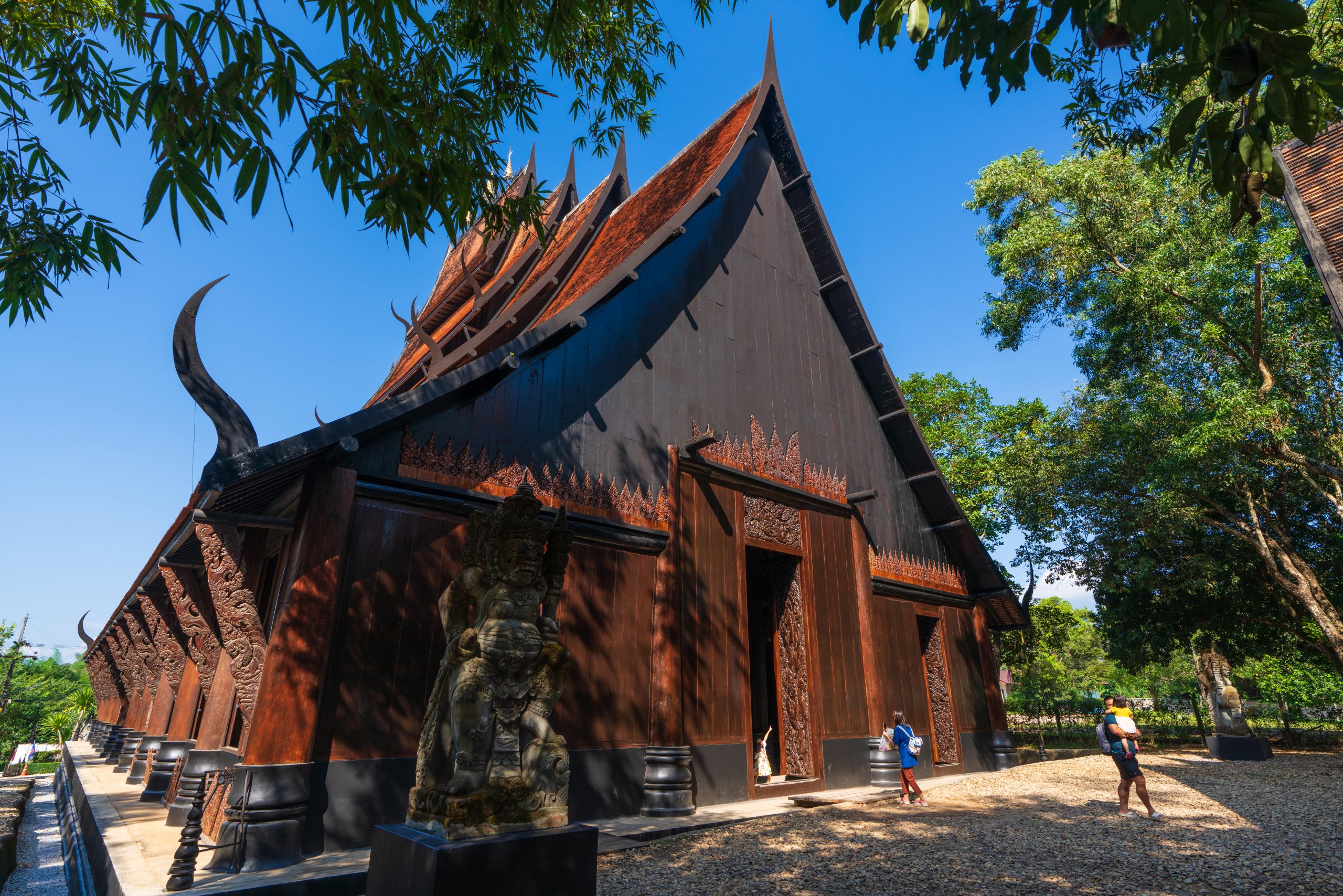
Baan Dam Museum, often called the Black House, is the Chiang Rai complex created by Thai National Artist Thawan Duchanee. Dark timber buildings, northern architectural references, paintings, carved furniture, animal horns, bones and folk objects form an environment that is part museum, part studio and part philosophical self-portrait.
It is not a temple and it should not be read as the dark twin of Wat Rong Khun alone. The most rewarding visit considers how Duchanee used familiar Thai forms and natural materials to explore mortality, power, instinct and spiritual tension.
Understanding the name
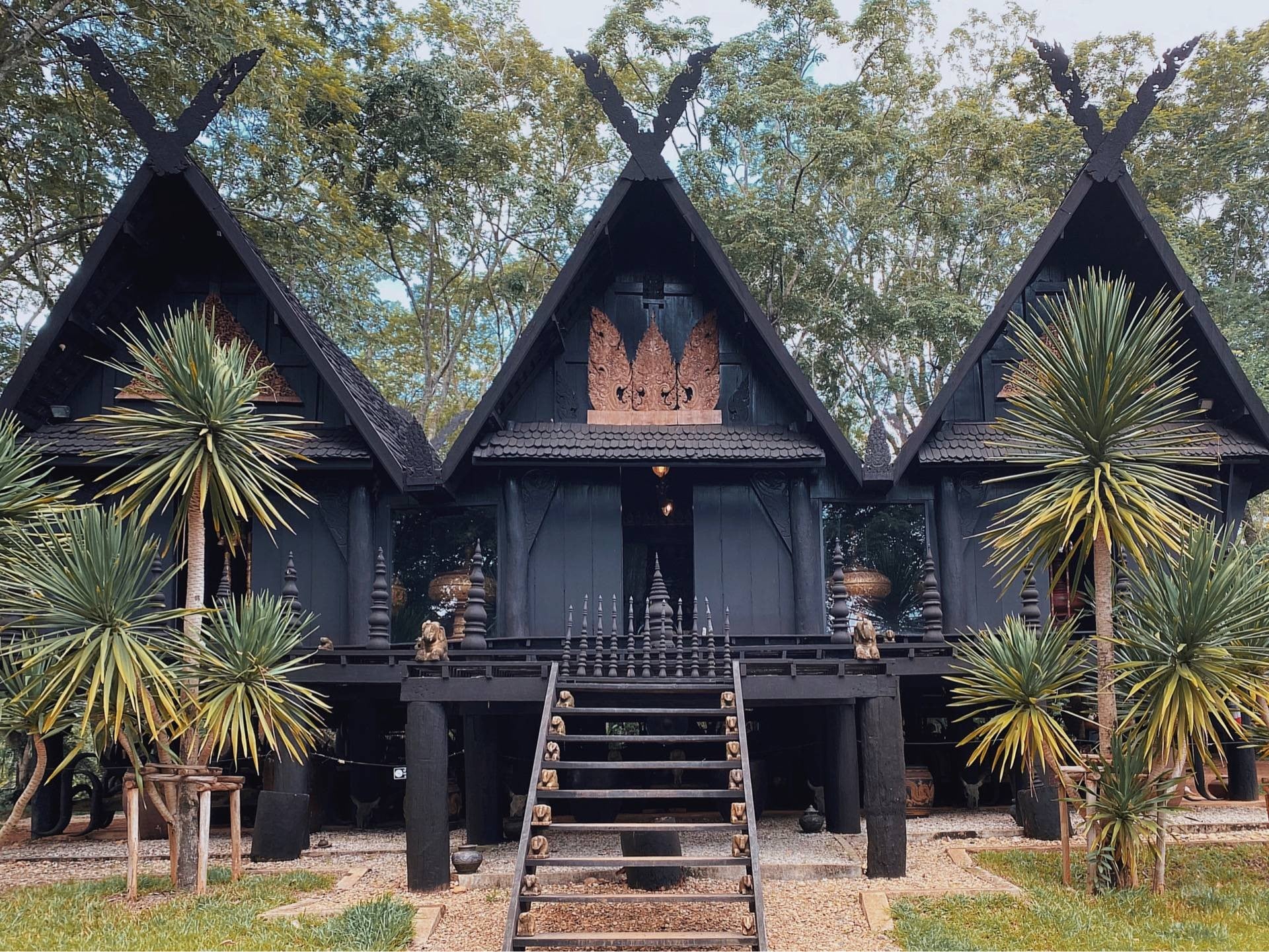
Baan Dam means black house, but the site contains many separate structures rather than one home. Rooflines, gables and carved timber recall northern traditions, while scale and colour push them into a contemporary artistic language.
Calling it a black temple creates the wrong expectation. There is no ordinary worship route, and the collections are arranged according to the artist’s vision rather than a religious narrative.
Thawan Duchanee
Thawan Duchanee was a major figure in modern Thai art whose work repeatedly returned to animals, myth, energy and the human condition. The museum allows those themes to move from canvas into architecture and objects.
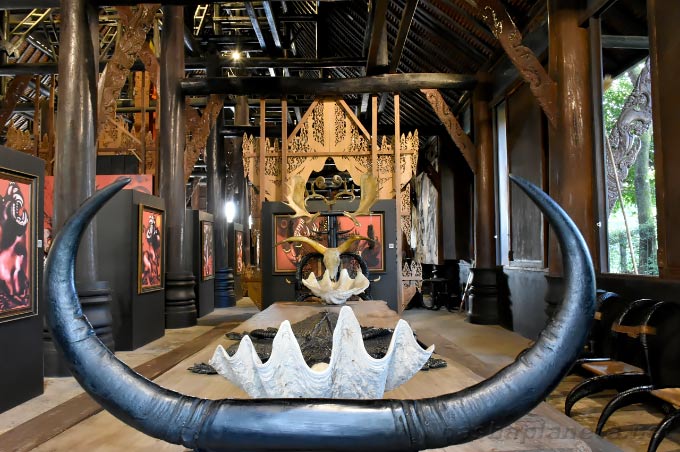
Look for repeated shapes and materials instead of searching for a single explanation. Horns can feel ceremonial in one room and confrontational in another, while heavy furniture turns domestic scale into something almost ritual.
What you will see
The largest halls make the first impression, but smaller pavilions reward patient wandering. Some hold paintings and carved pieces, while others stage shells, skins, bones or unusual furniture as complete environments.
The material can be unsettling. Families with sensitive children should understand that animal remains and strong imagery are part of the display, not incidental decoration.
How long to stay
Allow at least an hour, and closer to two if you want to examine individual buildings without rushing. The site is spread across landscaped grounds, so heat and rain affect the pace.
Arriving early helps with both temperature and group traffic. Move beyond the main hall before returning for details, because tour groups often cluster around the entrance first.
Photography and conduct
Photograph with care and follow current signs about interiors, flash and restricted rooms. Do not touch horns, furniture or installations even when barriers are minimal.
Quiet attention suits the site better than staged posing on artworks. Leave pathways clear, respect other visitors and remember that many pieces use fragile organic materials.
Getting there
Baan Dam lies north of central Chiang Rai in the Nang Lae area, roughly along the route towards Mae Chan. A taxi, ride-hailing car or hired driver is usually easier than relying on a city walking plan.
Agree on the return journey before entering if transport supply looks thin. Visitors often combine the museum with other northern Chiang Rai stops, but it deserves enough time to stand on its own.
Looking with context
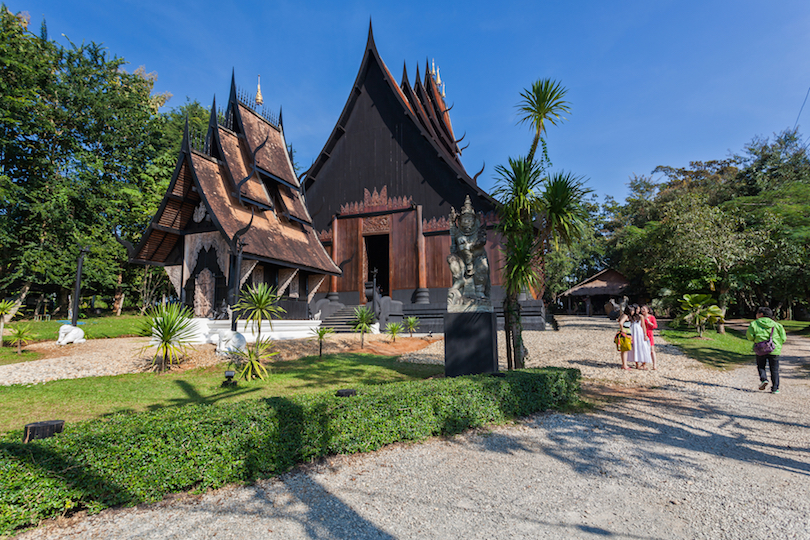
The repetition of dark timber, horns and animal forms can tempt a simple good-versus-evil reading. Spend time comparing how the same material changes from one building to another. Scale, light and placement often matter as much as the object itself.
Duchanee studied and worked beyond Thailand, yet the complex remains rooted in northern building language and Thai visual thought. Notice where traditional gables, columns and roof rhythms are preserved, exaggerated or stripped of their familiar function. Those choices make the site more than a collection of unusual rooms.
Visitors do not need to admire every object to engage seriously with the work. Discomfort can be part of the encounter, especially around skins and bones. Separate a personal reaction from a claim about meaning, read any available labels and allow different members of the group to interpret the spaces differently.
Combining nearby stops
Baan Dam is often placed on a north-Chiang Rai circuit, but stacking too many colour-themed landmarks can flatten their differences. Give each site its own context rather than treating the day as a checklist of black, white and blue buildings.
If using a driver, agree on waiting time and any extra stop charges before departure. Keep the museum visit flexible enough to linger when a pavilion holds attention, and reserve a meal break so heat and fatigue do not turn the final stop into a rushed photograph.
Practical Information
The regional tourism listing places Baan Dam in Nang Lae and gives daily hours of 9am to 5pm, with a midday closure from noon to 1pm. Reconfirm current hours, admission and holiday arrangements before travelling.
Wear shoes suited to uneven outdoor paths and bring sun or rain protection. The site is a museum and art complex, not an operating temple, so approach it with museum etiquette.
Keep exploring
Continue with related TFT coverage, browse more Thailand guides and compare the latest TFT recommendations.
Common questions
Is Baan Dam a temple?
No. It is an art and museum complex created by Thawan Duchanee.
How much time should I allow?
Plan at least an hour, and closer to two for a slower look across the grounds.