
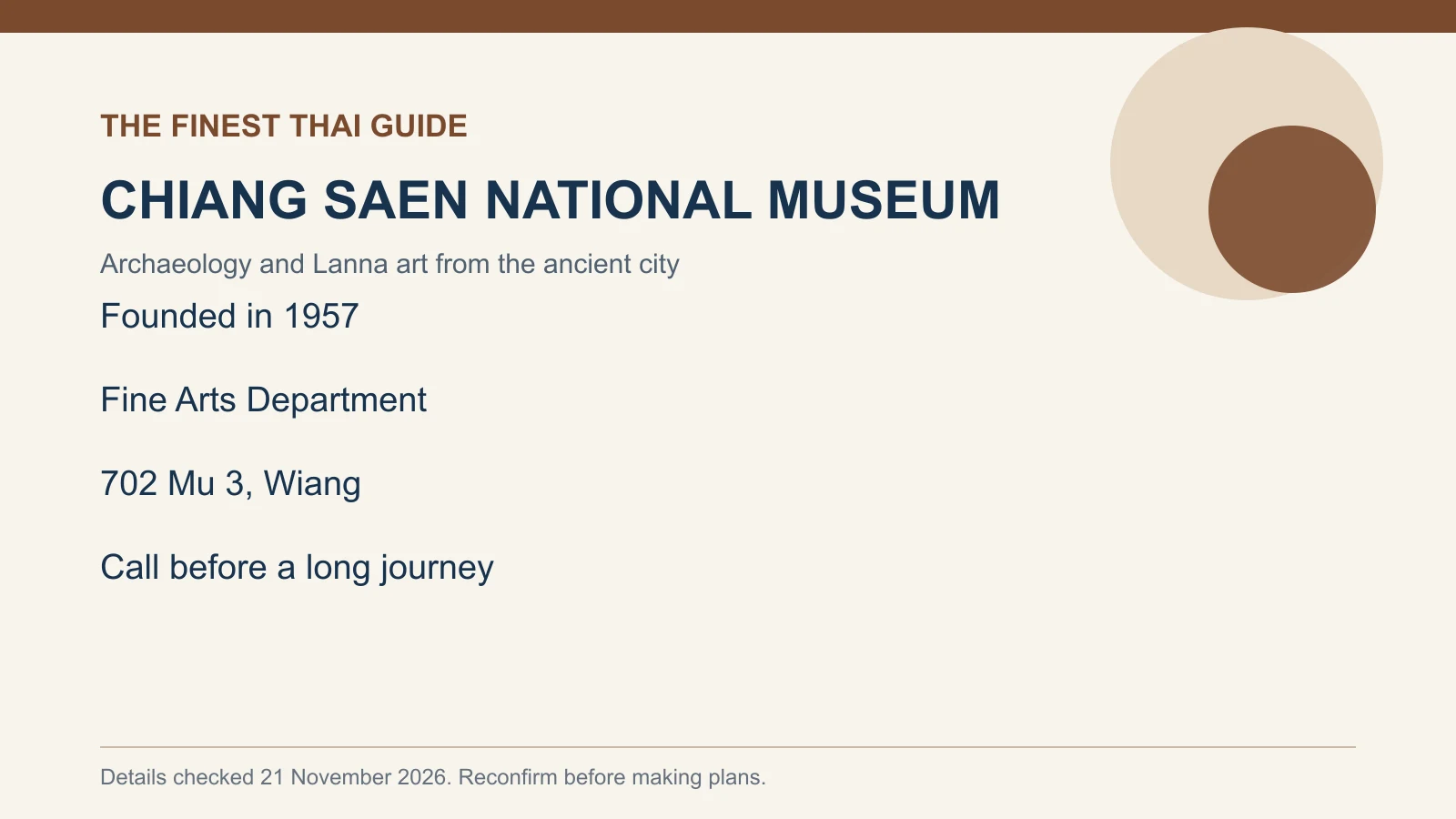
Chiang Saen National Museum was founded in 1957 as the national museum for the archaeological area of ancient Chiang Saen. Its role is to preserve and display antiquities and art found through surveys, excavation and restoration in the old city and elsewhere in Chiang Rai.
That context makes the museum a useful first stop before walking temple ruins or the old walls. Sculpture, inscriptions and archaeological material explain how Chiang Saen fits into Lanna history, regional Buddhism and exchanges across the Mekong area.
Quick Guide
| Institution | Fine Arts Department national museum |
|---|---|
| Founded | 1957 |
| Collection focus | Archaeology, antiquities and art from ancient Chiang Saen and Chiang Rai |
| Address | 702 Mu 3, Wiang, Chiang Saen, Chiang Rai 57150 |
| Contact | 053 777 102 |
Begin With the Old City
Use the galleries to understand the ancient settlement before visiting individual ruins. A chronological sense of the city’s rulers, religious sites and excavation work makes later fragments of brick, stucco and sculpture easier to read. Set the main purpose before travelling. A clear priority makes it easier to decide whether the food, route, workspace, exercise or cultural stop deserves the time available.
Photograph labels only where permitted and take brief notes on place names. Matching an object to its find location can shape the rest of the day’s route through Chiang Saen. Check the live venue or authority page again on the day. Service hours, access routes, weather and inventory can change while the core experience remains available.
Look at Lanna Sculpture
Buddha images and decorative fragments reveal changes in proportion, posture, dress and craftsmanship across periods. Some works combine Lanna features with influences associated with Sukhothai and regional Buddhist exchange. Allow a margin around published timing. Bangkok traffic, queues, mountain roads and building registration can turn a tidy schedule into a rushed one when every segment is packed closely.
Avoid reducing every object to a photo. Read the date, material and provenance, then compare two or three pieces closely. Small differences often explain more than trying to view the entire collection at equal speed. Save the destination in Thai and English, keep the confirmation offline and agree on a meeting point if the group may separate. These preparations help in busy stations and unfamiliar districts.
Read Archaeology Carefully
Excavated objects are evidence of ordinary life as well as royal or religious history. Ceramics, tools and architectural material can show trade, technology and the practical structure of the old city. Ask staff to confirm the detail that most affects the visit, whether that is a menu item, day pass, trail condition, ticket rule or sales-gallery appointment. Resolve that uncertainty before paying.
Museum labels may use Thai names or academic terms unfamiliar to visitors. Save the spelling, ask staff courteously and continue the research later rather than guessing a translation. Keep the receipt, booking email or ticket until the experience is complete. It gives staff a common reference if the name, date, price or included service needs to be checked.
Connect to the Ruins
After the museum, choose a manageable group of nearby temples and walls instead of trying to cover every site. The old city is spread across active streets and neighbourhoods, not sealed inside one archaeological compound. Treat promotional descriptions and photographs as a starting point rather than a guarantee of the exact view, dish or atmosphere. Demand, weather and daily operations shape what a visitor encounters.
Dress respectfully at functioning religious places, avoid climbing masonry and keep vehicles off sensitive ground. Heat and rain can make an open-air route harder than the museum visit suggests. Families and mixed-age groups should plan rest, shade and an exit route. A place that feels effortless for one adult may need more pacing for children, older visitors or mobility needs.
Confirm the Visit
The Fine Arts Department lists the museum at 702 Mu 3 in Wiang and provides the telephone number 053 777 102. Published schedules can change for official holidays, renovation or local conditions. Finish the plan by checking the route home, the final public transport service and the latest weather notice. The return journey deserves as much attention as arrival, particularly after a late event or remote trip.
Call before a long drive and confirm opening days, hours, admission, photography and any temporary gallery closure. Pair the museum with a daylight heritage route and leave time for the Mekong without rushing the collection. If the visit works well, note the route, seat, desk, order or timing that made the difference. Specific observations are more useful for a return than a general impression.
Make It Work
Chiang Saen National Museum turns scattered ruins into a more coherent story. The collection links objects to excavation, Lanna art and the long history of a city positioned near the Mekong and regional routes.
Visit before the ruins when possible, read slowly and keep the route modest. A few well-understood sites are more rewarding than a checklist of temples seen without context.
Continue Exploring
Continue with Thailand culture guides, compare Thailand travel guides, and keep Thailand event guides nearby for the rest of the trip.
FAQ
What does the museum cover?
It preserves archaeology, antiquities and art from ancient Chiang Saen and the wider Chiang Rai area.
Where is it?
The listed address is 702 Mu 3, Wiang, Chiang Saen, Chiang Rai 57150.
Should I call first?
Yes. Confirm current days, hours, admission and gallery access before a long trip.
Practical Information
Call 053 777 102 before travelling and confirm the current opening schedule, admission and photography rules. The museum is at 702 Mu 3 in Wiang, Chiang Saen. Allow at least an hour, then continue to selected old-city sites during daylight.