
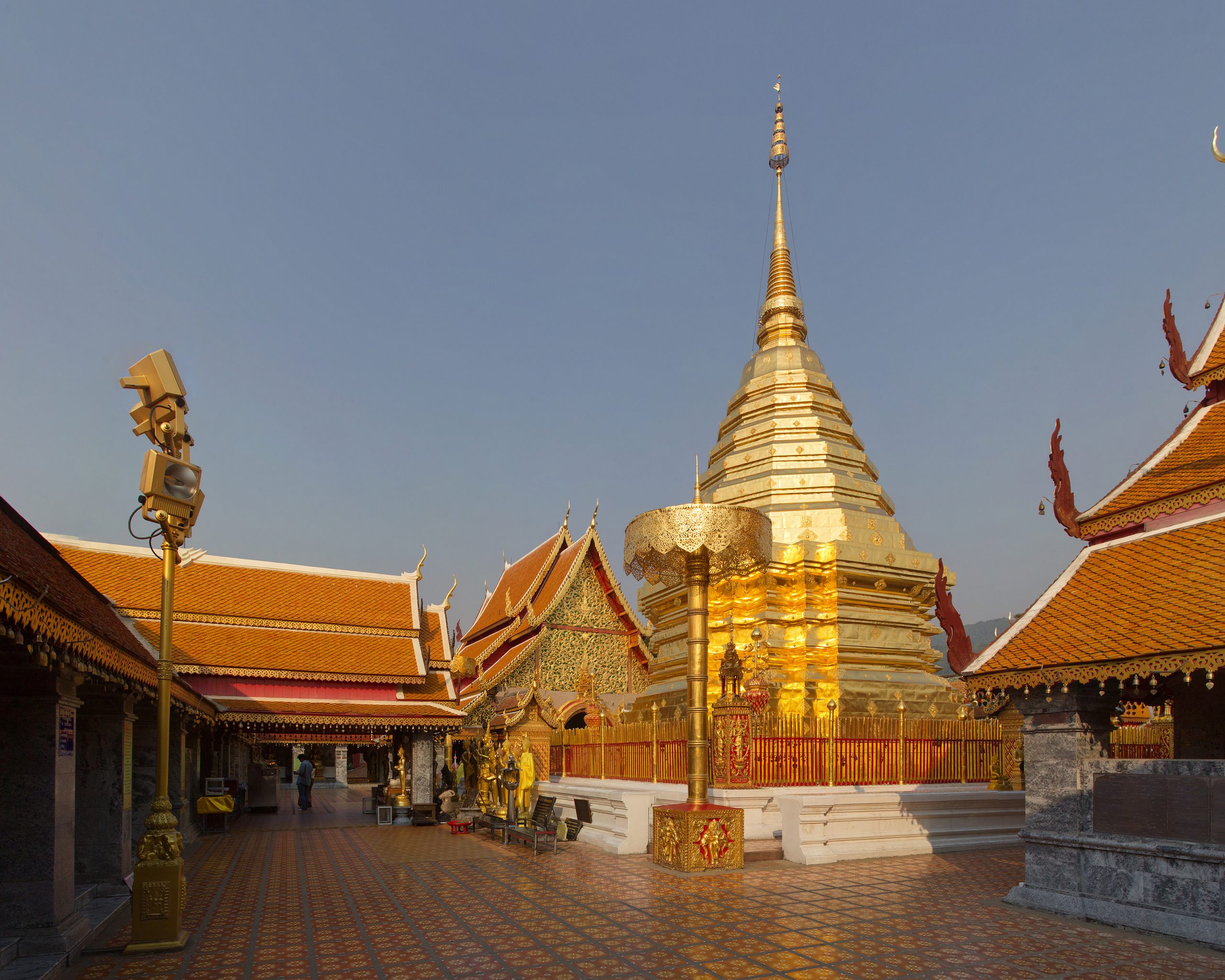
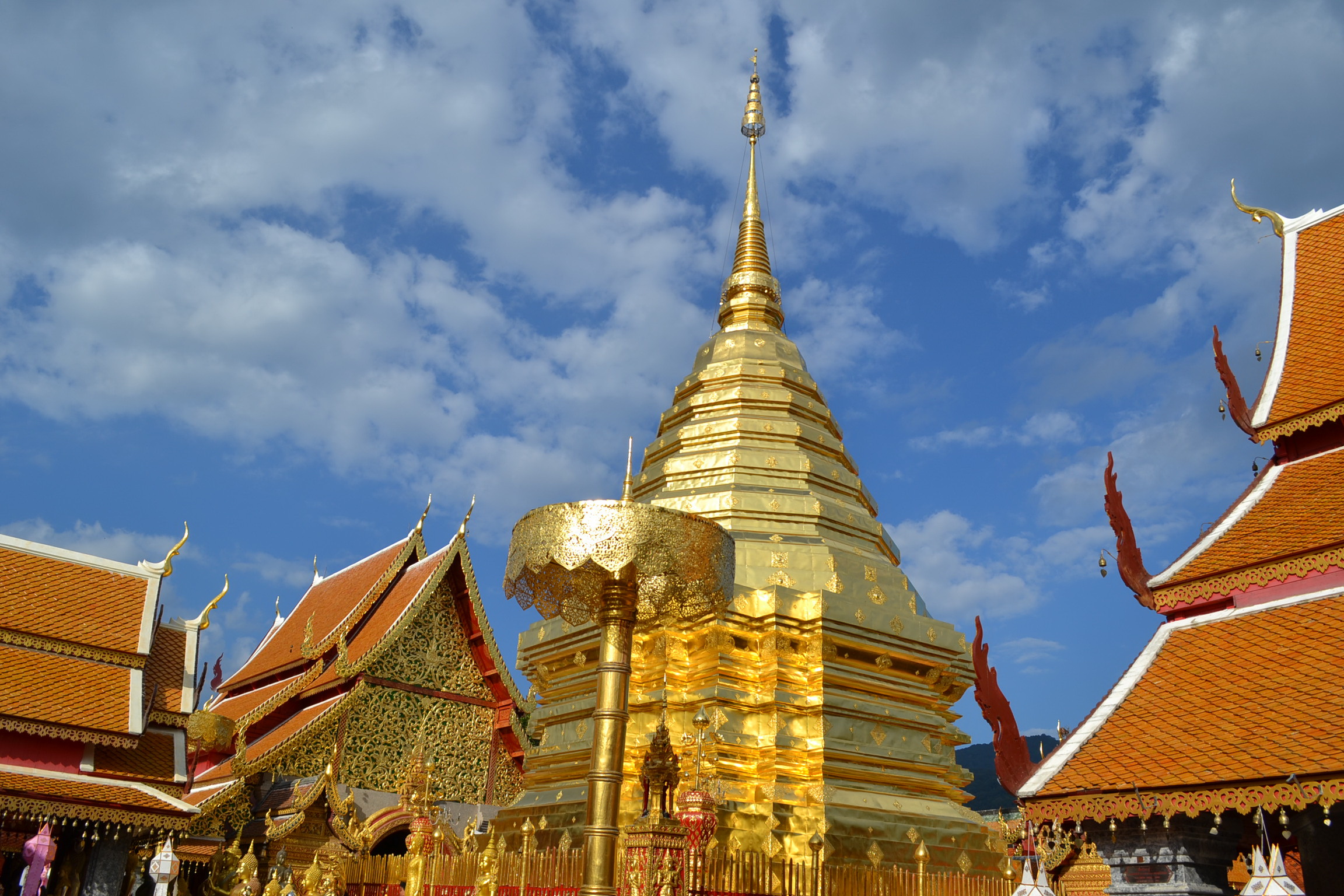
Wat Phra That Doi Suthep is the Chiang Mai temple that many visitors remember most clearly: mountain road, naga staircase, golden chedi, bells, city views and the feeling that the old city below is suddenly part of a much larger landscape.
It is also a functioning sacred place, not only a viewpoint. A good visit balances the practical questions, such as transport and timing, with the basic respect expected at a Thai temple. Dress, movement, photography and noise all matter more here than they do at a general lookout.
Getting There
Most visitors travel from Chiang Mai city by red songthaew, private car, taxi, tour vehicle or motorbike. The mountain road is part of the experience, but it is not the place to learn scooter confidence for the first time.
If you are using a songthaew, agree on the price and return arrangement before going up, especially if you plan to continue to Doi Pui or other mountain stops. If you are driving, allow for curves, traffic and limited patience at busy viewpoints.
Temple Etiquette
Cover shoulders and knees, remove shoes where required and move calmly around worshippers. Avoid touching sacred objects, pointing feet toward Buddha images or treating the chedi area like a photo studio.
Photography is generally part of the visitor experience, but it should not interrupt prayer, ceremonies or monks moving through the temple. If a sign says no photos in a specific area, follow it. The best temple visits are quiet enough that you can notice the details.
Best Time To Go
Early morning is the best compromise for cooler weather, softer light and fewer tour groups. Late afternoon can be beautiful if the sky is clear, but traffic, haze and crowds can make it less predictable.
Chiang Mai’s smoke season, rainy season and festival periods all change the experience. In haze, the view may be limited. In rain, the stairs and stone surfaces can be slippery. Around major Buddhist days, expect more worshippers and a more ceremonial atmosphere.
What To Combine
Doi Suthep can be paired with Chiang Mai University area cafes, Nimman, the old city temples or a longer mountain route toward Doi Pui. Keep the day realistic: the mountain road and temple visit take more energy than a quick map search suggests.
For first-time visitors, one temple-focused morning is better than trying to squeeze Doi Suthep between too many unrelated stops. Go up, spend time, come down for lunch, then leave the afternoon flexible.
Reader Notes
Plan Wat Phra That Doi Suthep around the part of the day that matters most. If the main draw is light, food, views, tickets, ferry timing or temple atmosphere, protect that priority first and let the secondary stops flex around it.
For current hours, access rules, ticketing, prices, private-event closures and seasonal changes, check the official channel before travelling. Thailand venues are usually straightforward once you arrive, but details can change quickly around public holidays, school breaks, heavy rain, trade events and high-season weekends.
Avoid treating map distance as real travel time. Bangkok cross-town routes, Chiang Mai mountain roads, ferry transfers, stadium exits and convention-style crowds all add friction that a quick route preview can hide. Anchor the day around one main experience, then keep meals, shopping stops or nearby sights flexible.
Also think about who is in the group. A solo visitor can move fast, but families, older travellers, business visitors and groups with luggage need more margin. Book key meals, tickets or timed access in advance, keep confirmation messages easy to find, and carry enough cash or card options for taxis, park fees, deposits, tips or small purchases.
Weather is another practical filter. Bangkok heat can make even a short walk feel longer, island rain can reshape ferry and dive plans, and mountain haze can limit views. If the main experience depends on clear light, outdoor movement or sea conditions, build a backup meal, indoor stop or rest window into the same neighbourhood.
For premium venues and official events, assume the best details live with the operator rather than on older travel blogs. Booking pages, venue social channels, ferry operators, immigration portals and hotel sites are more likely to reflect temporary changes, renovations, private functions and revised entry rules.
For anything date-sensitive, recheck during the same week you go. A fresh look often catches temporary closures, revised event hours, transport changes and booking rules that older travel notes miss.
Who Should Go
- First-time Chiang Mai visitors.
- Travellers interested in Thai temples and mountain views.
- Families who can manage stairs and warm weather.
- Photographers willing to arrive early and behave respectfully.
FAQ
Is Wat Phra That Doi Suthep worth visiting?
Yes. It is one of Chiang Mai’s most important and memorable temple visits.
What should I wear?
Cover shoulders and knees, and choose shoes that are easy to remove.
When is the best time to go?
Early morning is usually best for cooler weather, softer light and fewer crowds.