
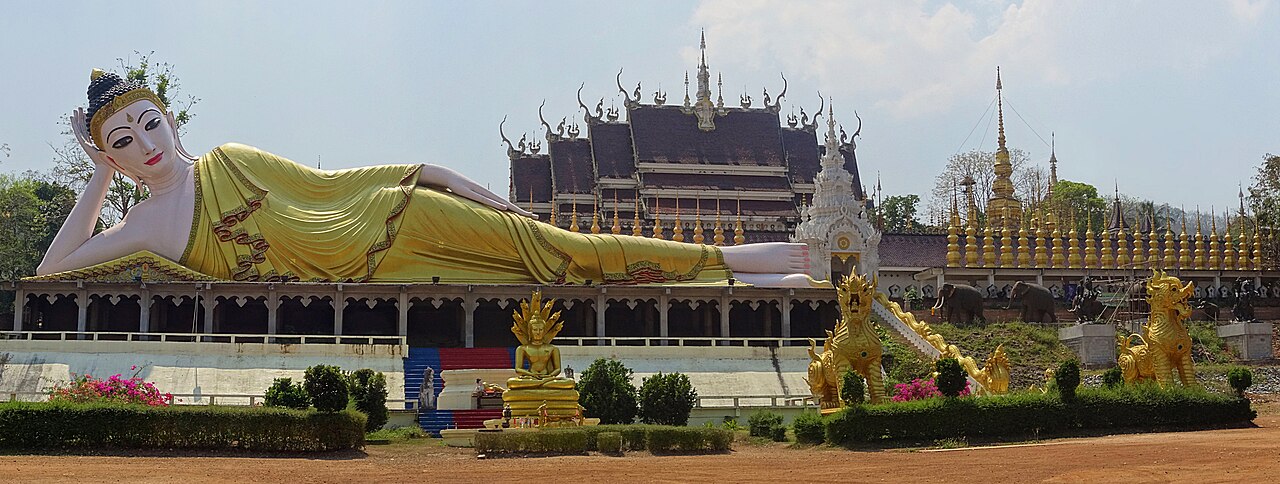
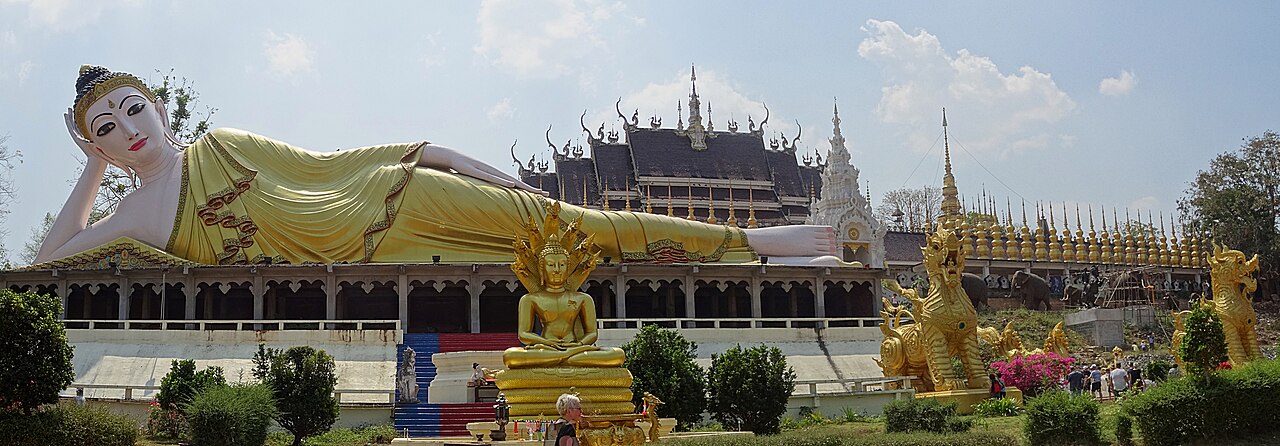
Wat Phra That Suthon Mongkhon Khiri rises beside the Phrae-Lampang road near Den Chai, its gilded stupas, complex rooflines and long reclining Buddha visible before many road travellers know the name. Despite its historical-looking forms, the temple is modern: Tourism Authority of Thailand information dates its creation to 1977 and describes a design drawing on notable traditional structures and Lanna Buddhist art.
This is a living religious site, not an architectural theme park. Dress with shoulders and knees covered, speak quietly and step aside for people making offerings. Published visitor hours vary slightly by source around 8.30am to 5pm or 5.30pm, so arrive well before closing and treat local signs or temple staff as authoritative on the day.
A Modern Temple
The complex demonstrates how contemporary Thai temple building can quote, combine and amplify older regional forms. Rather than assuming every structure is centuries old, read it as a modern act of devotion and preservation. The visual language includes Lanna and neighbouring influences, assembled to communicate abundance, merit and sacred geography to today’s visitors.
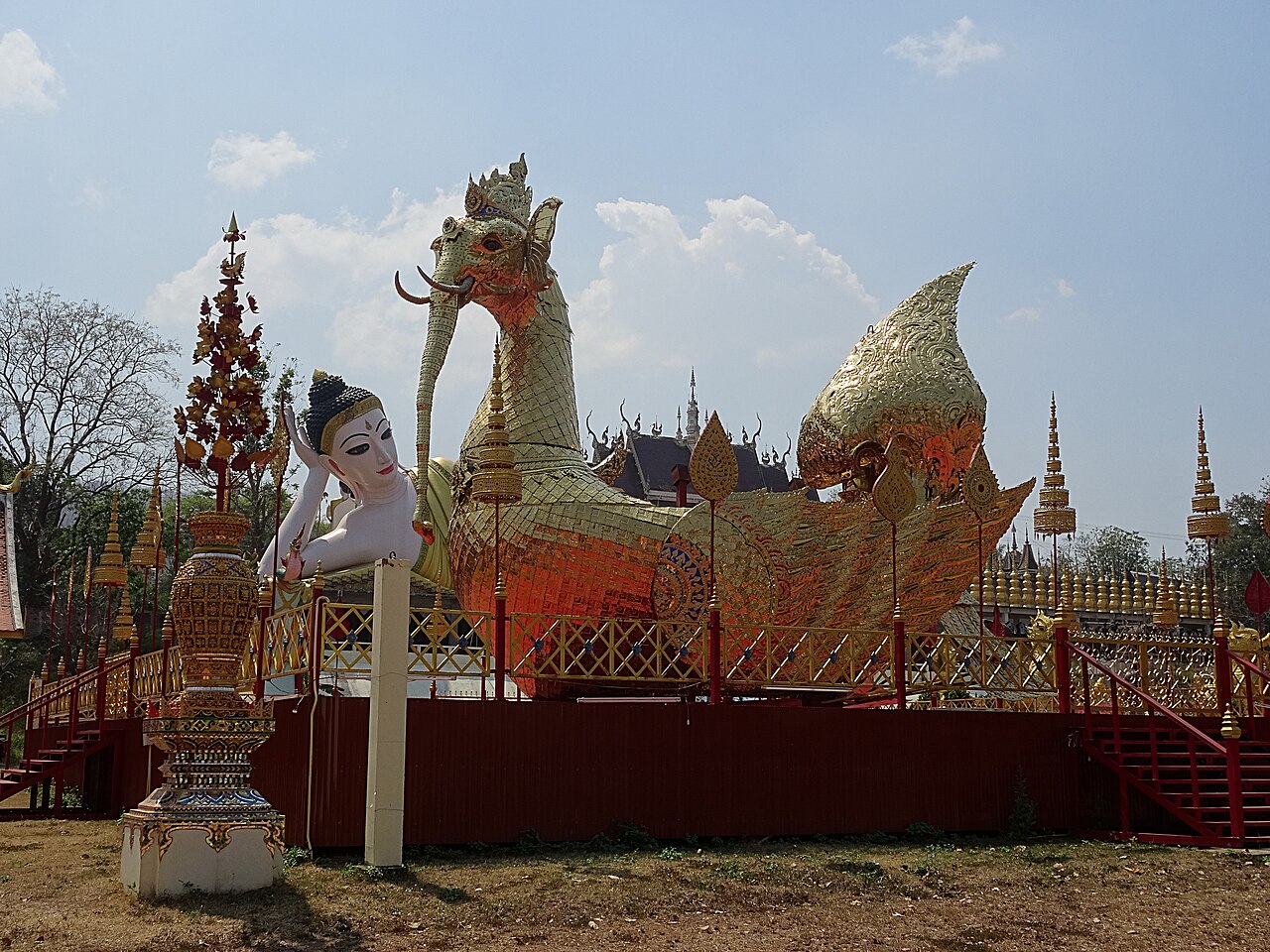
The Reclining Buddha
The large reclining Buddha near the road is the most immediate landmark and often the first place visitors stop. Approach respectfully, avoid climbing on bases or decorative elements and do not use the image as a comic photo prop. Observe whether worshippers are present before walking into their line of sight or making a long photographic setup.
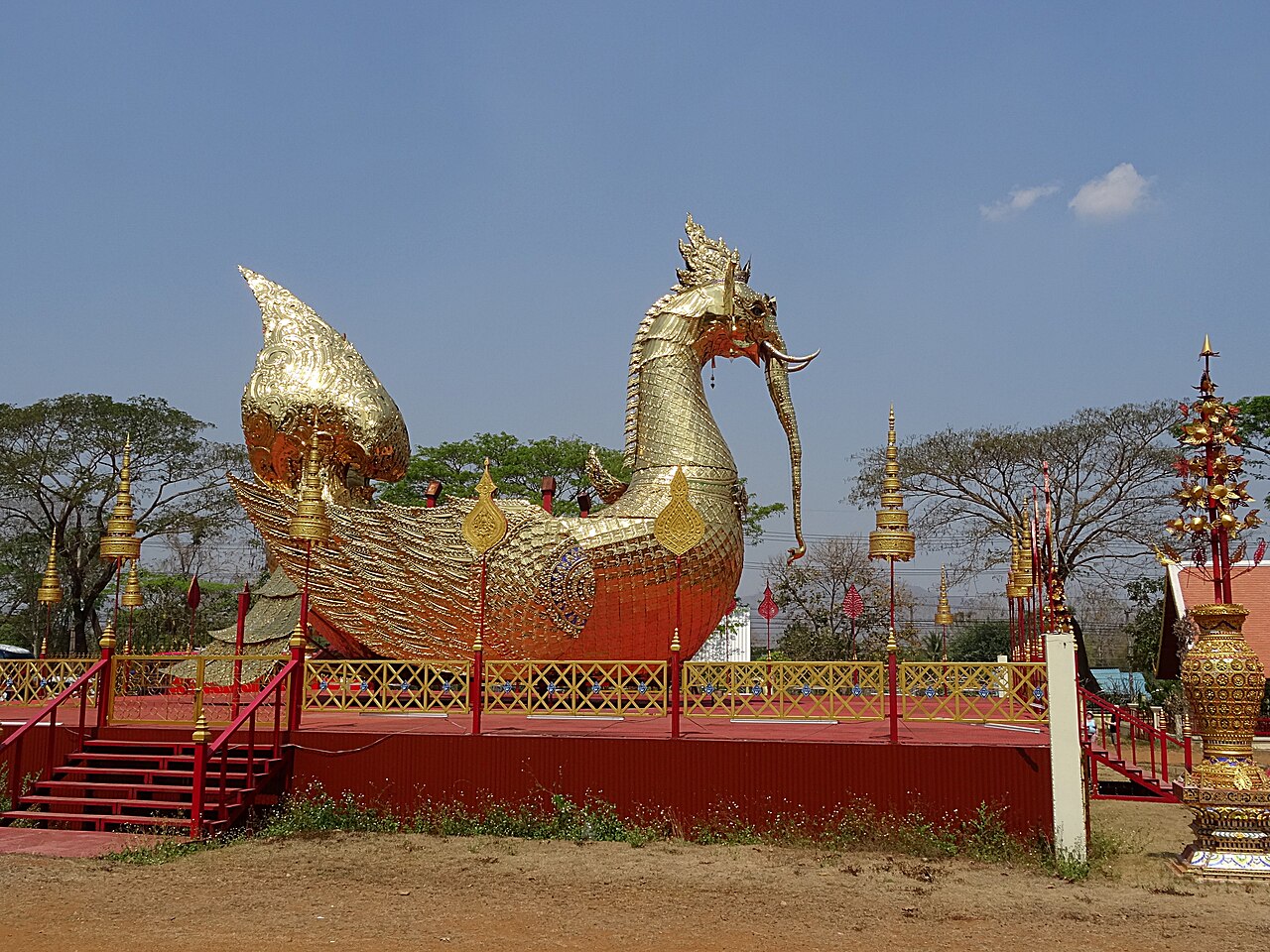
Rooflines And Stupas
The reward comes from details: layered roofs, naga finials, guardian figures, gilded surfaces and repeated stupas. Walk a complete circuit before deciding where to photograph. Morning light is softer and temperatures kinder, while midday sun can flatten colour and heat the stone courtyard. Rain makes steps slippery, so footwear should prioritise grip over appearance.
Museum And Collections
Local Den Chai information notes a teak museum hall with objects reflecting Lanna, Ayutthaya, Sukhothai, Shan and Sipsongpanna traditions. Opening can depend on staff and temple activity. Ask politely before entering, do not touch objects and accept that some rooms may close without notice. Labels may be primarily Thai, making a bilingual guide useful.
Temple Etiquette
Remove shoes wherever signs or the raised threshold indicate. Keep feet pointed away from Buddha images and monks, and ask before photographing people at prayer. Women should not touch monks or hand objects directly to them. A small donation can support upkeep, but no visitor should feel pressured by an unofficial guide or blessing arrangement.
Photography
The temple is highly photogenic, yet drones, tripods and commercial shoots may require permission. Avoid blocking doorways, stairs and offering tables. Photograph children or worshippers only with clear consent. When sharing images, name the temple accurately and resist describing it as ancient; its modern history is part of what makes the site culturally interesting.
Getting There
Wat Phra That Suthon lies near Den Chai on Highway 101 and works naturally for travellers driving between Lampang, Phrae and Nan. A private car or arranged driver is simplest. If arriving by rail or bus, organise the last segment in advance and save the Thai name. Road shoulders and high-speed traffic make improvised walking unsafe.
Combine The Stop
Use the temple as an introduction to Phrae rather than a hurried roadside photograph. Den Chai can lead into Phrae old town, teak houses, craft traditions and regional food. Allow at least 45 to 60 minutes at the complex, more if the museum is open. Continue only after resting; long northern road trips reward conservative driving.
Who Should Visit
The temple suits architecture enthusiasts, cultural travellers and road trippers who want a substantial stop before Phrae city. Visitors seeking quiet may prefer early morning, before tour groups and heat. Those with limited mobility should ask about the least-stepped route, because the hill setting and raised sacred buildings can make a full circuit demanding.
Read The Place Slowly
Begin with the overall silhouette, then move inward to the individual buildings and finally the smallest carving or painted detail. This sequence helps the complex make sense and prevents the camera from reducing it to unrelated gold surfaces. Sit quietly where permitted and watch how residents use the space: where shoes come off, how offerings are placed and which routes remain clear. If a guide or monk shares information, listen without turning the exchange into an interview unless they invite questions. Cultural understanding often comes from pace and observation rather than collecting a fixed number of facts before returning to the car.
At A Glance
- Province: Phrae.
- District: Den Chai.
- Built: The modern complex dates from 1977.
- Hours: Plan around roughly 8.30am-5pm and confirm locally.
- Dress: Cover shoulders and knees; remove shoes where required.
Keep Planning
Browse more TFT coverage in Culture, Travel and Deals.
Questions
Is the temple ancient?
No. Official tourism information dates the modern complex to 1977, though its design draws on older traditions.
Is there an entrance fee?
No standard admission fee is widely published; donations may be welcomed.
How long should I stay?
Allow at least 45 to 60 minutes, longer if the museum hall is open.
Can I use a drone?
Do not fly without explicit permission and compliance with Thai aviation and local rules.