
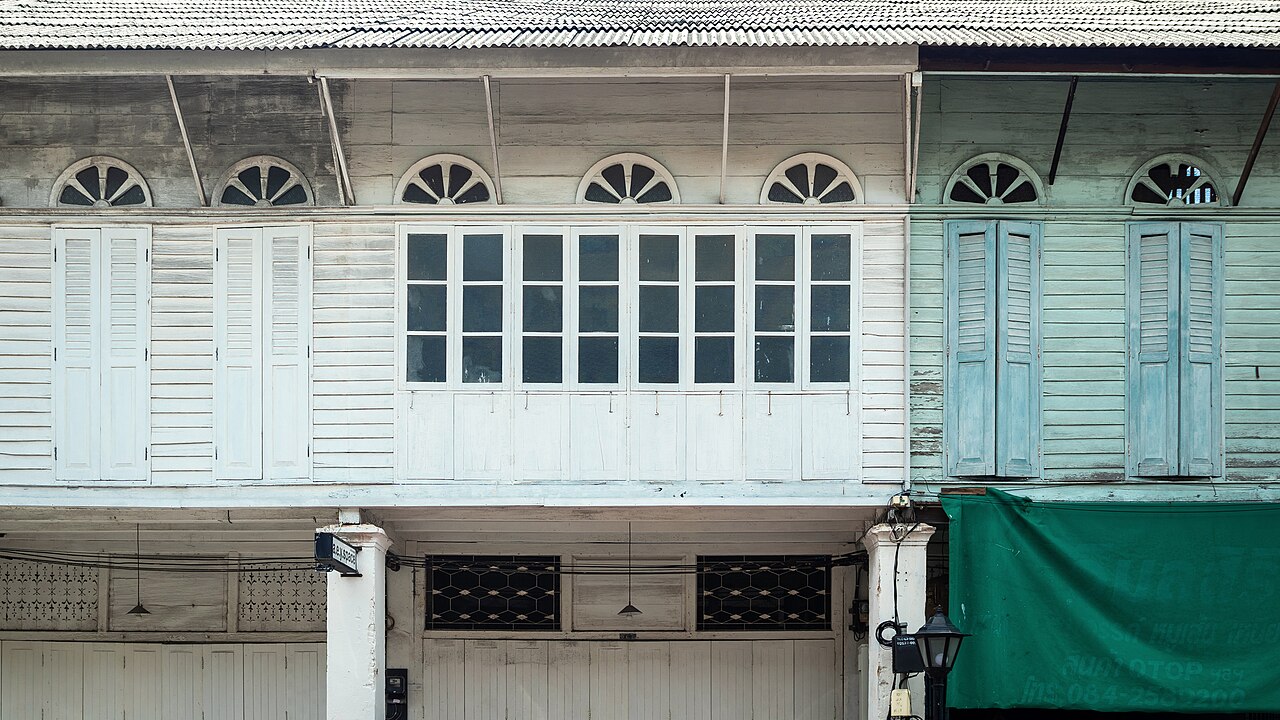
Songkhla Old Town is compact enough to walk but layered enough to reward a full morning. Nakhon Nok, Nakhon Nai and Nang Ngam roads hold Chinese-influenced shophouses, European details, southern Thai food, shrines, museums and murals within a few blocks of Songkhla Lake. The town’s identity comes from long contact among Thai, Chinese and Malay communities rather than from one frozen architectural style.
Begin before the heat builds, use the three streets as parallel threads and allow detours. A good route is not a race between street-art pins. Look at upper floors, ventilation panels, timber shutters and the relationship between homes, worship and trade. Stop for breakfast or an early lunch, then add the National Museum or lakefront only if energy remains.
Start On Nang Ngam
Nang Ngam Road is a useful introduction because food, shrines and old shops make the town feel immediately inhabited. Walk one side slowly, then return on the other rather than zigzagging through traffic. Look for small businesses that have adapted old buildings without erasing them. If a queue forms at a famous shop, decide whether it is worth waiting or whether the street itself is the priority.
Read The Shophouses
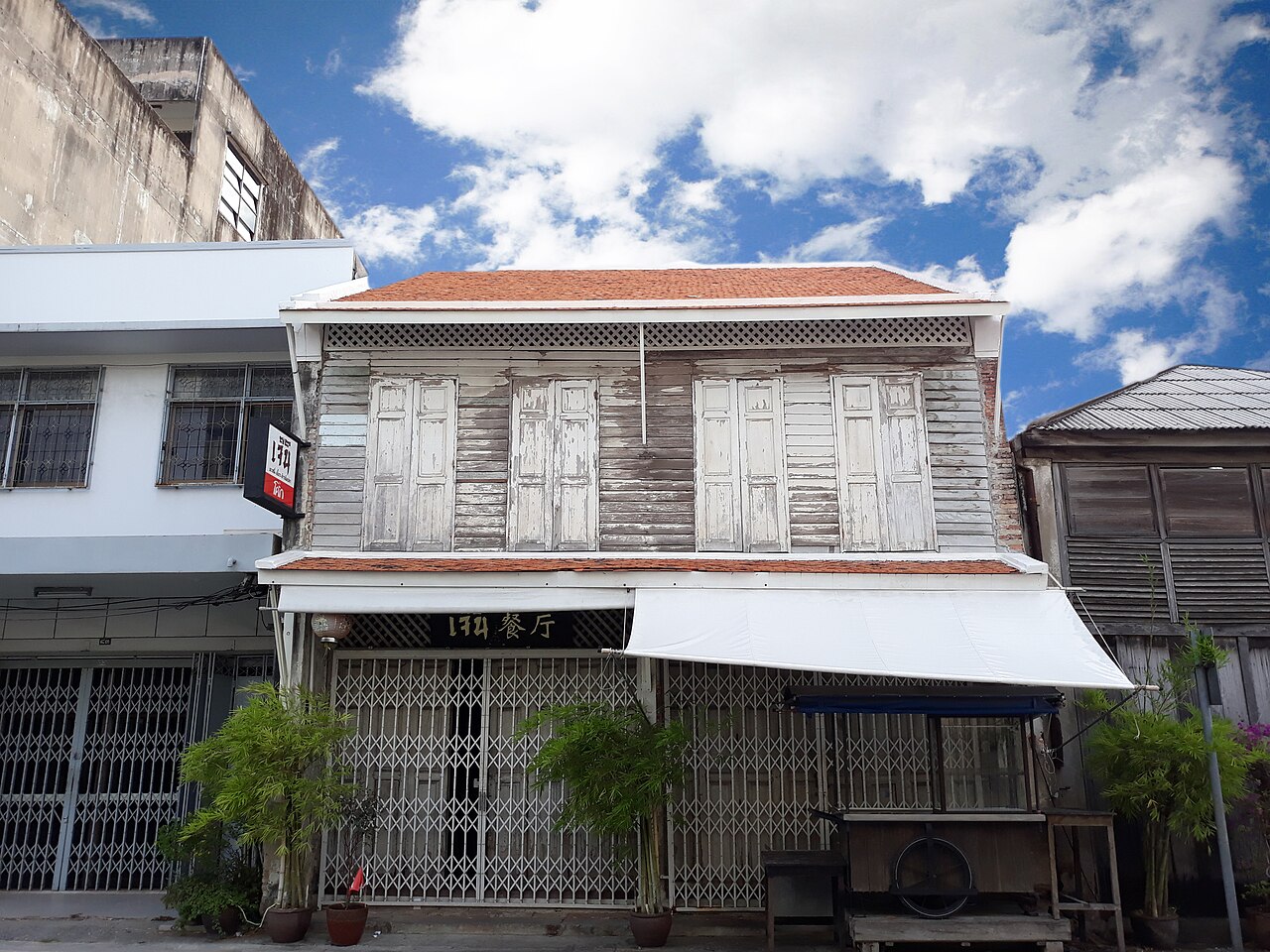
Songkhla’s facades can combine Chinese planning, European ornament, Peranakan colour and practical responses to heat and rain. Notice narrow plots, internal courtyards, covered thresholds and the way upper windows control light. Renovated pastel walls are attractive, but weathered timber and old commercial signs tell just as much. Avoid naming every building style from appearance alone; hybrid towns rarely fit tidy labels.
Nakhon Nai Road
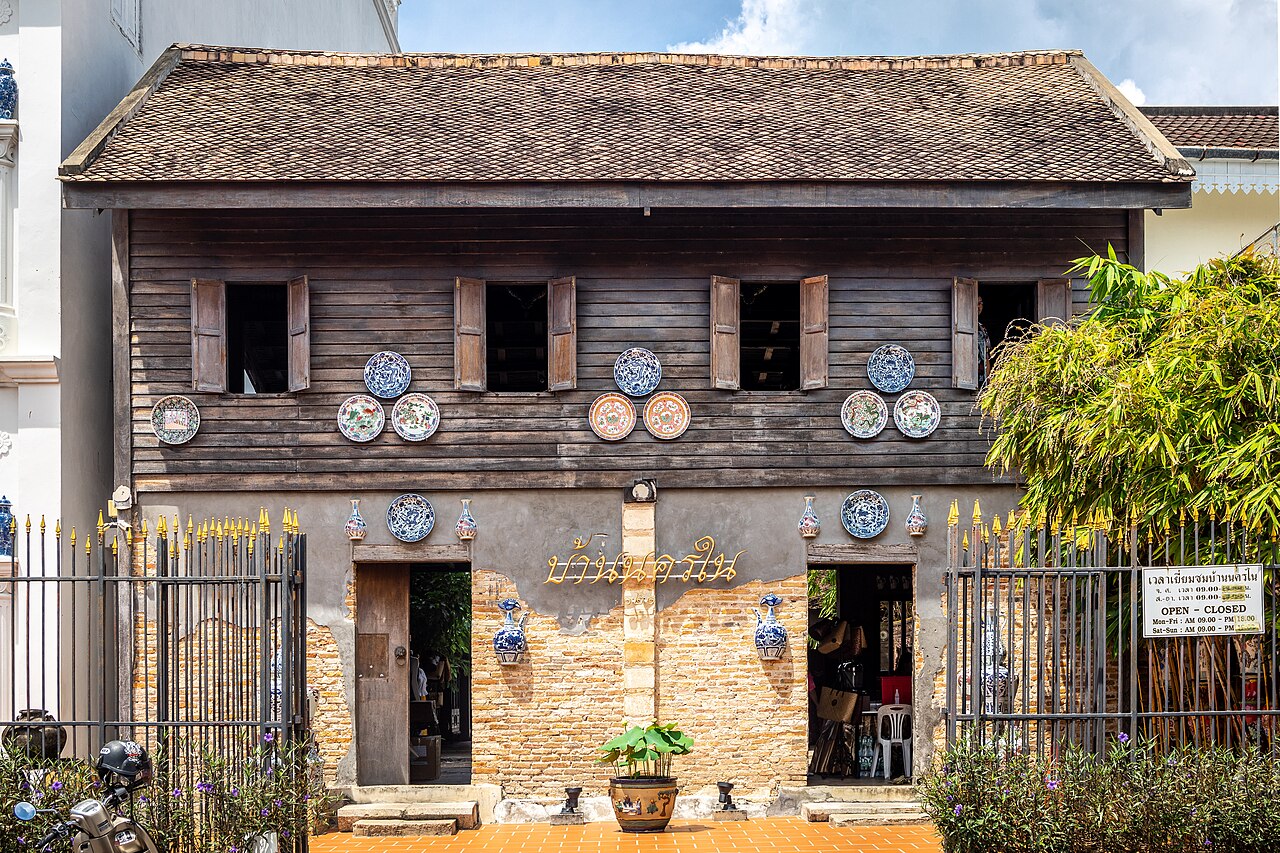
Nakhon Nai has one of the old town’s strongest concentrations of heritage buildings. Ban Nakhon Nai Museum offers a closer look at domestic objects and the life of a prominent Chinese-Thai family when open. Check current hours before building the whole route around it. Even without entry, the road rewards patient observation, especially where neighbouring houses reveal different approaches to repair, paint and reuse.
Nakhon Nok Road
Nakhon Nok runs closer to the water and helps explain why this became a trading town. Warehouses, commercial fronts and views towards Songkhla Lake connect the architecture with movement of goods and people. The sun can be stronger here, so alternate exposed stretches with shaded lanes. Watch for traffic while photographing; step fully onto a safe pavement or doorway edge with permission instead of standing in the road.
Shrines And Temples
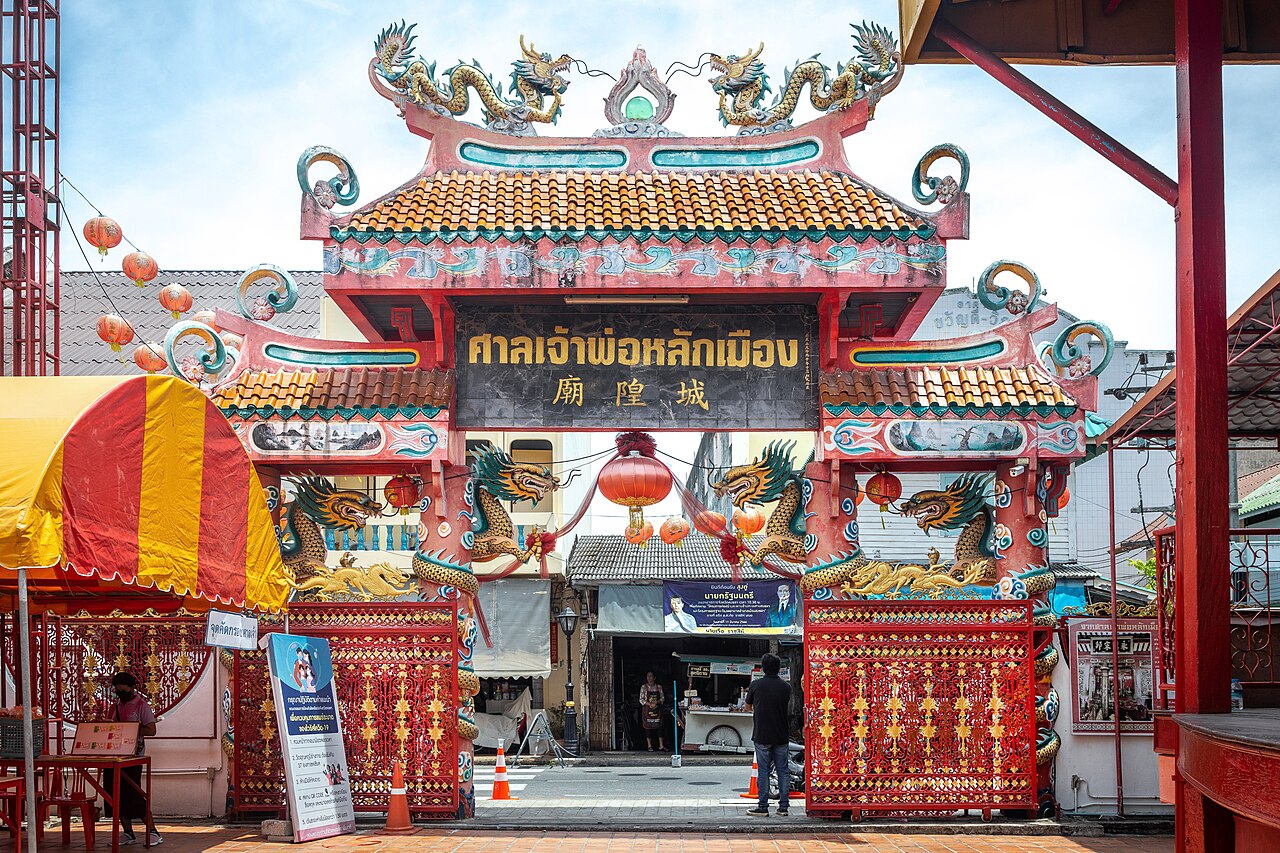
The Songkhla City Pillar Shrine and Wat Matchimawat add active religious life to the route. Dress respectfully, lower your voice and remove shoes where indicated. Do not walk between a worshipper and an altar for a photograph. Wat Matchimawat is among the south’s older temples and is known for an ordination hall with murals. Check access gently because ceremonies and maintenance take priority over sightseeing.
Street Art
Murals have made the old town easy to share online, but they work best as conversation with the buildings around them. Follow side lanes, look for images tied to food, trade and local memory, and avoid treating residents’ doorways as sets. Ask before photographing people or private interiors. Morning light is softer and the lanes are calmer; midday shadows can be harsh even when the walls remain colourful.
Eat The Town
Songkhla’s food reflects the same cultural mixing as its streets. Local favourites include Chinese-Thai stews, noodles, sweets and old-fashioned ice cream, alongside southern flavours and Muslim food in the wider city. Order small portions at several stops and ask about opening days; heritage businesses often keep individual schedules. Guests with allergies should ask about pork, shellfish, nuts, coconut and shared cooking oil before ordering.
Add A Museum
The Songkhla National Museum occupies a Chinese-style mansion built in 1878 and holds archaeology, regional history and material linked to the Na Songkhla family. It is commonly published as opening Wednesday to Sunday in two daytime sessions, closing Mondays, Tuesdays and public holidays. Confirm current hours and admission before walking over. The museum gives depth, but it should not force the old-town route into a sprint.
Plan The Heat
Wear light clothing, comfortable shoes and sun protection, and carry water. Southern rain can arrive quickly, so a compact umbrella helps with both sun and showers. Old pavements and thresholds are uneven. Build the walk around shade, food and rest rather than distance. Two attentive kilometres can reveal more than a long checklist completed while staring at a map and searching for air-conditioning.
Arriving And Leaving
Songkhla city is separate from Hat Yai, the region’s larger transport hub. A taxi or local connection between them needs time, particularly at commuter periods. Stay in Songkhla if an early walk matters, or arrange the return before evening. Pair the old town with Samila Beach or Tang Kuan only after allowing at least three unhurried hours for the historic streets.
Keep Planning
Browse more TFT coverage in Culture, Travel and Deals.
Questions
How long does Songkhla Old Town take to walk?
Allow at least three hours for the three main streets, stops and a meal.
Which streets should I follow?
Use Nakhon Nok, Nakhon Nai and Nang Ngam as parallel routes, then explore connecting lanes.
Is Songkhla Old Town in Hat Yai?
No. Songkhla city is a separate destination; allow time for the road connection from Hat Yai.
When should I visit?
Start in the morning for lower heat and the best chance of finding traditional food shops open.
Practical Information
- Core streets: Nakhon Nok, Nakhon Nai and Nang Ngam roads in Songkhla city.
- Best time: Morning for cooler walking, open food shops and softer light.
- Allow: At least three hours; add more for museums and meals.
- Character: Living Chinese-Thai, Malay and southern Thai heritage expressed through trade, worship, architecture and food.
- Trip planning: Explore current Songkhla visitor information
- Map: Open in Google Maps