
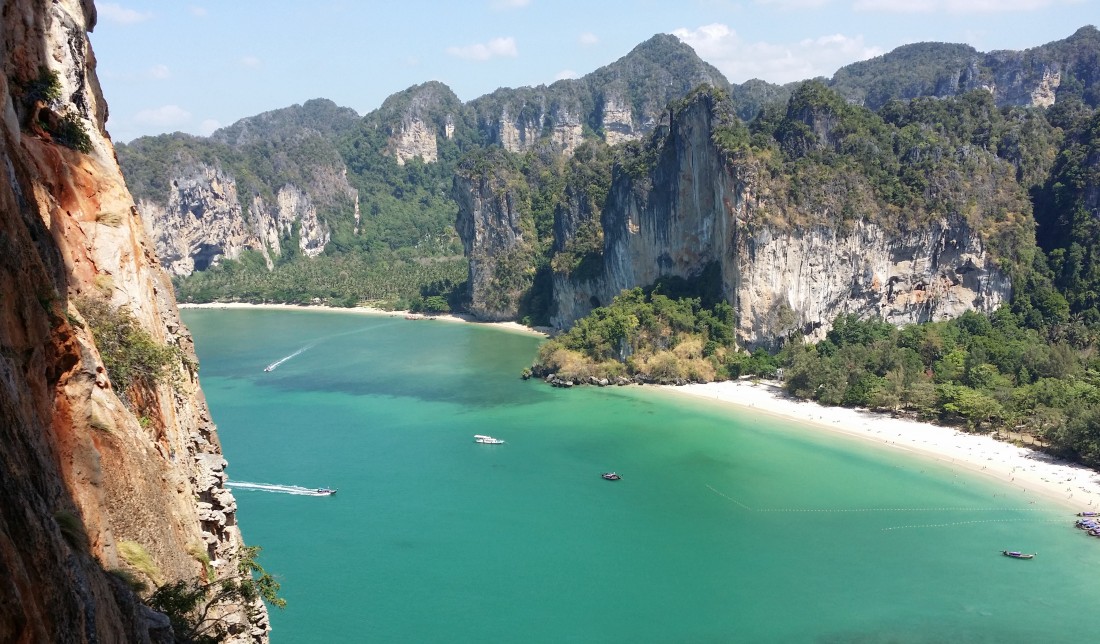
Railay’s limestone cliffs can give a complete beginner a genuine outdoor climb within a half-day, but the postcard setting should not hide the seriousness of the activity. Salt, rain, heat, sharp rock and changing route traffic all matter. A first session should be booked with a reputable local operator that provides instruction, appropriate equipment, insurance information and a route selected for the climber—not simply the best camera angle.
Beginners usually start with top-rope climbing, basic knots, belay awareness and movement technique. The guide manages the safety system while the participant learns how shoes, holds and body position feel on real limestone. Treat the day as a lesson, not a promise to reach a particular height. Stopping early is good judgement when weather, fear or fatigue changes.
Choose A Beginner Course
A half-day introduction suits many first-timers and leaves energy for the boat journey and beach. A full day offers more repetition but can be demanding in heat. Ask how much actual climbing time is expected, the maximum group size and whether the session is private or shared. A cheap package with one guide stretched across many climbers can mean long waits and less coaching.
Check The Operator
Look for a long-running local business, clear contact details, trained guides, maintained equipment and a direct explanation of insurance and emergency procedures. Ask who makes the weather decision and whether the guide holds relevant first-aid or rescue training. Reviews can reveal communication style, but safety claims should come from the operator rather than an anonymous booking-page badge.
Explain Your Experience
Tell the operator truthfully about previous climbing, recent injuries, fear of heights, medications and fitness. Indoor bouldering is helpful experience but does not equal outdoor rope competence. Children need age-appropriate instruction and a correctly fitting harness. A guide can adapt routes only when the information arrives before the group stands under the wall.
Inspect The Equipment
The operator should provide a harness, helmet, climbing shoes and rope system appropriate to the session. Check that the helmet fits, harness buckles are doubled back as designed and shoes are snug without causing numbness. Do not alter knots or hardware after the guide checks them. If equipment looks damaged or a procedure is unclear, stop and ask rather than copying another climber.
Understand The Surface
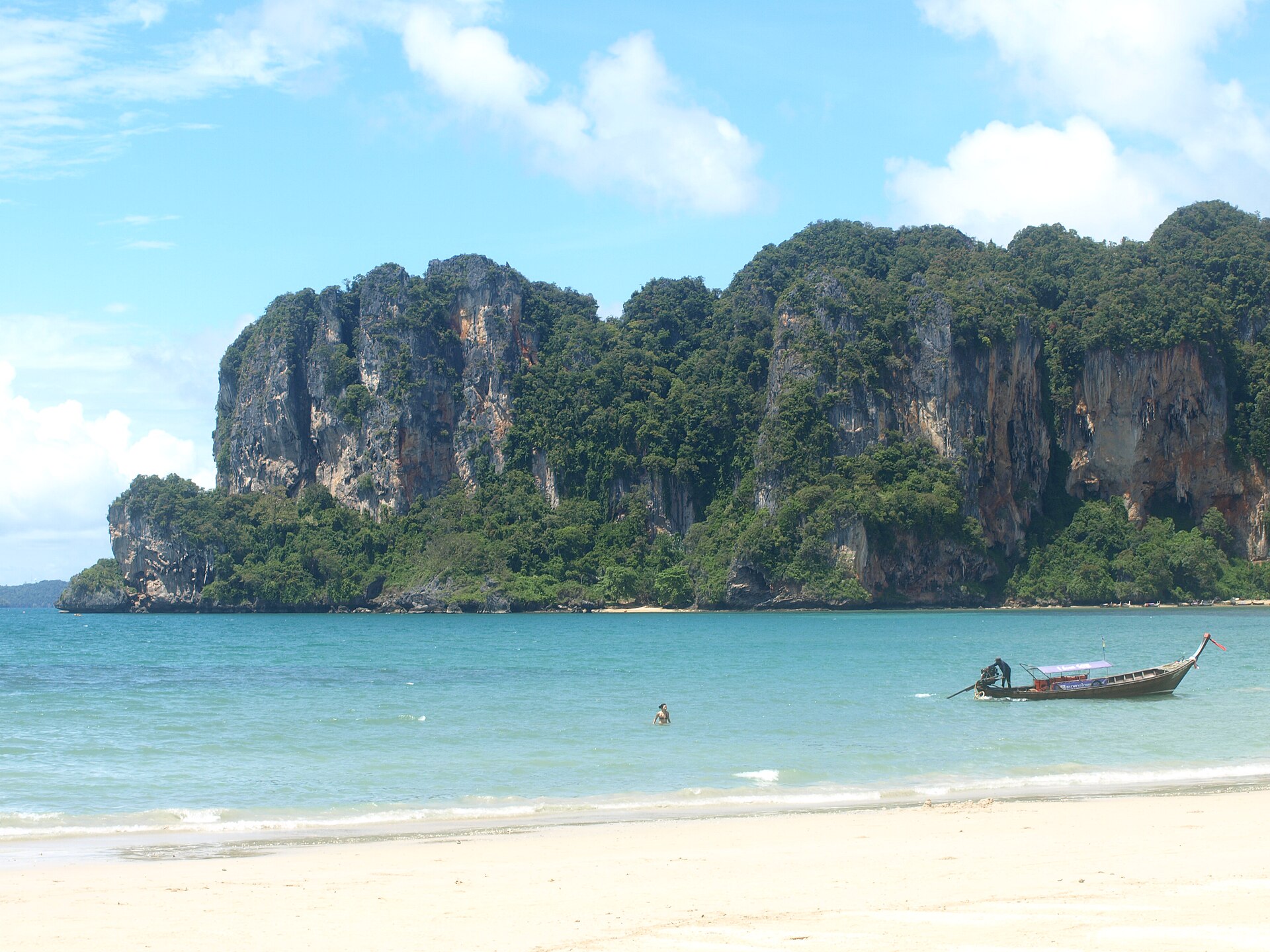
Railay limestone can be sharp, polished or wet. Holds that look enormous may be slippery after rain, while small edges can feel secure when dry. Keep the body balanced instead of pulling only with the arms. Avoid grabbing vegetation or loose rock, and warn people below if anything falls. Helmets stay on at the base because hazards do not begin only after leaving the ground.
Respect Weather Calls
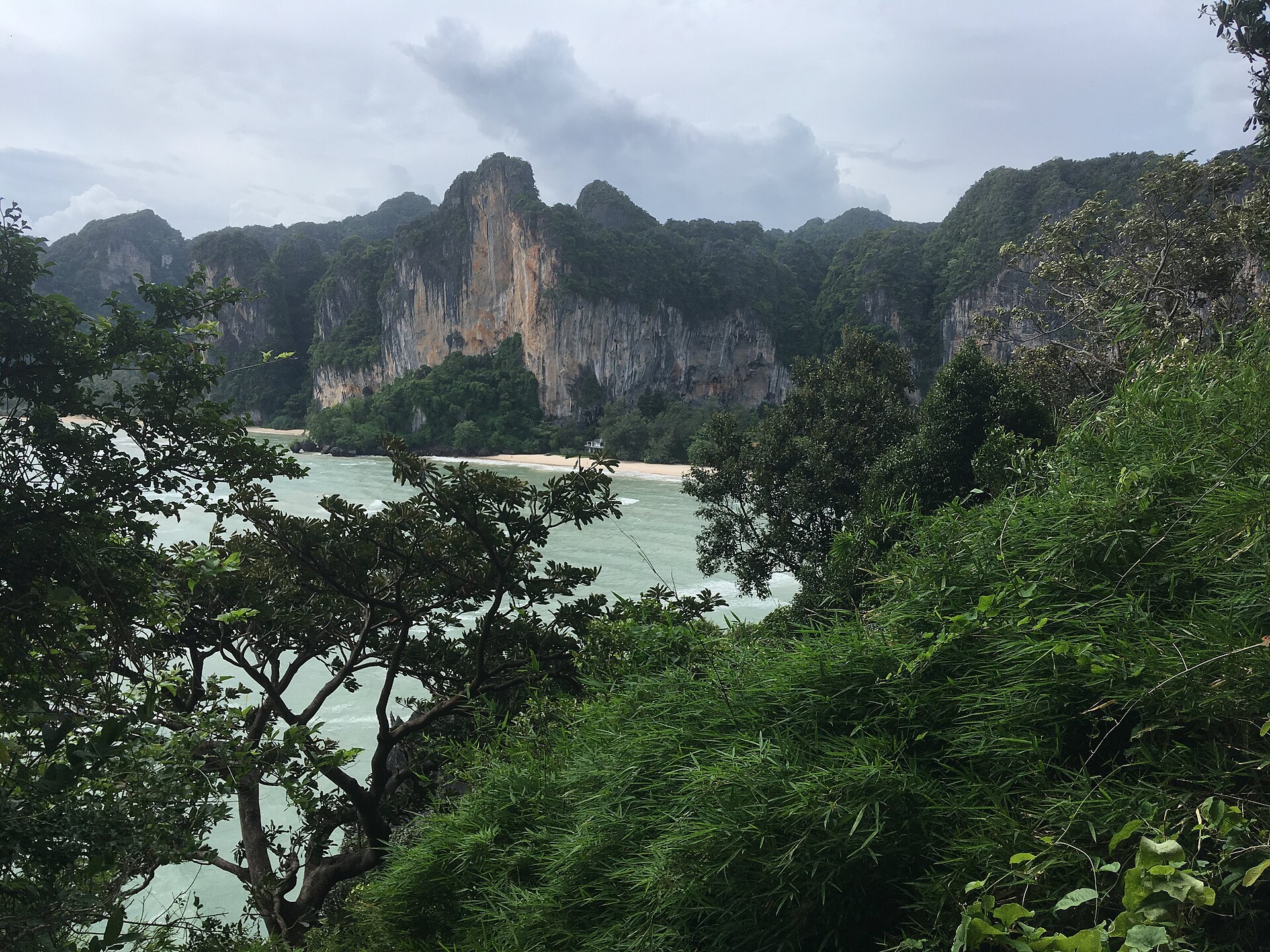
Heavy rain, lightning and strong wind can cancel or shorten a session. Wet rock changes friction and runoff can affect access paths. Let the guide make conservative decisions without pressure from a flight schedule or non-refundable hotel. Ask about the operator’s rescheduling policy before paying. A beach day, cave walk or massage is a better fallback than climbing in unsafe conditions.
Plan The Boat
Railay has no public road connection to Ao Nang or Krabi town. Long-tail boats and operator transfers form part of the day, with departure points influenced by weather and tide. Confirm whether pickup, boat fare and return are included. Carry essentials in a dry bag and keep footwear suitable for wet landings; boarding with a heavy backpack in waves requires patience.
Dress For Movement
Wear flexible clothing that covers enough skin for harness comfort, and bring sun protection that will not make hands greasy. Remove rings and secure long hair. A light long-sleeved layer can protect against sun and rock abrasion. Do not climb in beach sandals; use the supplied climbing shoes on route and stable footwear for approaches.
Fuel And Hydrate
Eat a normal meal before the session without overloading on alcohol or rich food. Carry water and a small snack, then follow the guide’s plan for breaks. Heat can reduce grip and judgement before a beginner notices. Headache, nausea, dizziness or unusual weakness are reasons to stop, cool down and rehydrate rather than chase one last route.
Keep The Base Clear
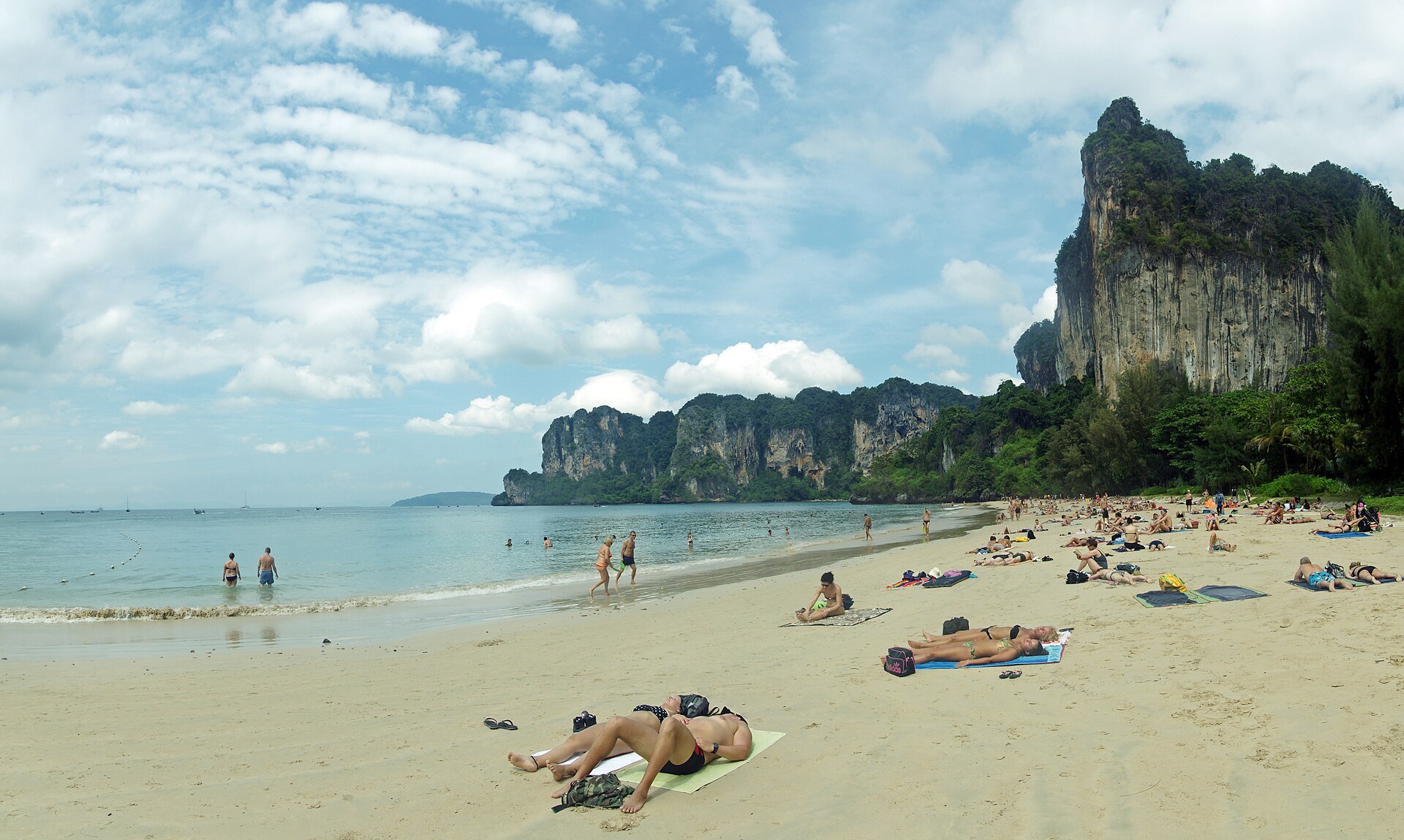
Popular walls can host several groups. Stand where the guide directs, keep bags away from the fall zone and never walk under a climber without awareness. Music, drones and loud coaching disturb communication. Share shade and route access patiently. Railay’s climbing community depends on visiting groups behaving as participants in a shared outdoor site, not customers who own a wall.
Know What Not To Attempt
Lead climbing, multi-pitch routes, rescue systems and deep-water soloing require separate skills and conditions. A successful beginner top-rope session is not permission to improvise on another wall the next day. Book further instruction if the sport clicks. Competence grows through repeated practice, partner checks and judgement, not through the number of metres climbed on holiday.
Recover Well
Hands, forearms, calves and feet may be tired after unfamiliar movement. Cool down, wash small cuts, eat and rehydrate. Seek medical care for a hard fall, head impact, deep wound or persistent pain even if the session continued initially. Avoid scheduling a strenuous swim, dive or overnight transfer immediately after a full climbing day.
Leave The Cliff Better
Pack out tape, bottles and snack wrappers. Use toilets before the approach where possible and follow local rules around chalk, route access and sacred or sensitive areas. Do not carve rock or remove plants. Paying a local guide is only one form of support; respecting closures and reducing impact keeps the cliffs viable for residents and future climbers.
Keep Planning
Browse more TFT coverage in Wellness, Travel and Deals.
Questions
Can complete beginners climb at Railay?
Yes. Book a beginner top-rope course with a reputable operator and disclose fitness or medical concerns.
Is Railay climbing available in rain?
Light conditions vary, but heavy rain, lightning or unsafe wet rock can cancel a session. Follow the guide’s decision.
Do I need my own equipment?
Beginner courses normally provide harness, helmet, shoes and rope equipment; confirm exactly what is included.
How do I reach Railay?
By long-tail boat or operator transfer from Ao Nang, Ao Nam Mao or another agreed pier.
Practical Information
- Location: Railay and nearby Tonsai on the Krabi coast, reached by boat.
- Beginner format: Usually top-rope instruction in half-day or full-day sessions.
- Ask before booking: Guide ratio, equipment, insurance, boat transfer, weather policy and cancellation terms.
- Bring: Water, sun protection, flexible clothing, dry bag and stable approach footwear.
- Destination context: Review current Krabi information
- Map: Open in Google Maps