
If you have just transferred money to a scammer in Thailand, speed matters. Call the Anti-Online Scam Operation Center on 1441 and select the option for reporting and requesting a suspicious-account suspension. At the same time, contact your bank through the number printed in its app or on the back of the card. Do not call a number supplied by the person who deceived you, even if they now claim they can reverse the transfer.
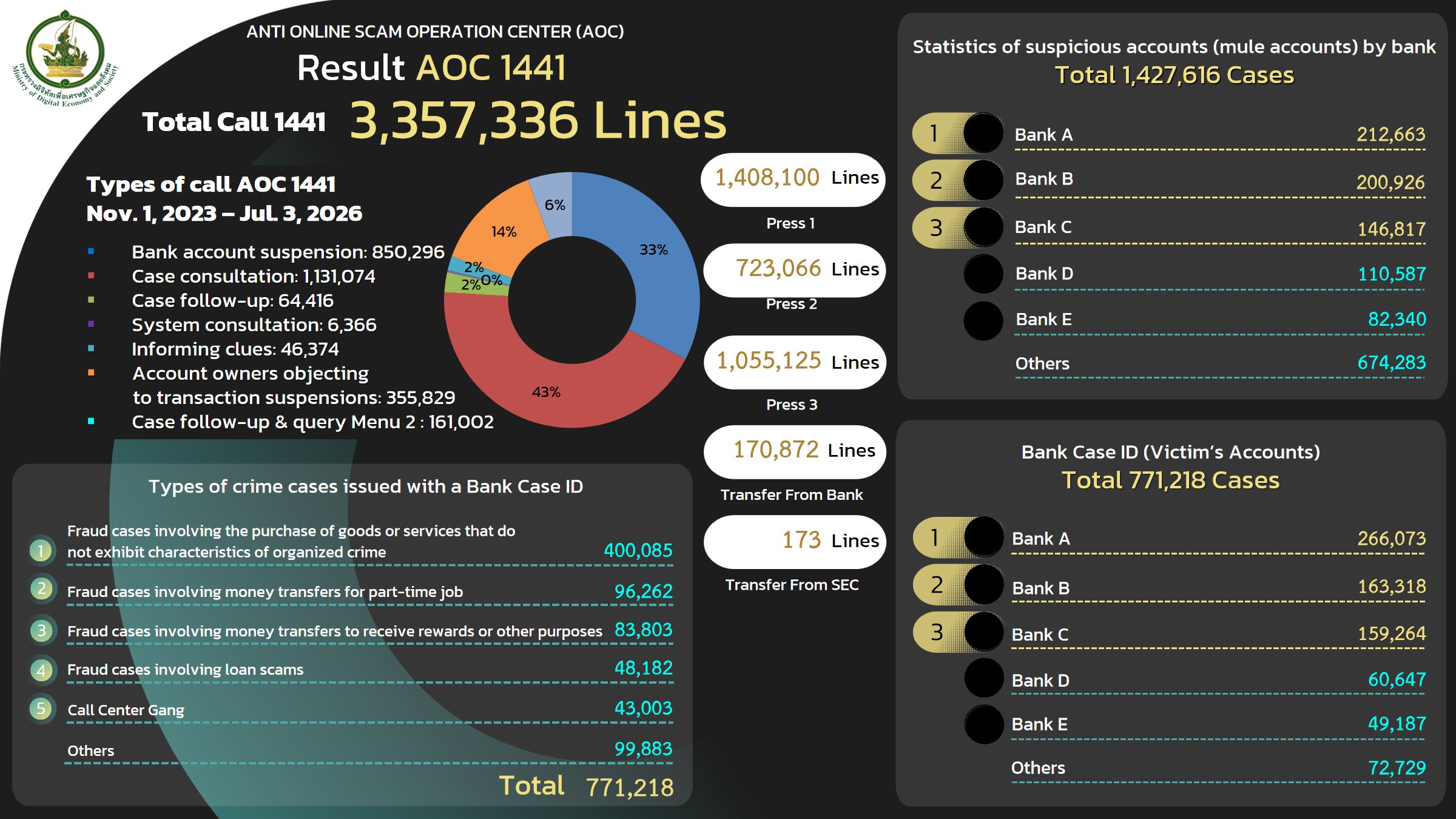
AOC 1441 is designed to connect the victim’s report with bank action and the police online-case process. The Ministry of Digital Economy and Society says callers receive a bank case ID, and the information is passed to thaipoliceonline for a police case ID. That second identifier should arrive by SMS within 24 hours, after which the victim must meet an investigator within seven days to continue the case.
Call 1441
Use 1441 as soon as you recognise the transfer as fraudulent. The official menu lists option 1 for reporting an online crime and requesting suspension, option 2 for asking to lift a suspension affecting your own account and option 3 for legal advice. Explain that money has already moved, state the transfer time and have the receiving account details ready.
Contact Your Bank
Call your own bank in parallel when another trusted person can help, or immediately after the AOC report. Ask for the fraud or mule-account team, not general payment troubleshooting. Give the transfer reference and ask what can be frozen or recalled. A bank cannot promise recovery, but early notification can improve the chance that funds have not moved onward.

Prepare The Evidence
Save the transfer confirmation, bank statement, account number, recipient name, amount and exact time. Take full screenshots of chats, usernames, phone numbers, advertisements, web addresses, QR codes and social profiles. Export conversations where possible instead of relying only on cropped images. Write a short timeline while the sequence is fresh and preserve the original device.

Keep Both Case IDs
The AOC process includes identity checking and the creation of a Bank Case ID. Record it exactly. The report then enters the online police system, which generates a Police Case ID by SMS. Those identifiers are not interchangeable. Store them in a note and share them only with your bank, the AOC or verified police officers—not with strangers offering recovery services.
Meet The Investigator
The official process requires the victim to meet an investigator within seven days after receiving the Police Case ID. Follow the instructions in the message and bring identification, transaction evidence, case numbers and a clear timeline. If language is a barrier, arrange a trusted Thai speaker or ask the station about interpretation. Missing the deadline can disrupt continuation of the suspension process.
Secure Your Accounts
Change passwords from a clean device, beginning with email and banking. Sign out other sessions, enable strong two-factor authentication and call the mobile operator if a SIM swap is possible. If remote-control software was installed, disconnect the device from networks and obtain professional help before using it for banking again. Do not simply delete the app and assume access has ended.
If Cards Were Exposed
Freeze affected cards in the banking app and ask the issuer to replace them. Review recent transactions and merchant tokens, including small test charges. A bank transfer case and a card-dispute case follow different rules, so report both clearly. Never send a one-time password to anyone claiming to investigate; legitimate staff do not need you to read it aloud.
Avoid Recovery Scams
Victims are often targeted again by people promising to retrieve funds for an upfront fee, cryptocurrency payment or access to the banking app. Treat unsolicited recovery messages as another scam. Verify every contact by ending the call and dialling the official organisation yourself. Do not pay a ‘release tax’, ‘lawyer deposit’ or ‘verification charge’ to unlock recovered money.
What Recovery Looks Like
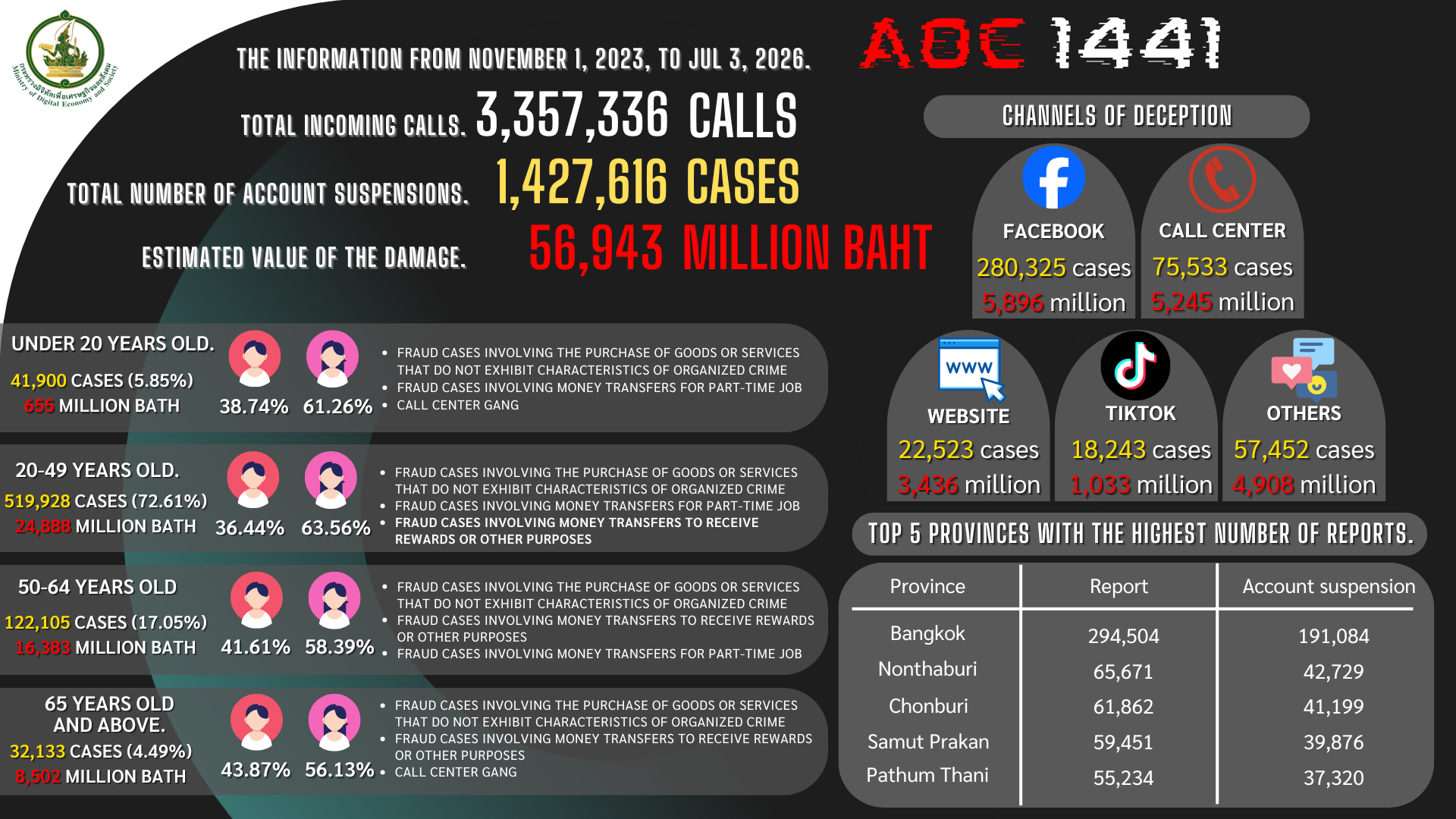
A report and suspension request do not guarantee reimbursement. Funds may already have passed through several accounts, and banks and police need evidence to trace them. The practical goal is to act quickly, preserve a complete record and keep the case active. Ask for the next deadline and responsible office at every step rather than waiting indefinitely for an update.
For Visitors
Travellers should also inform their home bank when a foreign card or overseas transfer is involved. Keep passport copies and Thailand contact details available, and contact travel insurance if the policy includes fraud assistance. The 1441 process is Thai, so a hotel manager, employer, lawyer or trusted bilingual contact may help with communication, but they should never take control of your banking credentials.
At A Glance
- Hotline: 1441.
- Option 1: Report online crime and request suspicious-account suspension.
- Police ID: The official process says SMS within 24 hours.
- Follow-up: Meet an investigator within seven days.
- Emergency: If personal safety is at risk, call Thai police on 191.
Keep Planning
Browse more TFT coverage in Money, Travel and Deals.
Questions
Can AOC 1441 guarantee my money back?
No. It coordinates urgent reporting and account-suspension steps, but recovery depends on where the money moved and the investigation.
What is the most important evidence?
The transfer reference, receiving account, amount and time, plus complete communications and the sequence of events.
Why do I need two case IDs?
The bank and police systems generate separate identifiers. Keep both so each organisation can find its part of the case.
Should I pay a recovery agent?
Do not pay an unsolicited recovery service. Verify all help independently through official channels.