
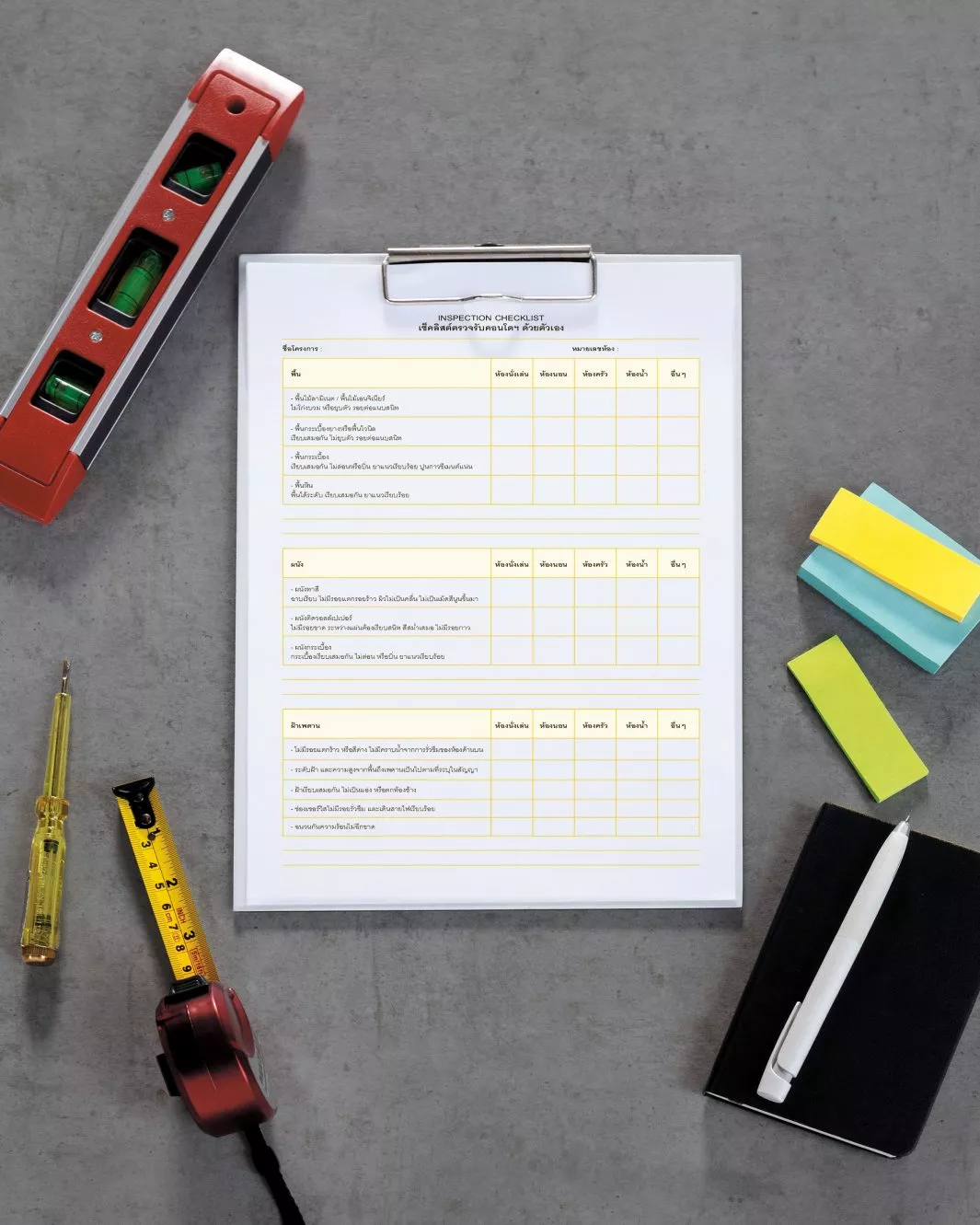
A condo handover is the moment to compare the finished Bangkok unit with the signed specification before small defects become your repairs. Walk through slowly, photograph every issue and identify its exact room and position. The goal is not to find perfection at any cost; it is to create a clear, agreed record of incomplete, damaged or non-functioning work before acceptance.
Bring the contract, floor plan, finish schedule and any promised variation in writing. Useful tools include a phone charger, small lamp, masking tape, spirit level, measuring tape, tissue, torch and a phone with enough storage. For an expensive unit or limited construction experience, a professional snagging inspector can add thermal, electrical and moisture checks beyond a visual visit.
Start With Documents
Confirm the unit number, floor, area and included parking or storage against the contract. Check the model, colour and quantity of installed appliances, sanitary ware, doors, flooring and built-in furniture. Sales-room conversations are hard to enforce when they were never added to the agreement, so separate contractual defects from optional improvements you may simply prefer.
Floors And Walls
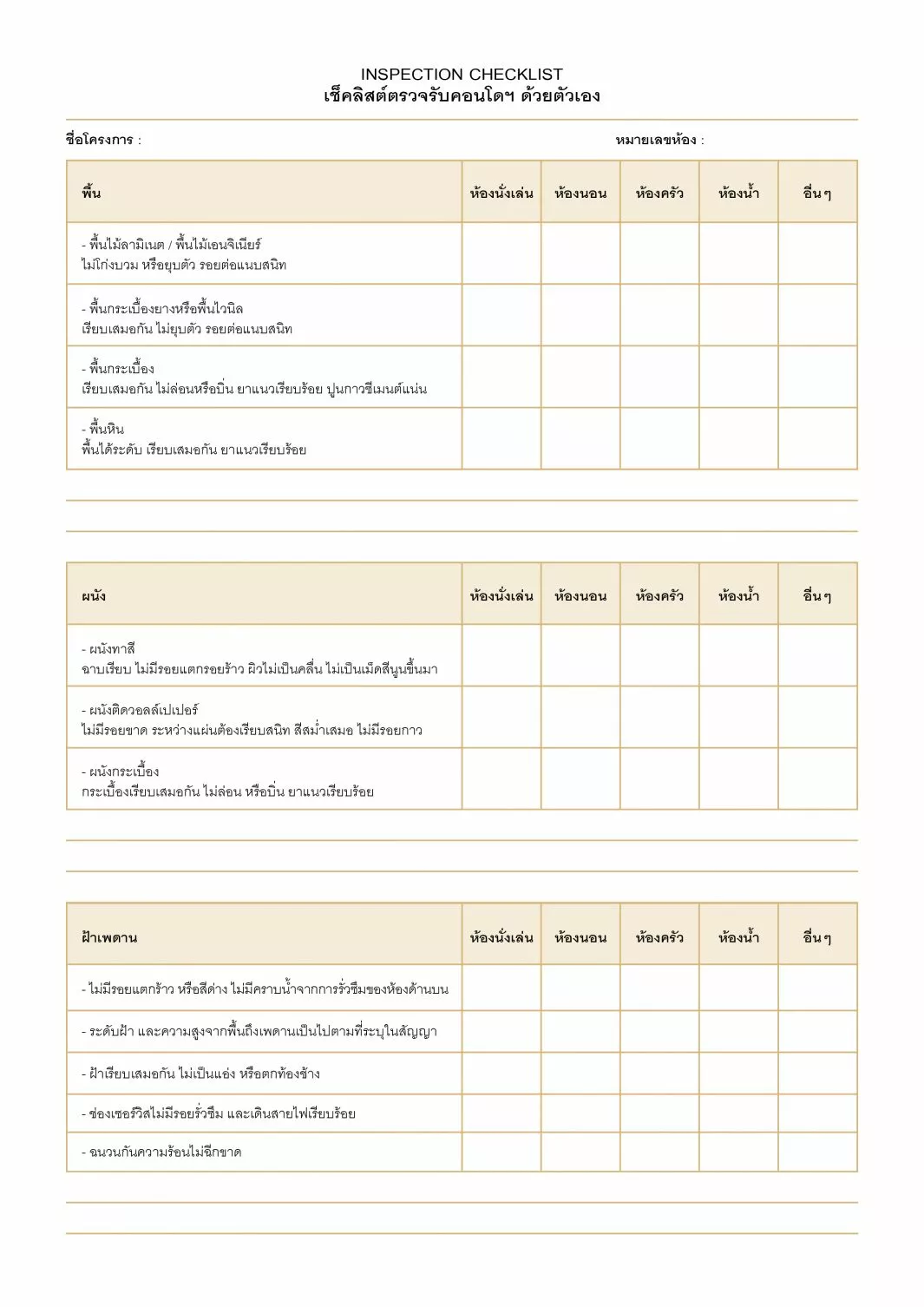
Look along walls and ceilings in side light for cracks, waves, stains and poor paint repairs. Tap tiles gently for suspicious hollow areas and inspect grout lines, skirting and transitions between materials. Timber or laminate should sit flat without swelling, large gaps or sharp edges. Mark each defect with removable tape and include a wide photo plus a close detail.
Doors And Windows
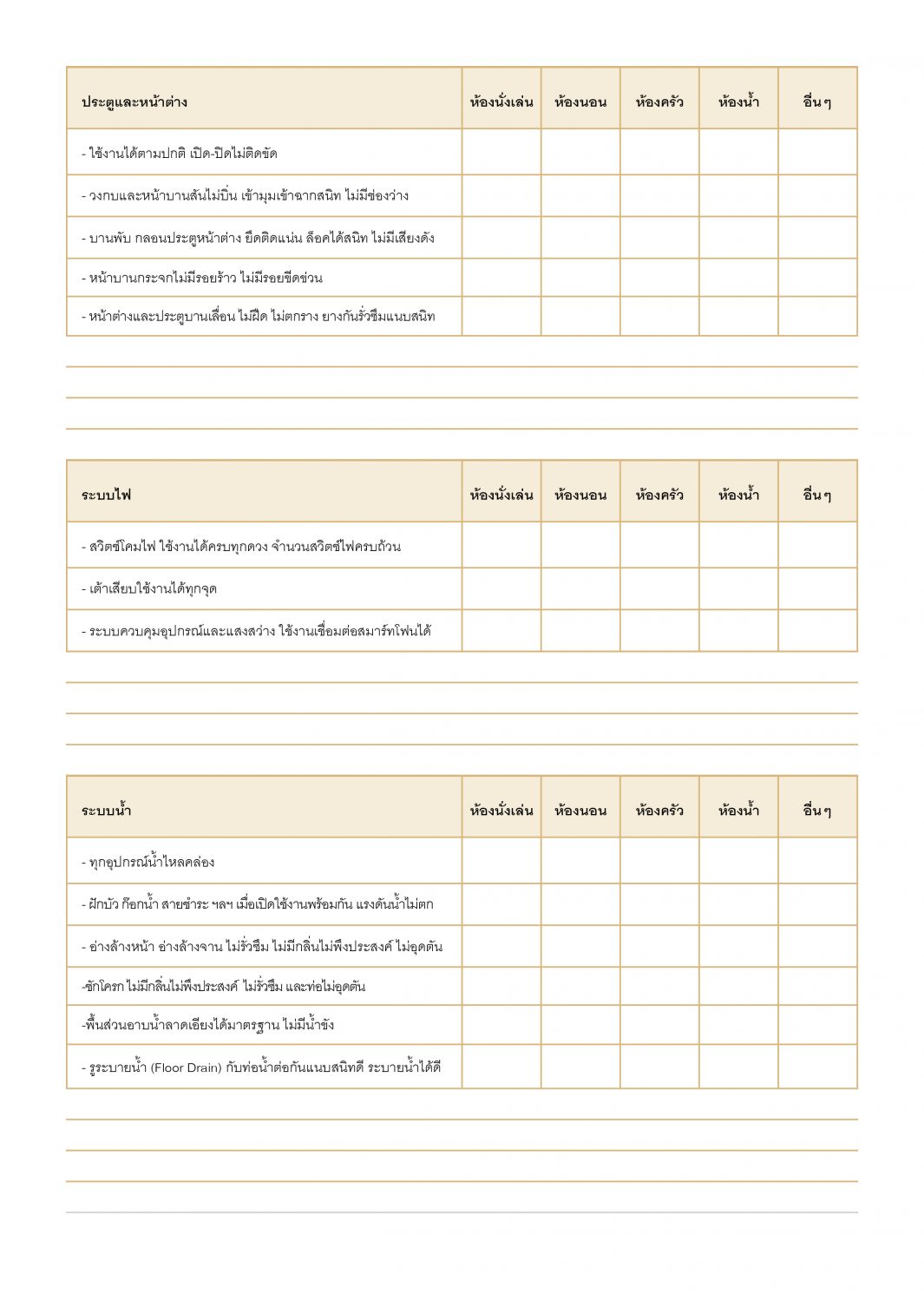
Open, close and lock every door and window several times. Frames should be aligned, seals continuous and glass free from cracks or deep scratches. Test balcony sliders for smooth travel and water-resistant seals. Check that door leaves do not scrape the floor and that handles, stops and hinges are secure. Confirm every supplied key and access card.
Water And Drainage
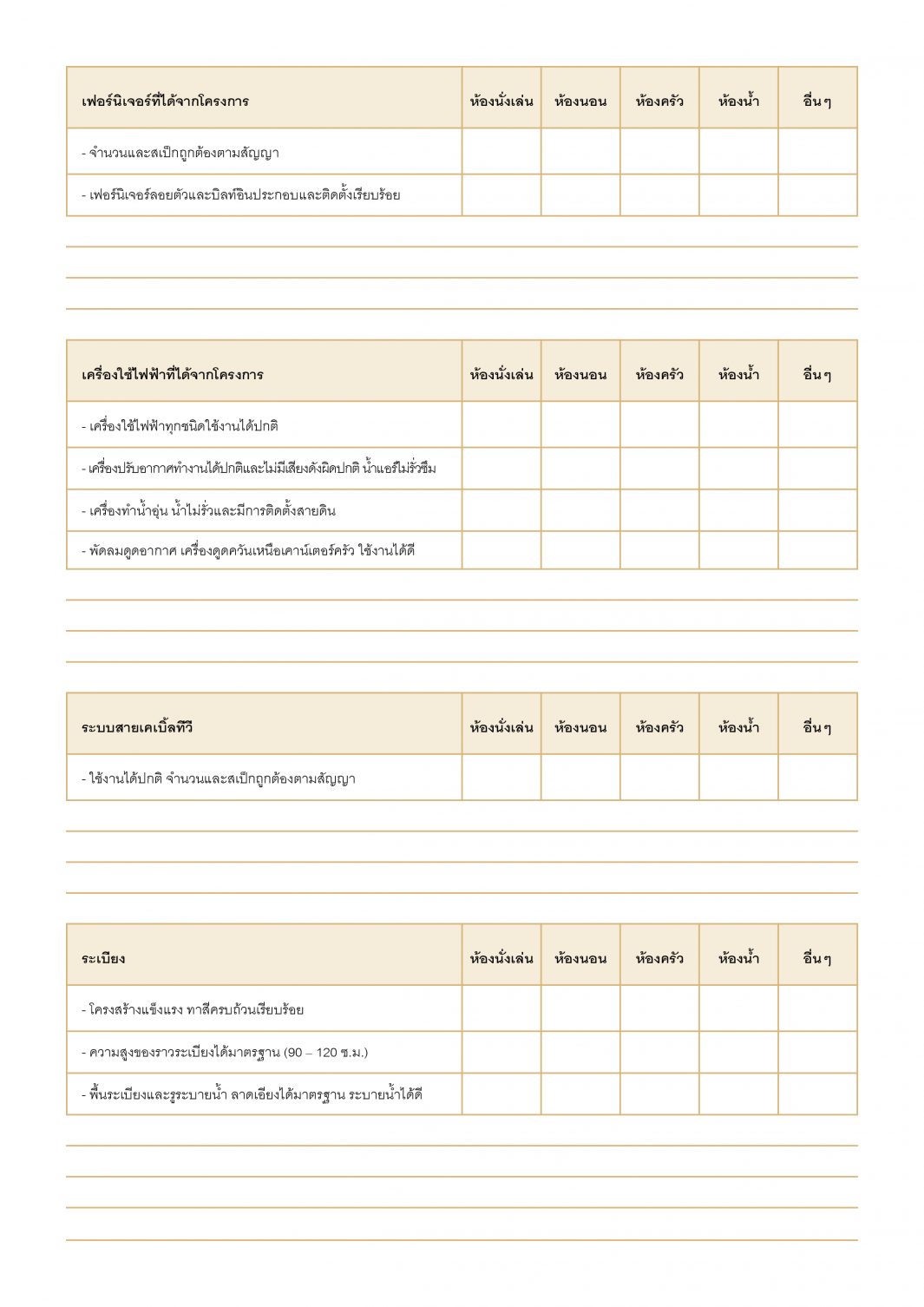
Run every tap and shower, flush toilets repeatedly and fill basins enough to test plugs and overflow paths. Look under cabinets for drips, smell floor drains and pour water across bathroom and balcony floors to see whether it reaches the drain without persistent pooling. Ask how hot water is controlled and test it at each connected outlet.
Electrical Load
Test every socket with a charger or lamp and operate all switches, lights, fans and circuit controls. Check the distribution board labels and confirm the safety devices specified. Turn on several appliances together to expose obvious trips or unstable supply. Electrical concerns require a qualified professional; do not remove covers or touch exposed conductors during a handover visit.
Air Conditioning
Run every indoor unit long enough to feel stable cooling and listen for unusual vibration. Check that condensate drains correctly and does not drip inside or onto an inappropriate exterior area. Inspect remote controls, filters and access panels. Ask where outdoor units are located and whether future servicing can be completed without entering another property.
Kitchen And Joinery
Open every cabinet and drawer, checking alignment, soft-close action, shelf supports and damage around screws. Test the hob, hood, oven, refrigerator and washing machine if included, following safe setup instructions. Worktops should be secure and sealed around sinks. Confirm there is practical access to shut-off valves, sockets and appliance connections after the cabinets are full.
Balcony Safety
Measure or verify guard heights and inspect railings, glass panels and fixings for movement or damage. Doors should lock securely, drainage should run away from the room and exterior finishes should not create sharp edges. Families with children or pets should assess climbable furniture, gaps and neighbouring ledges separately; legal compliance does not guarantee suitability for every household.
Record And Close
Create one numbered defect list with room, location, description and photograph. Ask the developer to acknowledge it, assign a target date and state how reinspection will work. Do not rely on a verbal promise that everything will be handled later. Keep copies of forms, emails, access records and photographs, and obtain independent legal advice if acceptance or payment rights are unclear.
Common Areas
The private unit is only part of the purchase. Compare promised shared facilities with the sales materials and contract: lobby access, lifts, fire exits, parcel handling, parking, pool, gym, waste rooms and security systems. Note unfinished or inaccessible areas without obstructing staff or residents. Ask when the juristic person will assume responsibility, how defects in common property are recorded and whether construction continues elsewhere in the building. Review fire escape routes and stair doors personally. A glossy pool cannot compensate for an unreliable lift, poor drainage or unclear access control, and common-area issues can shape monthly costs long after the handover ceremony.
At A Glance
- Bring: Contract, finish schedule, floor plan, tape, level, charger and torch.
- Photograph: One wide image and one close image for each defect.
- Test: Water, drainage, sockets, lights, air conditioning, locks and appliances.
- Record: Number every defect and obtain written acknowledgement.
- Caution: This checklist is general information, not legal or engineering advice.
Keep Planning
Browse more TFT coverage in Properties, Travel and Deals.
Questions
Should I hire an inspector?
It is sensible for high-value units, complex systems or buyers who cannot inspect construction quality confidently.
Can I inspect after taking keys?
You can report later defects, but the pre-acceptance visit gives the clearest chance to record visible issues before occupancy.
What if the developer promises a repair?
Ask for the defect, repair and target date in writing, then reinspect before signing it off.
Should I test every socket?
Yes, using a safe plug-in device; leave panels and wiring to a qualified professional.