
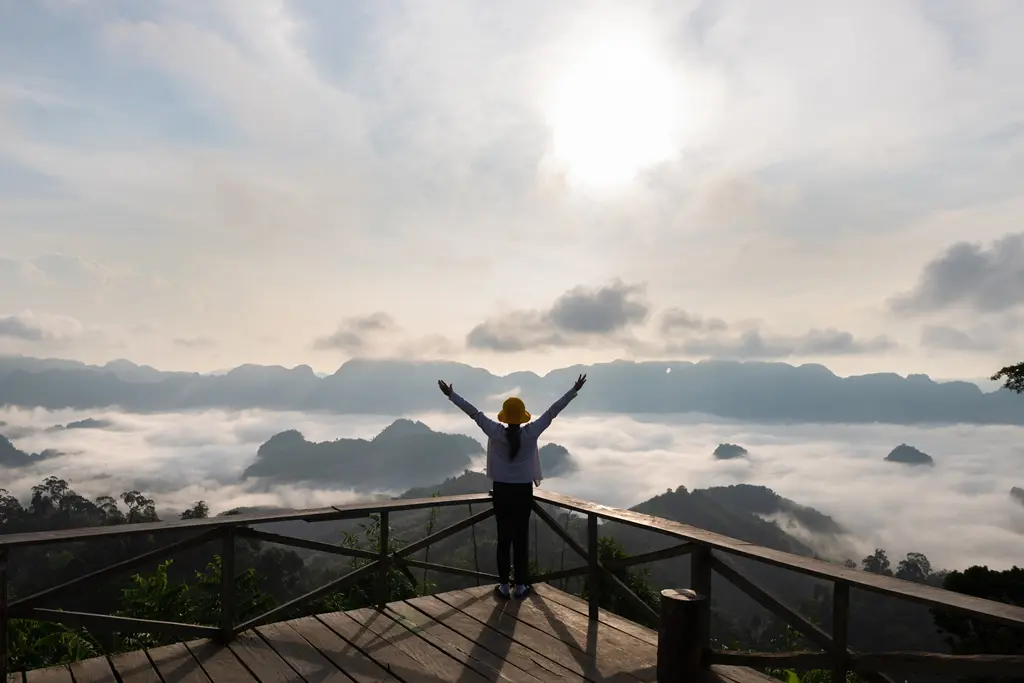
Thailand’s green season rewards early risers with cloud moving through valleys, bays and forested ridges, but no viewpoint can promise a sea of mist on demand. Doi Tapang in Chumphon, Samet Nangshe in Phang Nga and Ay Yer Weng in Betong offer three different landscapes: inland mountain layers, limestone islands above mangroves, and a managed glass skywalk looking across the far south.
Choose according to the wider trip, not a single forecast icon. Doi Tapang suits a Chumphon road journey, Samet Nangshe connects naturally with Phang Nga or northern Phuket, and Ay Yer Weng deserves a dedicated Betong plan. All require pre-dawn transport, wet-surface judgement and a fallback that still feels worthwhile if cloud closes the view completely.
Understand Mist
Mist forms through moisture, cooling and local terrain; rain the previous day can help without guaranteeing a visible layer at sunrise. A cloud deck can sit below the lookout, wrap around it or disappear early. Check radar, local updates and visibility, then accept uncertainty. The goal is a safe morning in a living landscape, not forcing one exact image from conditions that cannot be booked.
Choose Doi Tapang
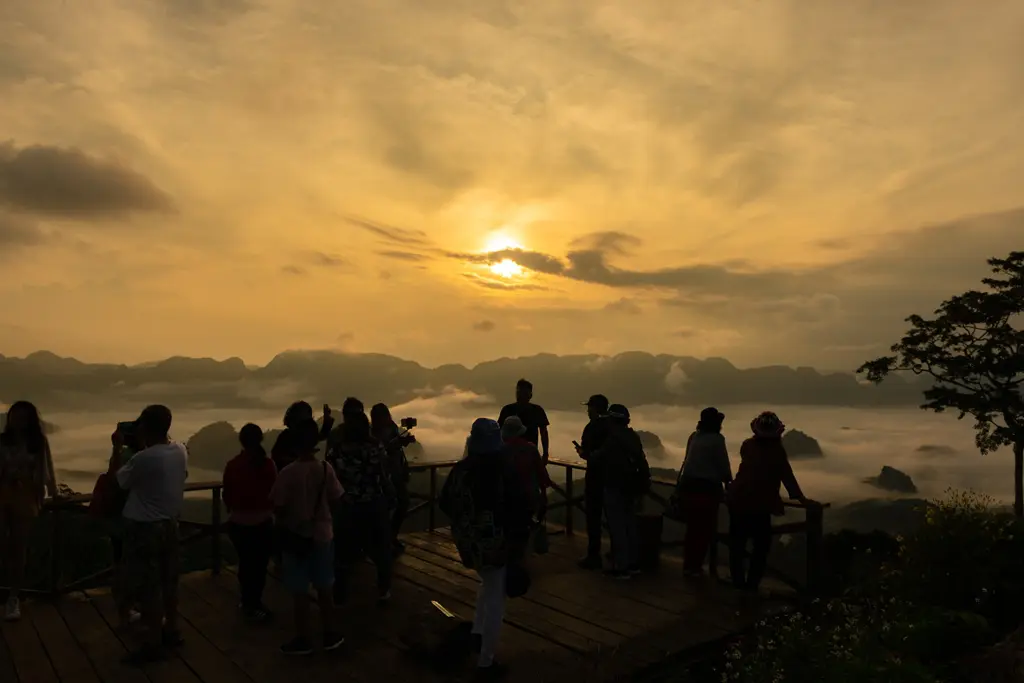
Doi Tapang rises in Sawi district, Chumphon, around ninety minutes by road from the provincial city. The viewpoint is known for early mist and camping access. A local vehicle familiar with the final approach is preferable before dawn. Confirm whether camping, toilets and road transfer are operating, and bring enough food and water without assuming a remote viewpoint has a full cafe every morning.
Choose Samet Nangshe
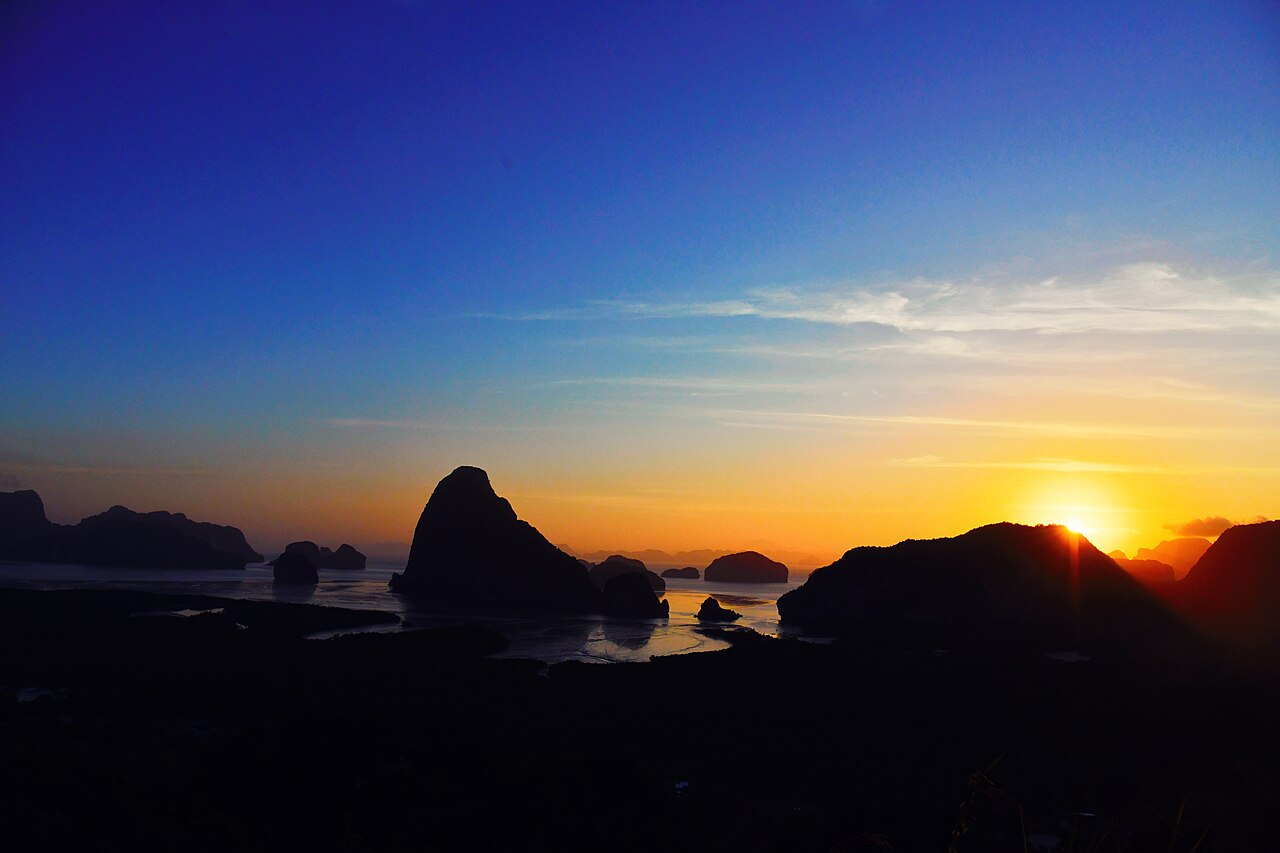
Samet Nangshe overlooks Phang Nga Bay from Takua Thung, south of Khao Lak and north of Phuket. The public viewpoint involves an uphill approach, with a local shuttle often available. Its sunrise geometry differs from a mountain valley: mangroves and limestone karsts create the layers. Expect photographers, protect equipment from sudden showers and never stand on an unprotected edge to clear another tripod.
Choose Ay Yer Weng
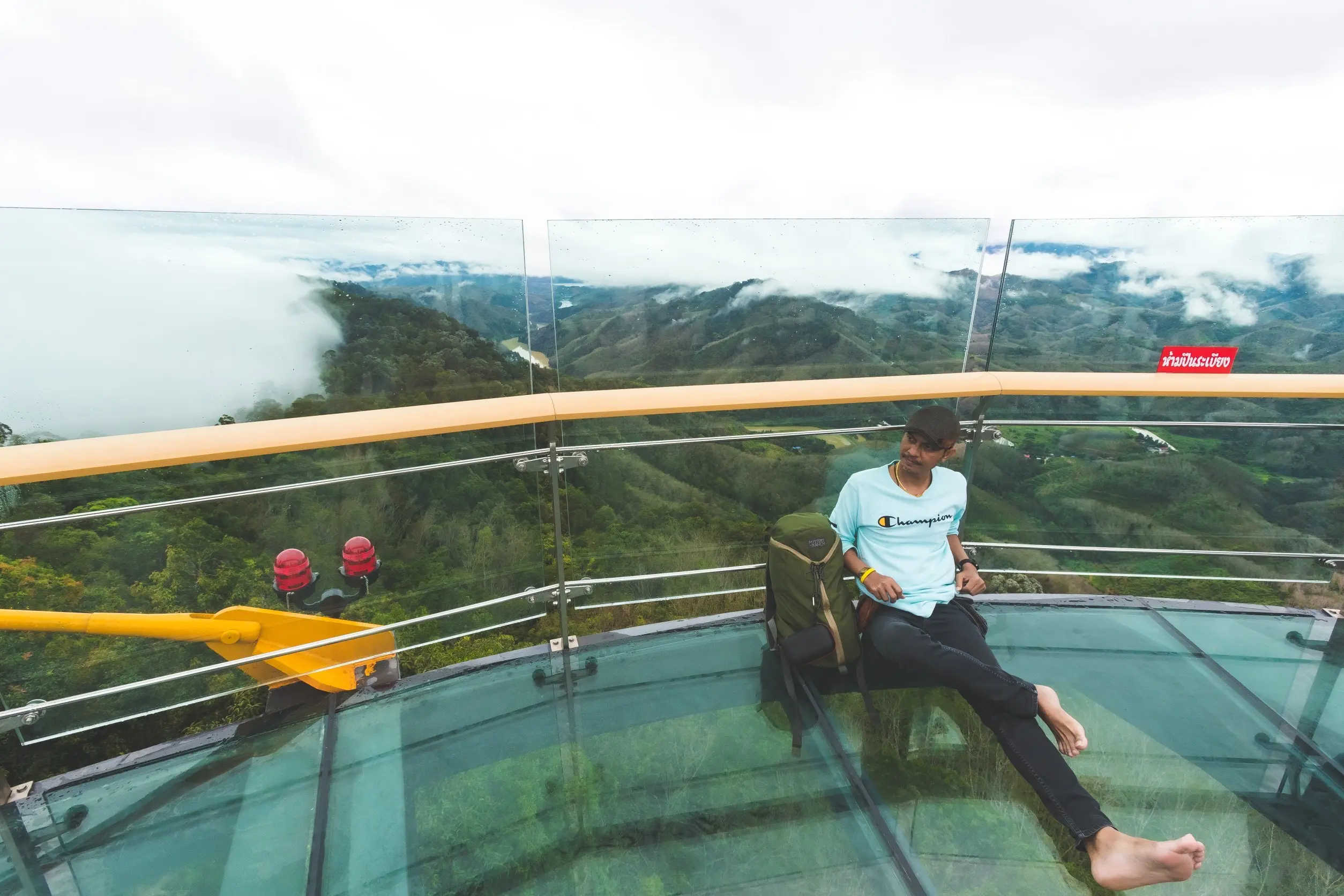
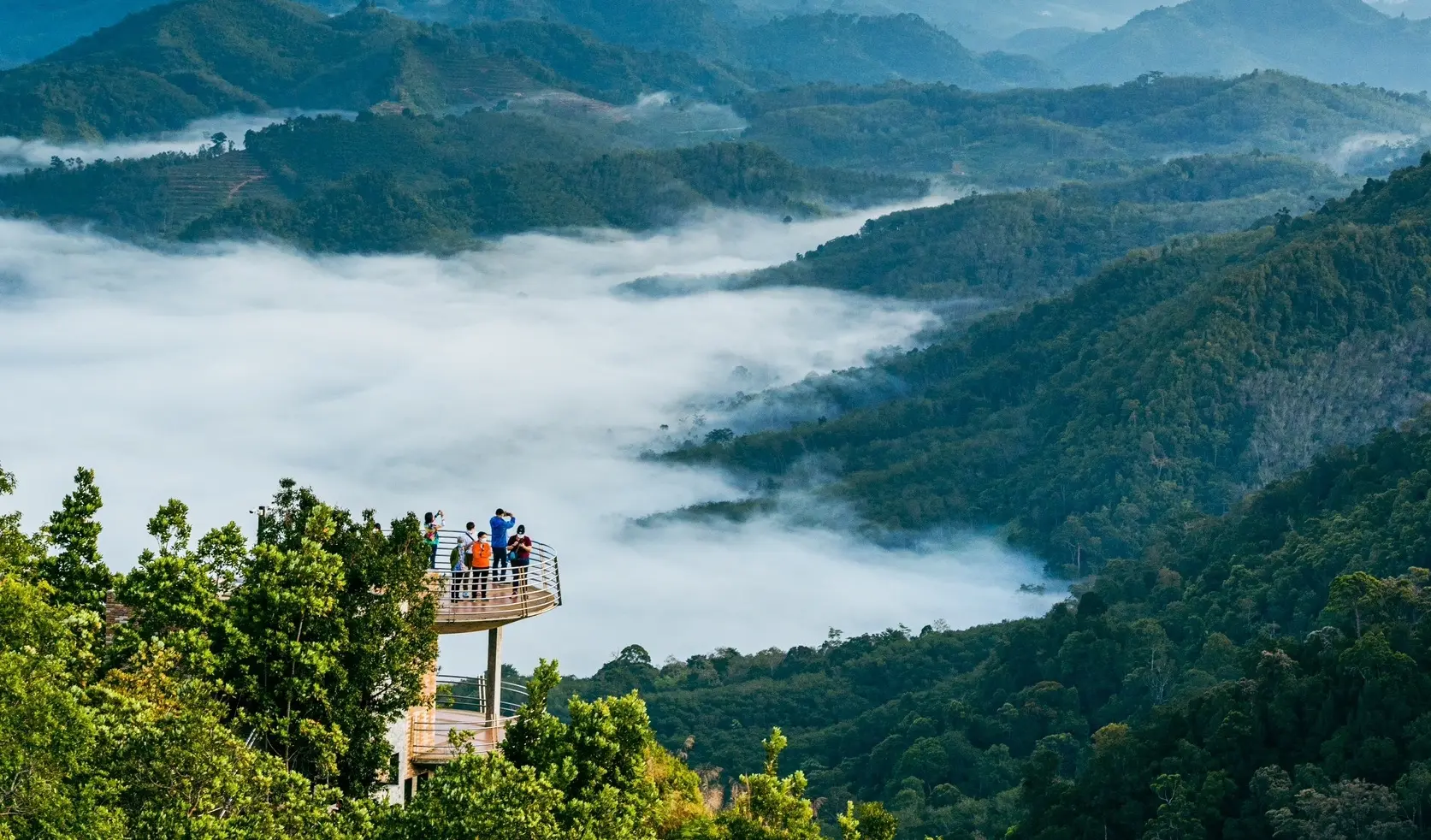
Ay Yer Weng Skywalk in Betong district opens early for mist viewing and adds a transparent floor at the viewing tip. The published information lists dedicated shoe covers for the glass and local transfer from the base. Border-region road time is significant, so stay nearby and use a trusted driver. Check operation directly because heavy rain, wind or maintenance can close exposed sections.
Hire The Driver First
A 04:00 departure is not the moment to discover that a ride-hailing car cannot find the road. Arrange the vehicle, pickup point, return wait and total price in advance. Share the official pin and ask whether the driver has completed the final approach in darkness. Motorbikes expose travellers to rain, wildlife, debris and poor visibility; choose a vehicle suited to the actual road and weather.
Pack For Wet Ground
Wear shoes with real tread, carry a compact rain layer and keep a dry bag for phone, camera and spare clothing. A cotton hoodie becomes heavy after rain and is not a substitute for waterproofing. Bring a small torch even when the driver has headlights; car parks and steps can be dark. Avoid dangling umbrellas near other visitors on a windy platform.
Protect The Camera
Temperature change can fog lenses before the sky clears. Keep equipment bagged while it adjusts, use a lens cloth and avoid constant lens changes in drizzle. A phone in a waterproof pouch may capture more than a complicated setup. Keep tripods within marked areas and never block a staircase. The landscape matters more than equipment placed where it creates a fall hazard.
Wait Past Sunrise
The best moment may arrive twenty minutes after the official sunrise, when cloud thins or light reaches the lower layers. Do not leave immediately because the first horizon is grey. At the same time, set a sensible cutoff based on the return road and weather. A viewpoint is not safer simply because daylight has arrived; heavy rain can worsen drainage and falling debris.
Use A Fallback
Near Doi Tapang, shift to a slow Chumphon food or community day; around Samet Nangshe, use sheltered Phang Nga stops without committing to rough water; in Betong, favour town food and indoor history if the skywalk closes. Avoid replacing a cancelled hill with an improvised boat, cave or waterfall during severe weather. A good fallback reduces the pressure to take a marginal risk.
Leave The Ridge Clean
Carry every wrapper, tissue and coffee cup back down. Do not feed dogs or wildlife, fly a drone without confirmed permission or walk outside barriers to escape a crowd. Local communities bear the cost of litter and rescue. Hiring local transport and buying breakfast nearby can distribute value, but only if the visit also respects noise, property and early-morning village life.
Keep Planning
Browse more TFT coverage in Travel, Travel and Deals.
Questions
Which viewpoint is closest to Phuket?
Samet Nangshe in Phang Nga is the natural choice from northern Phuket.
Is a sea of mist guaranteed after rain?
No. Moisture helps, but cloud height, wind and temperature decide whether the view opens.
Can I arrive by ride-hailing car before dawn?
Do not rely on finding one at the last minute. Arrange a driver and return plan in advance.
What should I do if the viewpoint closes?
Use a safe town, food or indoor fallback rather than improvising another exposed activity in severe weather.
Practical Information
- Doi Tapang: Sawi district, Chumphon; mountain mist and camping setting.
- Samet Nangshe: Takua Thung, Phang Nga; east-facing view over mangroves and bay karsts.
- Ay Yer Weng: Betong district, Yala; early-opening glass skywalk and local base transfer.
- Best planning rule: Stay nearby and arrange a pre-dawn driver who knows the final approach.
- Weather rule: Check radar and local closure notices; no mist view is guaranteed.
- Season context: Review current green-season viewpoint inspiration