

Thailand Earth Trail Season 4 brings runners to Sai Yok, Kanchanaburi, on 10 and 11 October 2026. The official registration listing offers 10km, 20km, 40km and 60km categories, turning the weekend into very different experiences depending on distance. A runner choosing between them should consider recent trail time, climbing comfort, heat management and the ability to remain self-sufficient, not only road-race pace.
Choose distance honestly
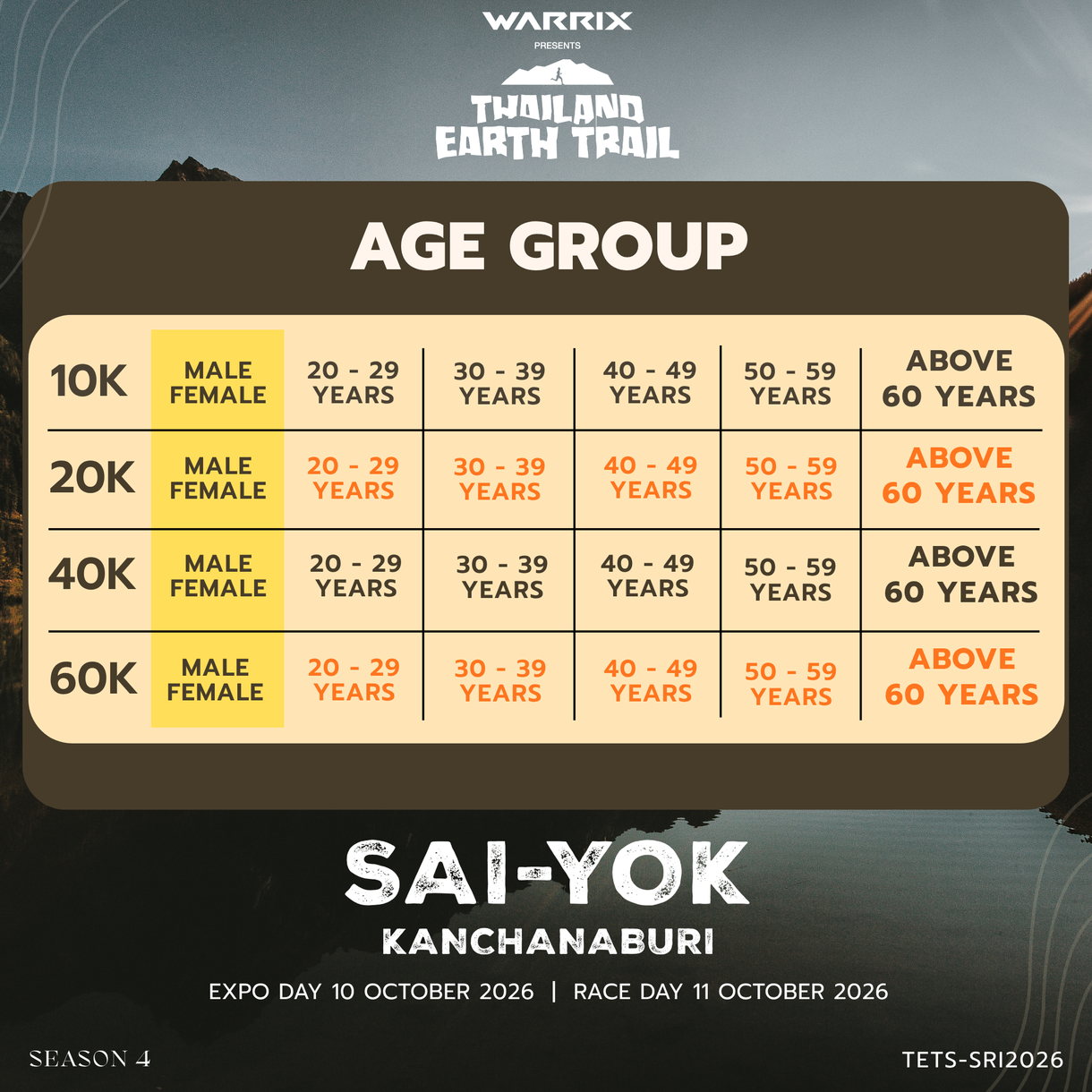
The 10km event is the most approachable, but a short trail race can still include steep, slippery and uneven ground. The 20km category demands more deliberate pacing and nutrition. At 40km and 60km, the event becomes an endurance project that requires trained legs, tested equipment and a plan for several hours of changing conditions. Review the organizer’s current route information, elevation and cut-off times before registering, because distance alone does not describe trail difficulty.

Entry prices and inclusions
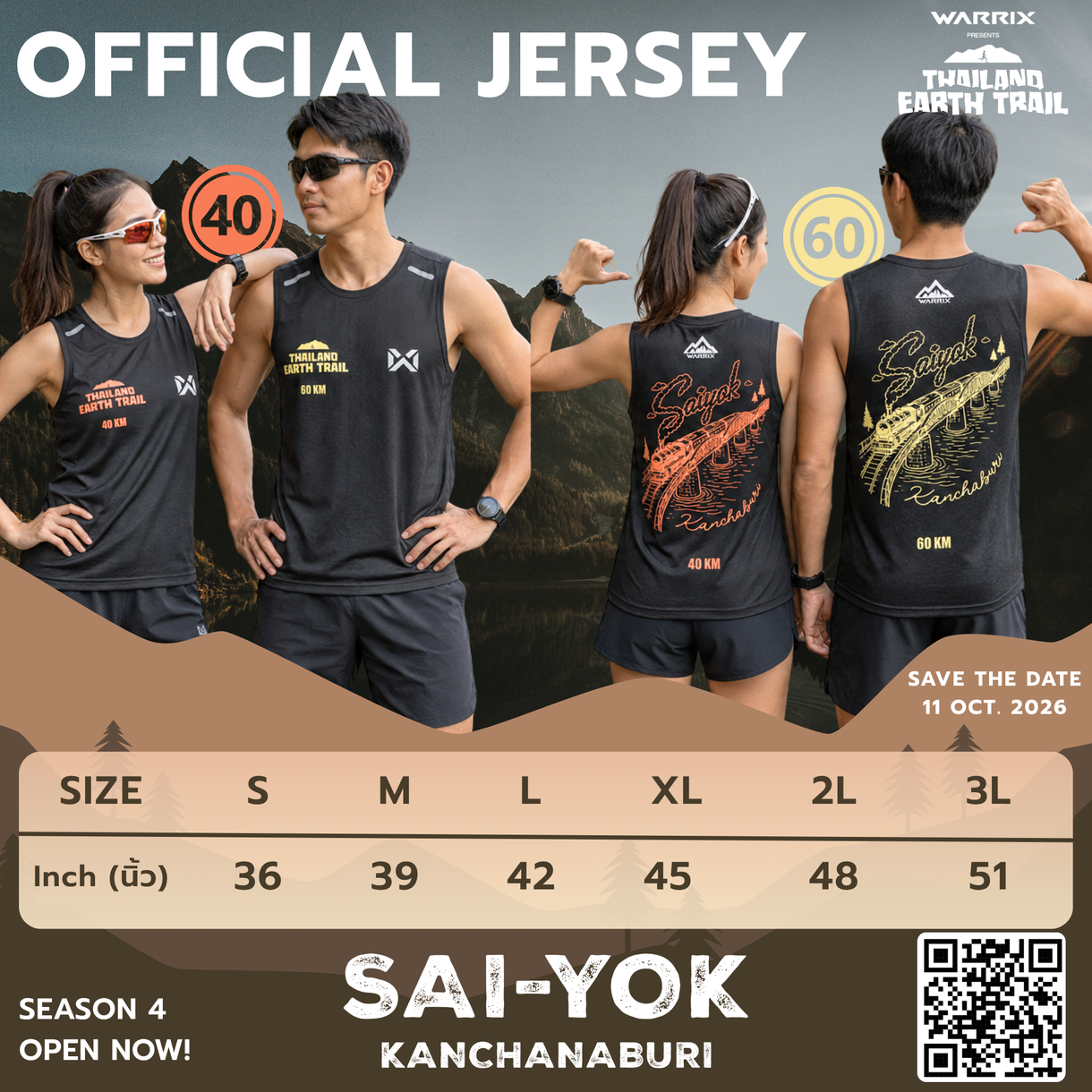
The live registration data lists regular prices of THB 1,490 for 10km, THB 1,990 for 20km, THB 2,490 for 40km and THB 2,990 for 60km. Earlier tiers may be cheaper when available, but the checkout page is the authority on current inventory. The organizer lists a race shirt and medal, with finisher shirts for the 40km and 60km runners who complete within the rules. On-course water and electrolyte support, finish food and race-time accident cover are also listed.
Mandatory kit matters
The organizer requires category-specific equipment and reserves the right to inspect it before or during the race. Do not treat the list as a formality. A hydration container, charged phone, light, weather layer or emergency item only helps when it has been tested in training and is easy to reach. Lay everything out several days before departure, replace weak batteries, label medication and check the pack for rubbing when full.
Train for the surface
Road fitness helps, but Sai Yok trail conditions reward foot placement and controlled effort. Include climbs, descents and uneven surfaces in preparation. Practice hiking steep sections before the heart rate spikes, because efficient walking is a legitimate trail skill. Descending strength often fails late, so add gradual eccentric leg work rather than attempting a final-week crash programme. In the last days, reduce volume, sleep well and arrive healthy rather than chasing one more hard session.
Heat and hydration
October in Kanchanaburi can feel hot and humid even when the forest provides shade. Start drinking before thirst becomes urgent, but avoid consuming beyond personal needs. Use the same electrolyte concentration and food tested in training. Longer-distance runners should carry calories that remain palatable after several hours and know where aid stations are expected. Any dizziness, confusion, chest pain or loss of coordination is a reason to stop and seek event medical help.
Travel to Sai Yok
Sai Yok lies west of Kanchanaburi city, so race-weekend accommodation should be chosen around the confirmed start area rather than the district name alone. Ask the property about early breakfast, late arrival and transport before booking. Drivers should fill fuel before reaching more rural stretches and avoid planning a long return immediately after an ultra-distance finish. Groups can designate a rested driver or stay an extra night.
Race morning
Collect the race pack within the announced window, pin the bib where officials can see it, and arrive early enough for kit inspection and toilet queues. Begin conservatively; the first climb is not the place to prove fitness. Yield safely on narrow sections, carry wrappers out, and follow marshal instructions. The organiser may change routes or safety measures in response to conditions, so read the final briefing even if an earlier version has already been saved.
A responsible trail weekend
The event promotes sport tourism and local economic benefit. Runners can support that aim by using local accommodation and food businesses, respecting residents, keeping noise low before dawn and leaving no litter. Sai Yok is not just a race surface. Treating the landscape and community well is part of finishing properly, whatever the clock says.
Support crews and spectators
Friends and family should use only approved viewing areas and never drive onto a course or aid-station access road. Agree on realistic meeting times, because trail splits and mobile coverage can make live tracking unreliable. A support bag can hold dry clothing, sandals, food and any regular medicine for after the finish. Spectators need their own water and sun protection too. If a runner misses an expected time, follow the organiser’s official contact process rather than entering the route to search independently.
Recovery before departure
Walk for a few minutes after finishing, change out of wet clothing and begin normal food and fluid intake gradually. Check feet for blisters and seek medical advice for persistent pain, confusion, breathing difficulty or dark urine. Long-course runners should avoid driving until alert, fed and rested. The day after the race, gentle movement is usually more useful than forcing a hard workout. Save the organiser’s post-race notices in case results, photographs or incident information are updated.