
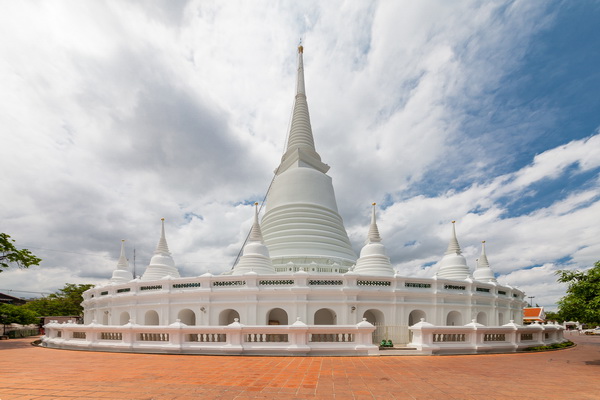
Wat Prayurawongsawat Worawihan, usually shortened to Wat Prayoon, stands on the Thonburi side of Memorial Bridge and deserves more than a quick photograph of its white chedi. The temple was begun in 1828 during the reign of Rama III and completed in 1836. Its grounds bring together an immense early Rattanakosin chedi, a museum of relics and Buddha images, a formal ubosot and wihan, and Khao Mo, a miniature mountain landscape surrounded by water.
Begin at the chedi
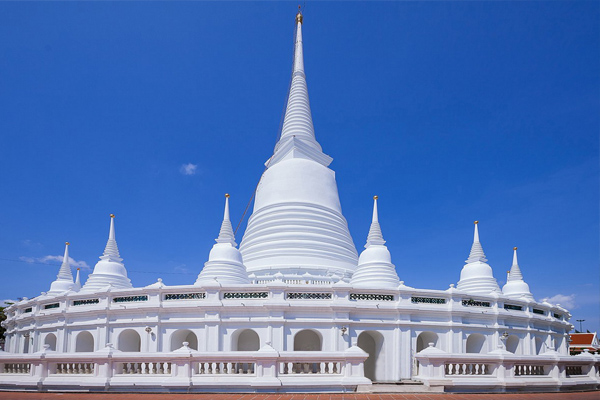
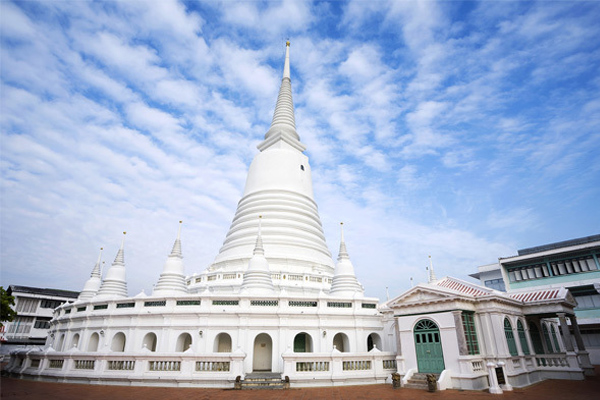
Phra Borommathat Maha Chedi is the visual and structural centre. The temple records a height of 60.525 metres, a diameter of 50 metres, 54 niches around the lower level and 18 smaller chedis above. Its interior preserves a central brick pillar known as the sao kru, evidence of an Ayutthaya-derived construction technique. Enter quietly, follow any one-way route and do not touch devotional objects.
Visit the museum
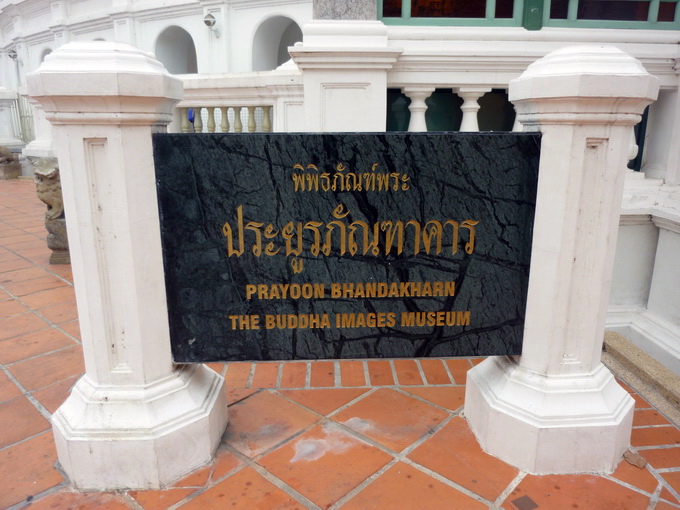
Prayoon Bhandakharn Museum occupies space at the chedi base and displays Buddha images, amulets and relic-related material discovered during restoration. The temple records 270 ancient Buddha images in one chamber and thousands of amulets in another. Objects here are religious and archaeological, not decorative props. Photography may be restricted, so ask before using a camera and keep voices low.
Walk around Khao Mo
Khao Mo, sometimes called Turtle Hill, is a constructed mountain in a pond with pavilions, a Gothic-style mondop and small monuments. It reflects the nineteenth-century taste for miniature landscapes while creating a cool, shaded contrast to the open chedi court. Do not feed animals unless the temple explicitly permits it, and keep children close to the water and uneven stone edges.
Dress with respect
Cover shoulders and knees, remove hats inside worship spaces and take shoes off where signs or local practice require. Do not sit with feet pointing toward a Buddha image or climb structures for a photograph. Monks may be moving between duties, so ask before photographing people. The grounds are active religious space even when the architecture attracts heritage visitors.
Use the published hours
The temple’s current site lists daily opening from 8 a.m. to 5 p.m. Museum access can be narrower, and ceremonies may temporarily change routes. Call 02 465 5592 if the museum is the main reason for travelling. Morning brings cooler light and fewer groups. Avoid arriving close to closing if you want time inside the chedi and museum.
Reach the Thonburi bank
Wat Prayoon is on Prajadhipok Road in Wat Kanlaya, close to Memorial Bridge. MRT Sanam Chai plus a river crossing or local ride works well, while taxis can approach directly. The area is walkable but exposed to heat. Use the current map pin and allow extra time around bridge traffic. River services can change with weather and operating schedules.
Pair the neighbourhood
The Kudi Chin area supports a rich half-day with Wat Kalayanamit, Santa Cruz Church, local lanes and riverside food. Keep the itinerary geographically tight rather than rushing to another district. Religious sites represent different communities, so dress and behave for the most conservative stop. A local snack or quiet cafe break makes the walk easier in midday heat.
Read the restoration story
The chedi suffered damage and long periods without repair before major conservation in the modern era. The 2006 restoration led to important discoveries, and the project later received a UNESCO Asia-Pacific Award of Excellence in 2013. That recognition concerns the conservation work, not a World Heritage listing. The distinction matters because visitors often repeat the wrong label.
Plan your next stop
Quick questions
What are the opening hours? The temple’s current site lists daily opening from 8 a.m. to 5 p.m.
Is Wat Prayoon a UNESCO World Heritage Site? No. Its chedi restoration received a UNESCO Asia-Pacific conservation award.
Wat Prayoon offers a compact lesson in Bangkok’s early nineteenth-century architecture, religious continuity and modern conservation. Give the chedi interior and museum as much attention as the exterior silhouette, then continue on foot through Kudi Chin. A slow, respectful visit reveals far more than a checklist of photogenic structures.
Look beyond the landmark
The great chedi dominates photographs, but the smaller buildings explain how the complex functions. Look at the carved gables, glazed roof tiles and principal Buddha images in the ubosot and wihan, then compare those formal spaces with the playful landscape of Khao Mo. The old red iron fence is another thread in the temple’s history and survives as more than decoration. Read signs before entering rooms because some areas may close for worship or maintenance. If a ceremony is underway, remain at the edge or return later. A temple guide should help visitors recognise relationships between architecture, ritual and community, not simply move them from one object to the next. Sit briefly in the shade and listen to how worship, school activity and neighbourhood life overlap around the grounds.