
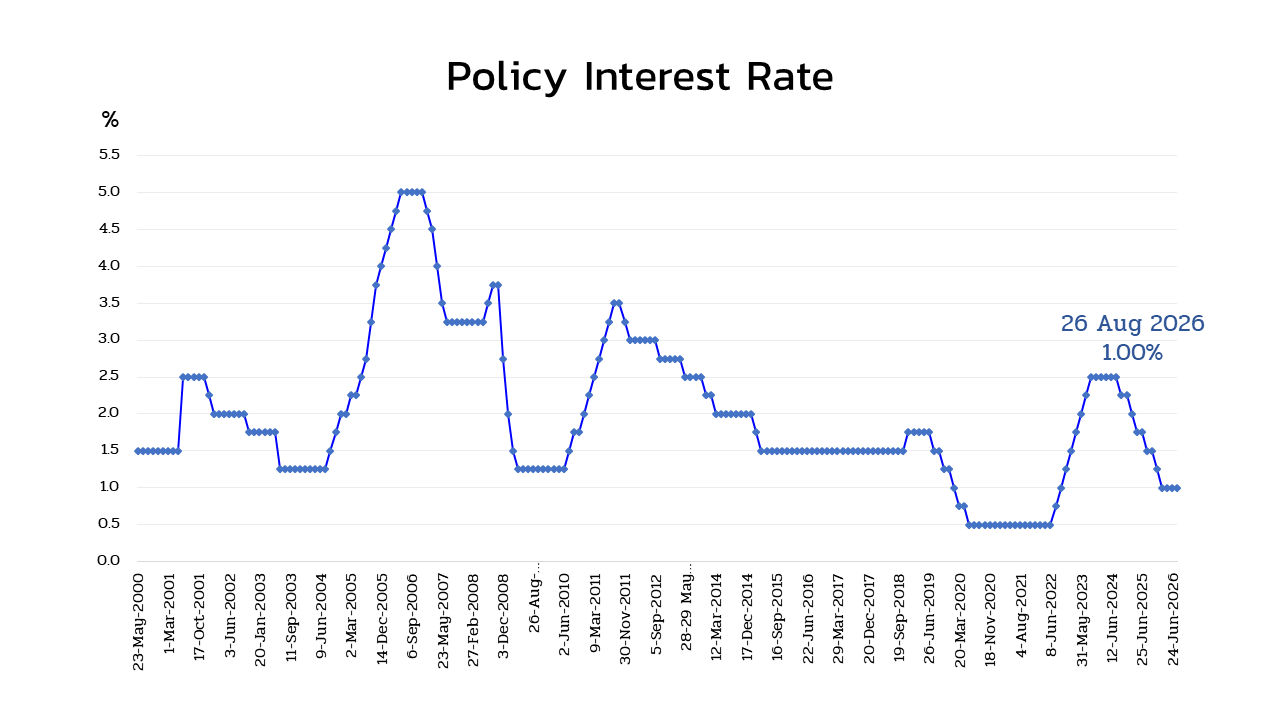
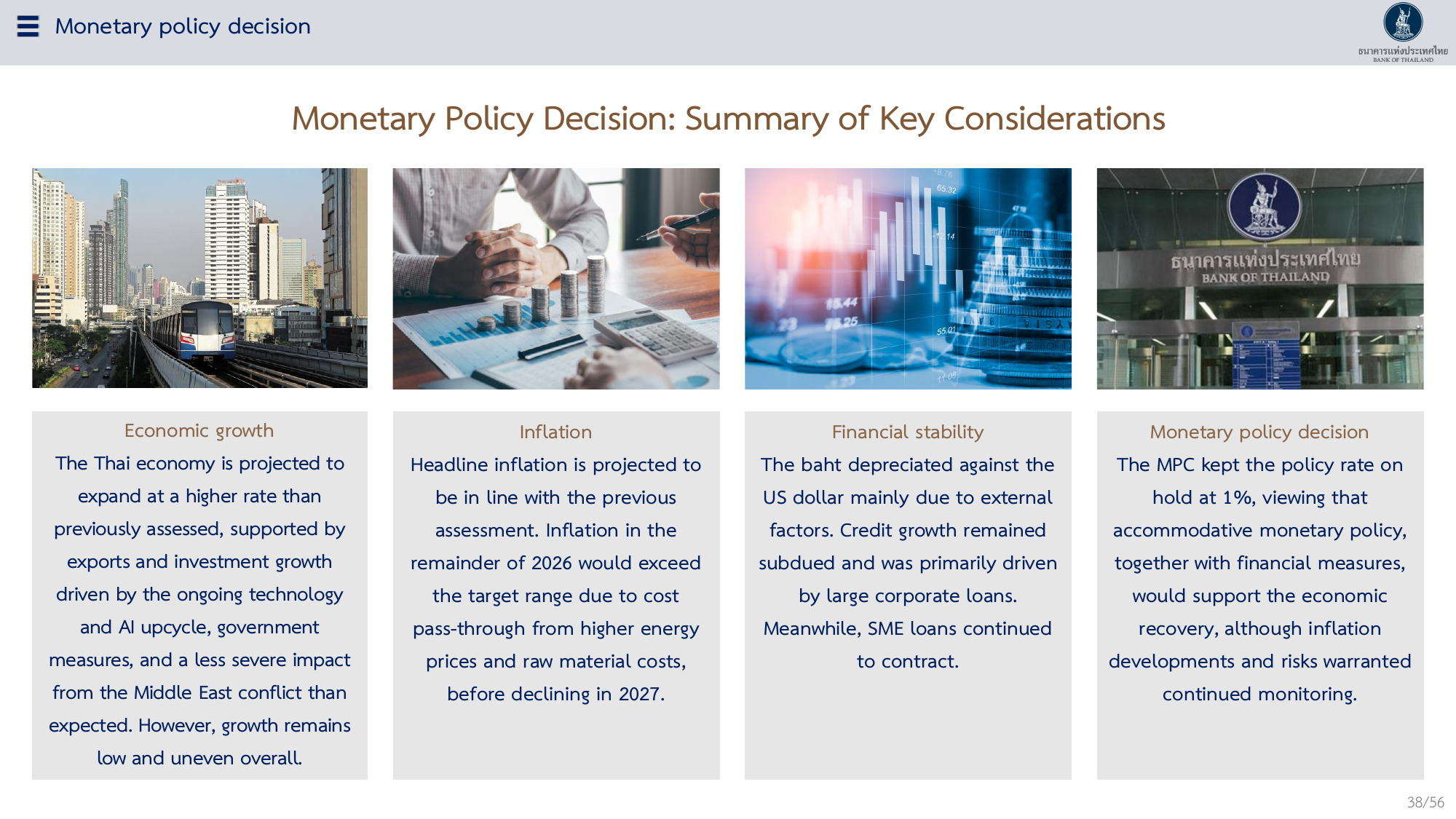
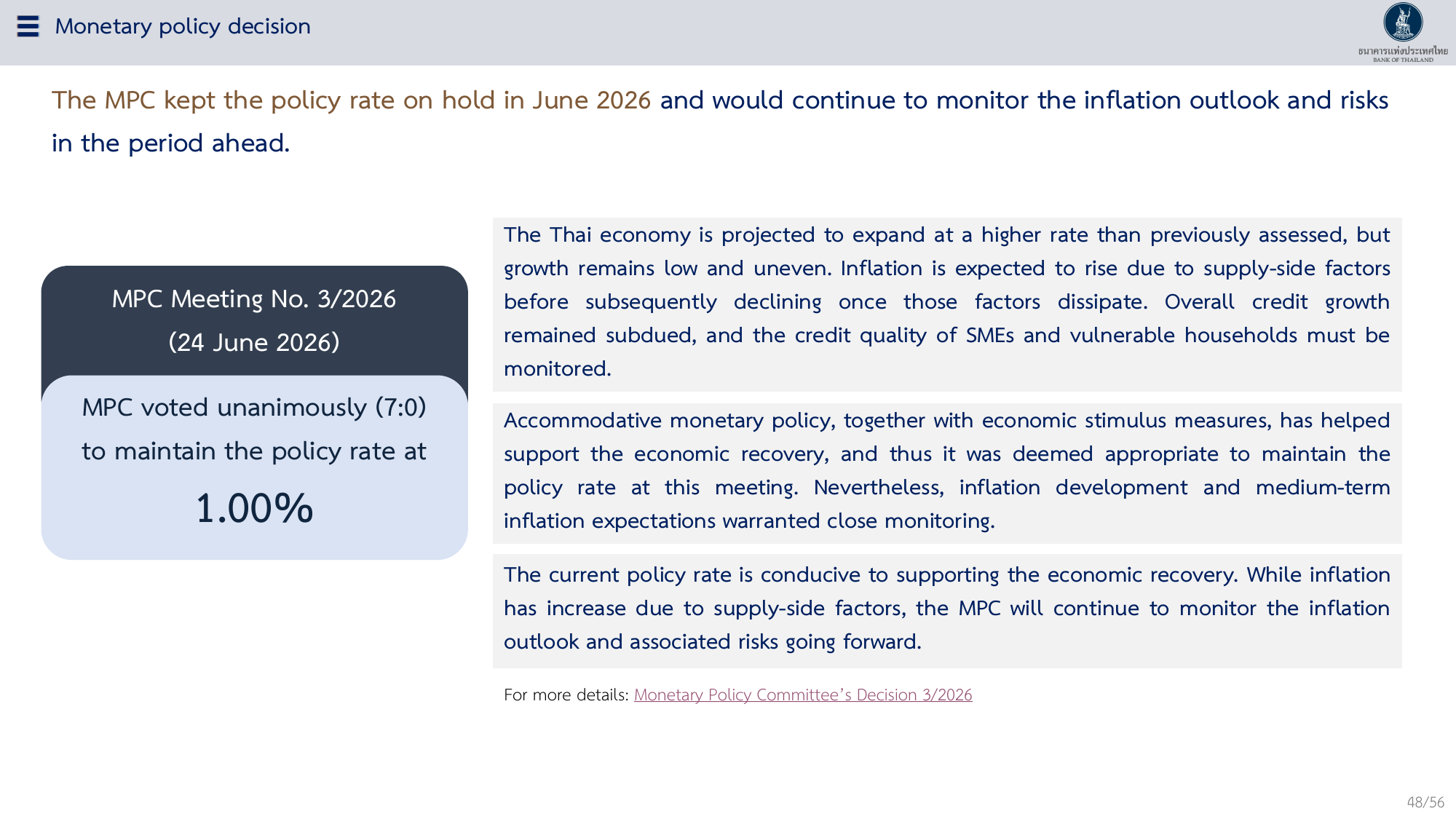
The Bank of Thailand kept its policy rate at 1 percent on 26 August 2026. The Monetary Policy Committee voted unanimously to hold the one-day bilateral repurchase rate, judging the current accommodative stance appropriate while growth remains uneven and inflation risks require monitoring. The next scheduled decision is 28 October, so 1 percent is the current policy setting, not a promise for the rest of the year.
A policy rate is not the interest rate printed on a savings account, mortgage or credit card. It influences financial conditions, but each bank prices products using funding costs, competition, borrower risk, loan type and contract terms. Households should therefore use the decision as a prompt to check their actual rates, not assume every deposit or monthly instalment changes immediately.
Know The Rate
Thailand’s policy rate is the rate on one-day bilateral repurchase transactions used by the central bank to signal its monetary stance. The MPC sets it six times a year under the normal schedule. It guides short-term market conditions and can influence broader bank pricing, but transmission takes time and varies across products. A 1 percent policy rate does not mean consumers can borrow at 1 percent.
Check Savings Accounts
Banks may adjust deposit rates after policy changes, but the amount and timing differ by account. Compare the current rate, tiered balance rules, introductory period, withdrawal limits and deposit-protection status. A promotional account with a high headline may pay that rate only below a balance cap or after monthly activity. Use the bank’s official rate sheet rather than an old comparison post.
Review Fixed Deposits
Existing fixed deposits normally follow the contracted rate until maturity, while new placements use the current offer. Before rolling over, compare term, early-withdrawal penalty and the value of keeping emergency cash liquid. Chasing a slightly higher annual rate can be poor value if the money is needed next month. Record the maturity date and renewal instruction instead of relying on a reminder call.
Read Loan Contracts
Variable-rate home and business loans may reference MRR, MLR, MOR or another benchmark, plus or minus a margin. Check which reference applies, how often it resets and whether the bank has changed that reference rate. Fixed-rate periods do not move with every MPC decision. Ask the lender for the next payment schedule rather than estimating from the policy announcement alone.
Compare Refinancing Carefully
A lower-rate environment can make refinancing worth reviewing, but fees can erase the saving. Include appraisal, mortgage registration, insurance, early-repayment charges and the new loan term. Extending a loan can reduce the monthly instalment while increasing total interest. Request a written total-cost comparison and calculate the number of months needed to recover switching expenses.
Keep Card Debt Separate
Credit-card rates and minimum-payment rules are governed by their own product terms and regulatory ceilings. A 1 percent policy rate does not turn revolving card debt into cheap finance. Pay the full statement balance when possible, stop adding new revolving spend during repayment and contact the issuer early if the minimum is unaffordable. Do not wait for a future rate cut to solve a current cash-flow gap.
Watch The Baht
The MPC noted that the baht had been volatile against the US dollar as geopolitical events and expectations for US policy changed. Travellers and businesses should compare live exchange rates, fees and timing rather than treat a Thai rate hold as a directional currency forecast. Split a large exchange when timing risk matters and avoid dynamic currency conversion when its quoted rate is worse.
Follow Inflation
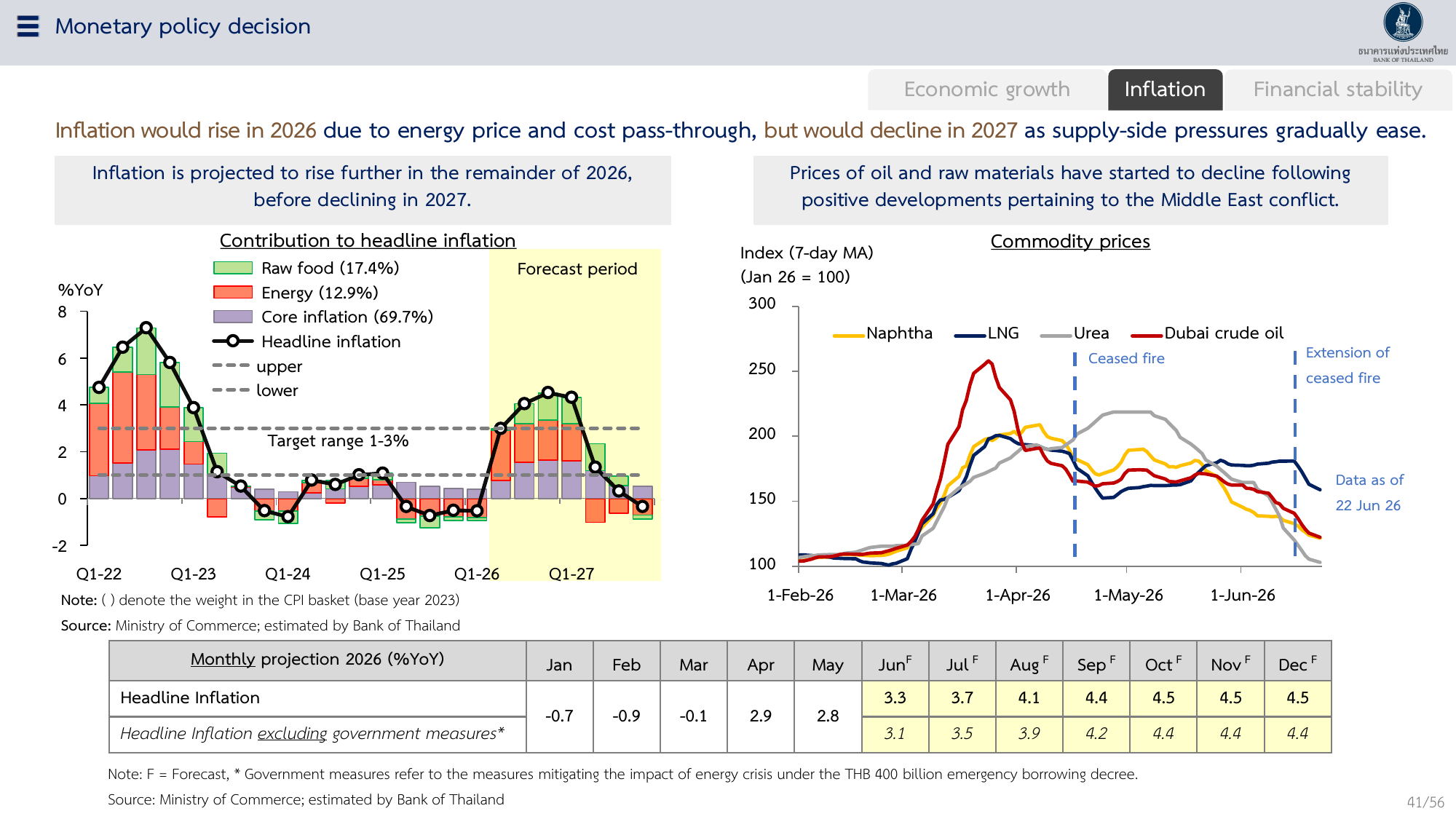
The committee expects inflation to rise through the remainder of 2026 before easing, with supply-side pressures important. Households can respond through a realistic food, energy and transport budget, not by predicting one monthly data release. Compare recurring bills, maintain an emergency buffer and distinguish a temporary price spike from a permanent spending commitment such as a larger car or home loan.
Use The Calendar
MPC minutes for the August meeting are scheduled for 9 September, while the next decision is due on 28 October. Minutes add context but do not change the rate by themselves. Save both dates if a major deposit or variable loan decision is pending, then check the official announcement. Avoid making a costly move based on market rumours before the published decision.
Make One Useful Check
Choose the product with the largest effect on the household: the mortgage reference rate, savings return, fixed-deposit maturity or business credit line. Download its current terms and compare them with the previous statement. One verified rate and one written question to the bank are more useful than broad assumptions about who wins or loses from a policy hold.
At A Glance
- Current policy rate: 1 percent as of 26 August 2026.
- Decision: The MPC voted unanimously to hold.
- Next scheduled decision: 28 October 2026.
- What it is: The one-day bilateral repurchase rate used to signal monetary policy.
- What it is not: A guaranteed consumer deposit or loan rate.
- Check: Use the bank’s current rate sheet and the product contract before acting.
Keep Planning
Browse more TFT coverage in Money, Travel and Deals.
Questions
Did every Thai bank rate become 1 percent?
No. Banks price deposits and loans separately, and product rates do not move one-for-one with the policy rate.
Will my mortgage payment fall now?
Only if the loan’s reference rate and reset terms produce a change. Check the contract and next statement.
Should I break a fixed deposit?
Compare the early-withdrawal penalty, remaining term and liquidity need before changing it.
When is the next MPC decision?
The next scheduled policy-rate decision is 28 October 2026.