
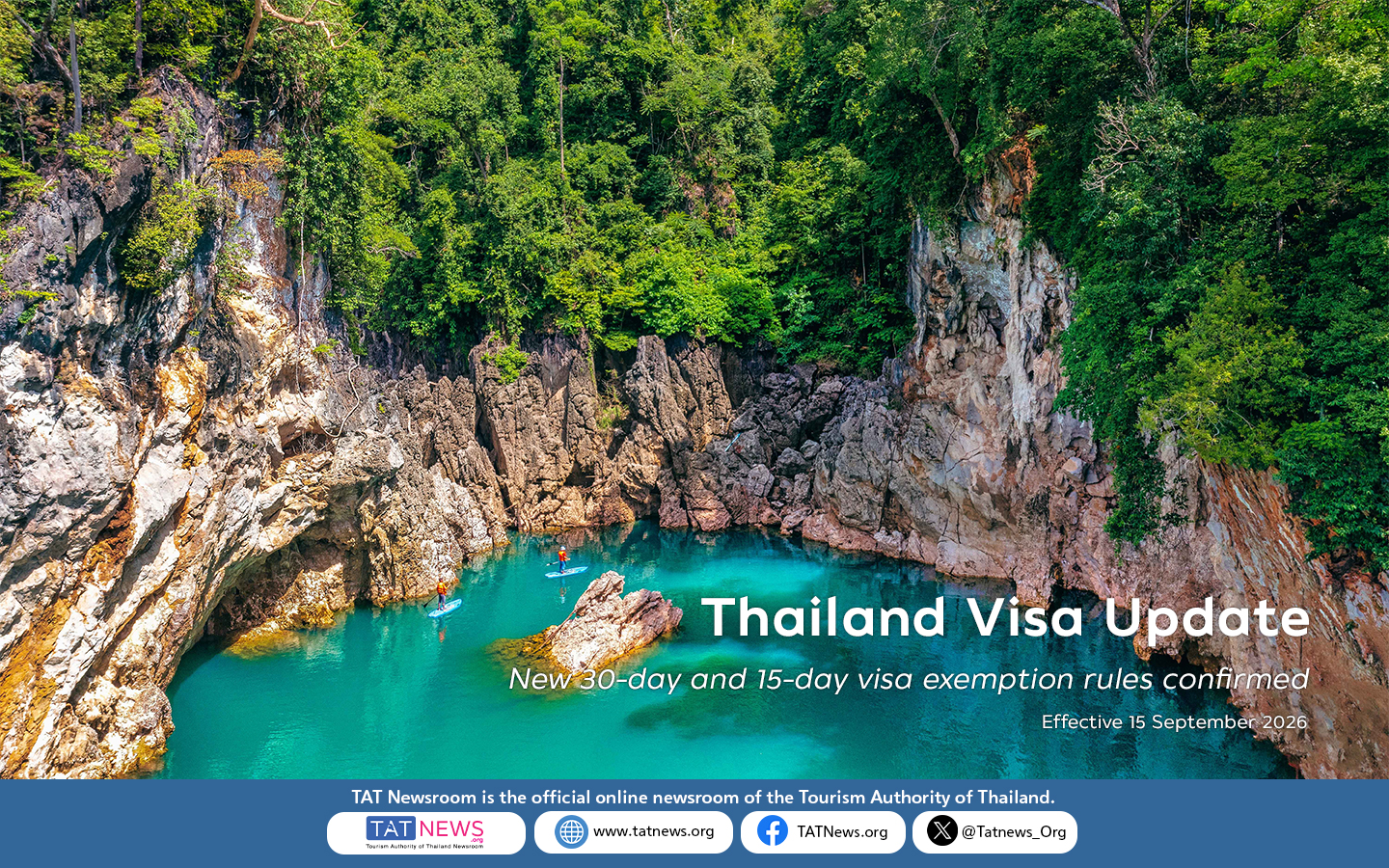
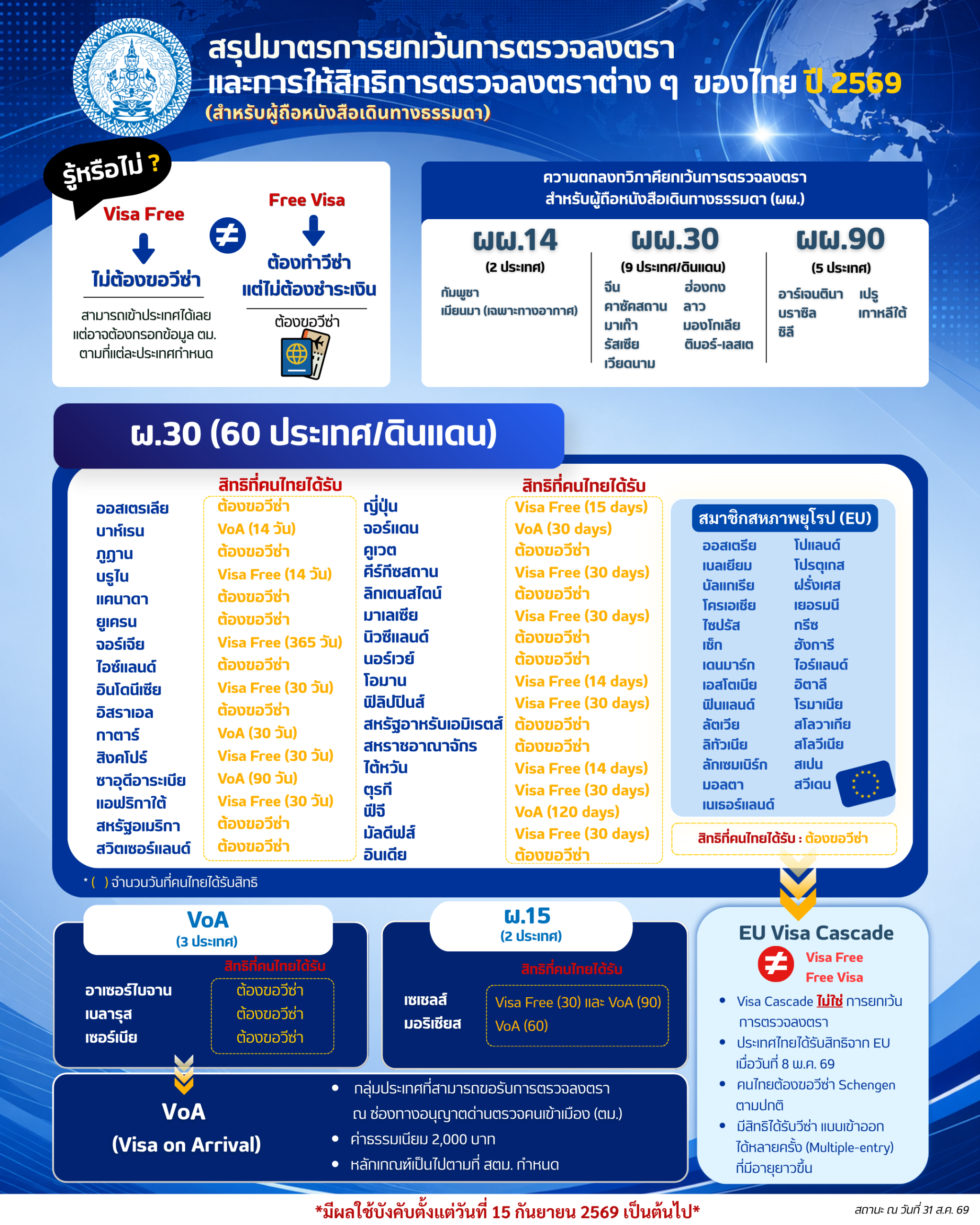
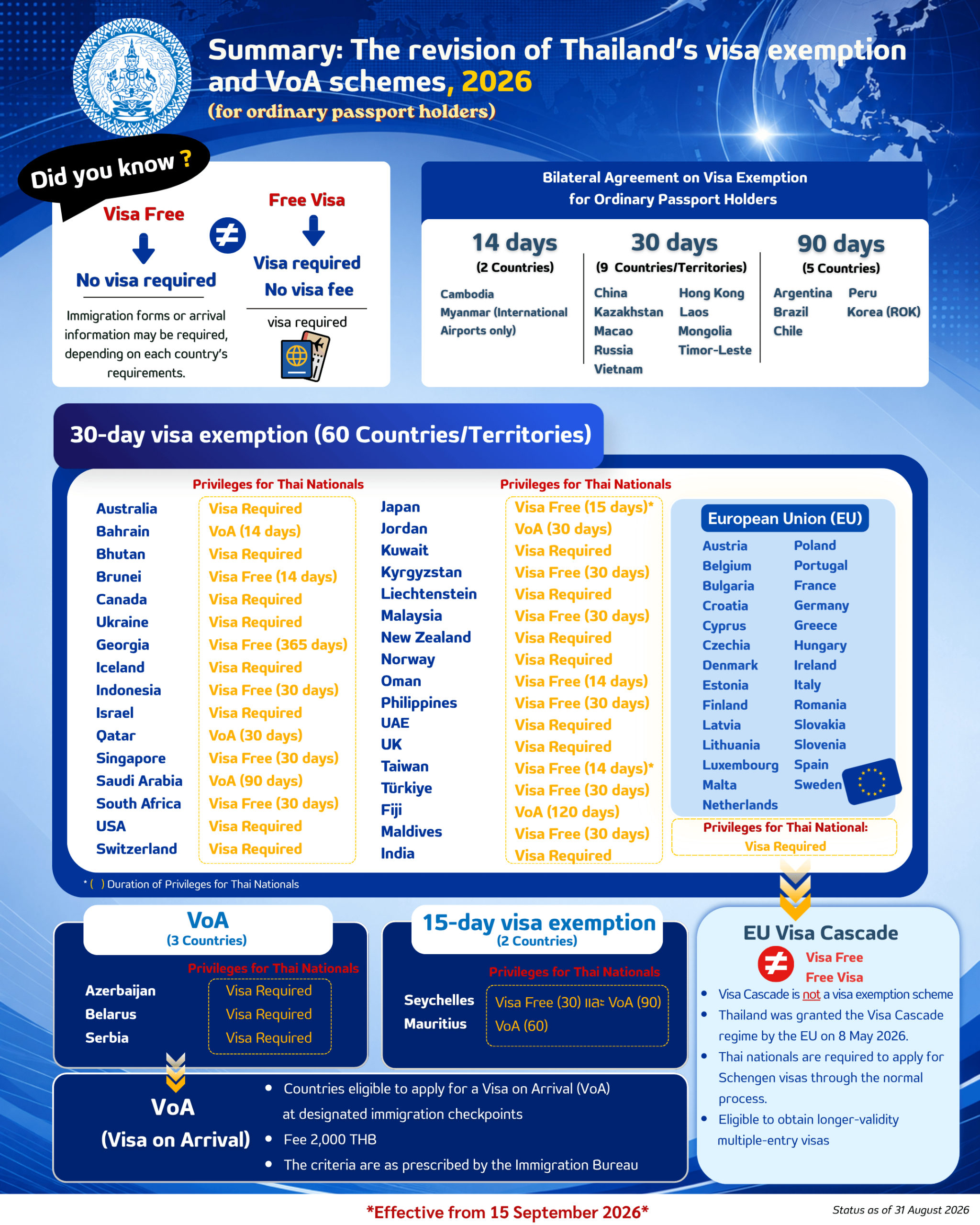
Thailand’s revised visa-exemption and visa-on-arrival framework takes effect on 15 September 2026. The former 60-day exemption is revoked. The new structure provides 30-day tourism exemption for 60 countries and territories, 15-day exemption for Mauritius and Seychelles, and visa on arrival for Azerbaijan, Belarus and Serbia.
Nationality determines the category, and one country or territory is placed in one group. Travellers admitted before 15 September keep the date already stamped or recorded for that entry. The change concerns tourism entry; work, study and other purposes require the correct permission. The Destination Thailand Visa remains a separate route.
Why It Is Worth Considering
The practical importance is trip length. Someone who once planned around 60 exempt days may now need a different visa, shorter itinerary or properly authorised extension. The effective date also creates a sharp distinction between a person already admitted and someone arriving from 15 September onward. Thailand’s September 2026 visa-exemption rules is most rewarding when the main reason for going matches its real character, not a generic popularity signal. Decide what a successful visit or decision would look like before spending time or money.
What To Expect
Airlines and border officers will check passport, travel purpose and supporting details under the applicable category. A nominal exemption is not a guarantee of admission. Travellers can still be asked about onward travel, accommodation, funds or previous stay patterns, and repeated tourism entries may receive closer scrutiny. Conditions vary with date, weather, inventory and operating needs, so treat this description as a planning frame rather than a promise that every detail will be identical on arrival.
Price And Value
Visa exemption has no application fee, but changing plans can create flight, accommodation and extension costs. VOA, visa applications and overstays follow separate fees and consequences. Budget for the lawful route before buying inflexible travel. Never assume a cheap border run resolves a long-stay plan. Compare the full cost for the actual group, including transport, food, service charge, tax, add-ons and cancellation exposure. The lowest headline is not always the strongest value.
Choose The Timing
Use the actual arrival date, not ticket-purchase date, to identify the new framework. Count permitted stay from the immigration record, not from a blog estimate. Apply for any required visa with enough lead time, and do not leave extension or status questions until the final lawful day. Build a realistic buffer before and after the main activity. Spare time protects the plan when traffic, queues, rain, transfers or local operations move more slowly than expected.
Getting There
For international travel, carry the passport used for the booking, onward itinerary and accommodation details in accessible form. Check transit-country rules separately. At a land border, confirm the crossing accepts the relevant process. A domestic connection after arrival does not change the immigration category. Save the destination in Thai and English, verify the final map pin and keep enough battery for navigation. Confirm the return journey before companions are tired or local transport becomes scarce.
Reserve Or Plan Well
Before paying for long accommodation, use the Thai embassy or consulate serving the place of application and the official e-visa or consular channel relevant to the passport. Digital nomads should compare the DTV and other lawful statuses rather than stretching a tourism exemption beyond its purpose. Keep written confirmations and review names, dates, party size, inclusions and cancellation terms. When no reservation is needed, save current opening information shortly before leaving.
Make It Comfortable
Keep digital and offline copies of the passport bio page, insurance, tickets and booking details, but secure sensitive information. Review the admission stamp or electronic record before leaving the counter. If something appears wrong, ask calmly while still at immigration rather than discovering it weeks later. Carry water where permitted, dress for the setting and tell companions about stairs, heat, noise, crowding or long transfers. Comfort planning is part of good value, not an afterthought.
Build A Better Visit
This national rule should shape the whole itinerary, not one border day. If the permitted period is shorter, choose fewer regions and allow recovery time instead of racing through Thailand. A compliant schedule can be more enjoyable than an ambitious plan built on an outdated entry assumption. One well-matched extra stop is usually better than a long checklist. Leave room for food, rest and the unexpected so the core experience does not become a race.
Check Before Leaving
Confirm the passport’s exact group, permitted days, arrival airport or crossing, purpose and any extension possibility immediately before departure. Entry rules can change and airline databases can lag. For employment, study or long-term residence, obtain advice on the appropriate visa rather than using tourism exemption. Verify live hours, availability, access and every date-sensitive detail on the day. Contact the operator directly when one unanswered point would decide whether the journey or purchase is worthwhile.
Who It Suits
This is essential for tourists, frequent visitors, remote workers and hosts planning stays after 15 September 2026. People already admitted should rely on their recorded permission. Anyone with prior overstays, unusual travel history or a non-tourism purpose should seek case-specific official guidance. People whose priorities differ should compare alternatives rather than treating popularity as proof of fit. A clear decision rule keeps this guide useful when plans change.
A Useful Final Filter
Thailand’s September 2026 visa-exemption rules is a strong choice when its real character matches the reason for the visit or decision. Reconfirm the essentials, keep the plan flexible and leave enough time to enjoy the experience rather than merely complete it. Small preparations protect the outcome without turning leisure, culture or travel into administration.
Practical Information
- Effective: 15 September 2026.
- 30-day exemption: 60 countries and territories.
- 15-day exemption: Mauritius and Seychelles.
- Visa on arrival: Azerbaijan, Belarus and Serbia.
- Earlier arrivals: Keep the admitted-until date granted before 15 September.
- DTV: Separate and unaffected by the exemption replacement.
Keep Planning
Browse more TFT coverage in Nomads, Travel and Deals.
Questions
Is the old 60-day exemption still available?
No. It is revoked from 15 September 2026.
What if I entered on 14 September?
The permission granted on admission remains controlling for that entry.
Does visa exemption permit work?
No. It is for tourism; use the correct visa and work authorisation.
Is the DTV cancelled?
No. It remains a separate visa route.