
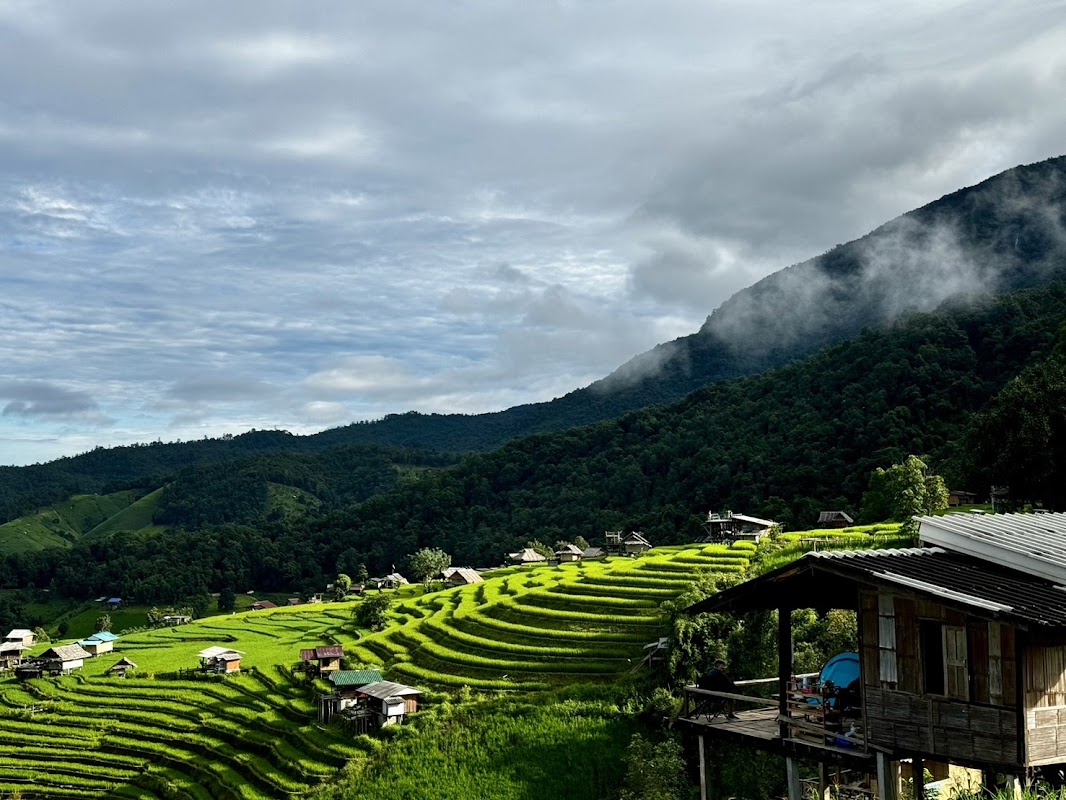
Ban Pa Bong Piang is a Pga K’nyau community and rice-terrace landscape in Mae Chaem district, Chiang Mai. In September the paddies are usually deep green, following their July planting and August growth, before moving towards golden harvest tones in late October and early November. The dates are agricultural rhythms, not a fixed attraction schedule.
The terraces sit in a remote mountain setting where the final road can be steep, narrow, rough and slippery after rain. This is not the place to test an unfamiliar scooter or rely blindly on an ordinary low-clearance car. Arrange a local driver or suitable vehicle, confirm the route with the homestay and build enough daylight for changing weather.
Why September Works
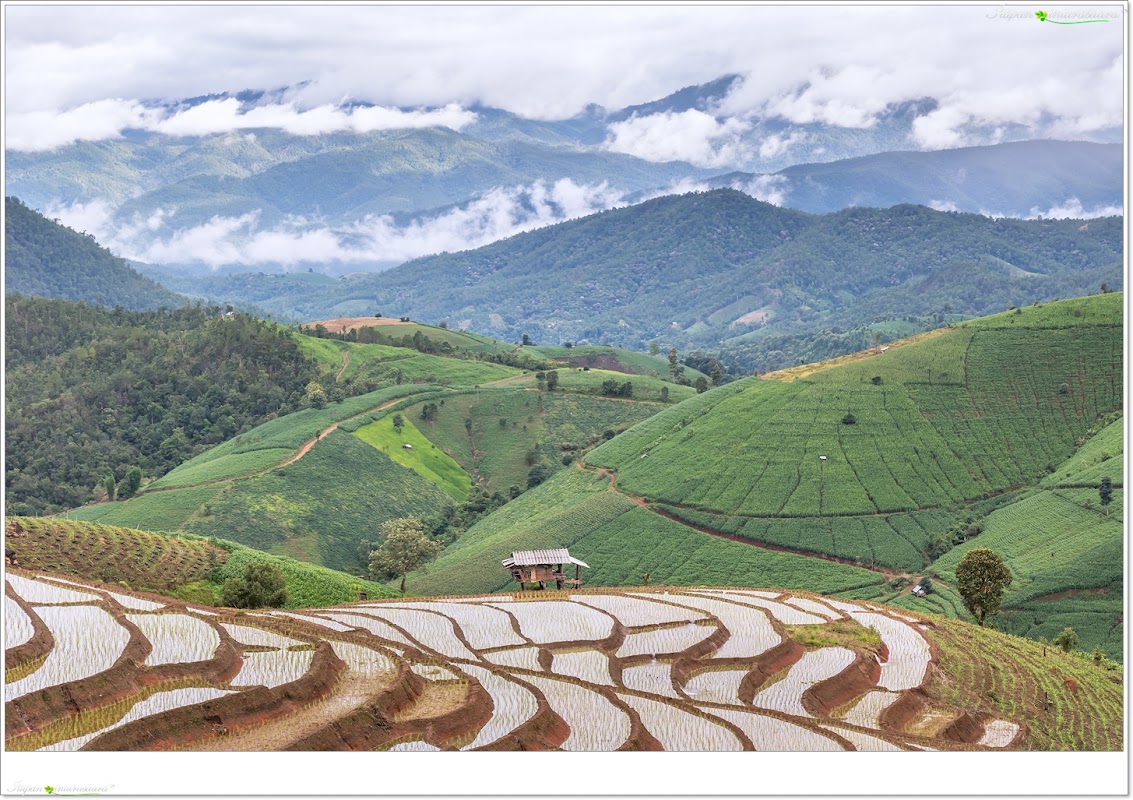
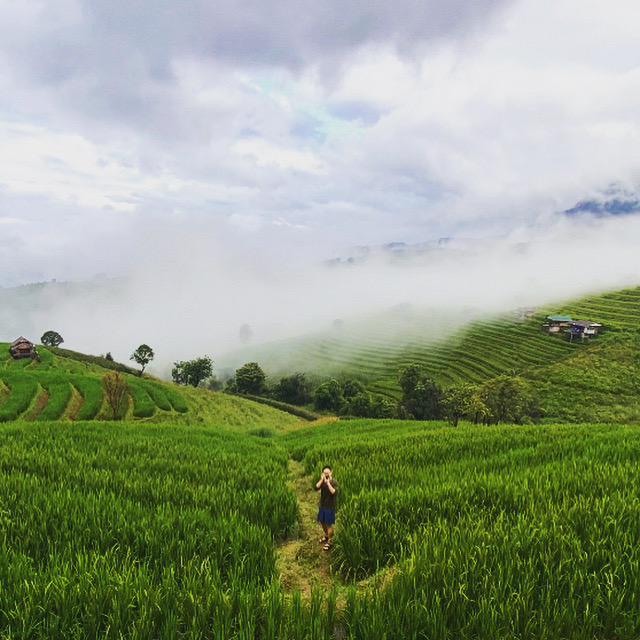
September normally catches the terraces at their lushest, with layered green lines, cloud movement and occasional warm evening light. Rain creates the colour but also complicates the road. A flexible visitor gains more than someone chasing one perfect sunset: mist, farmers at work and quiet morning texture are all part of the place.
The Fields Are Working Land
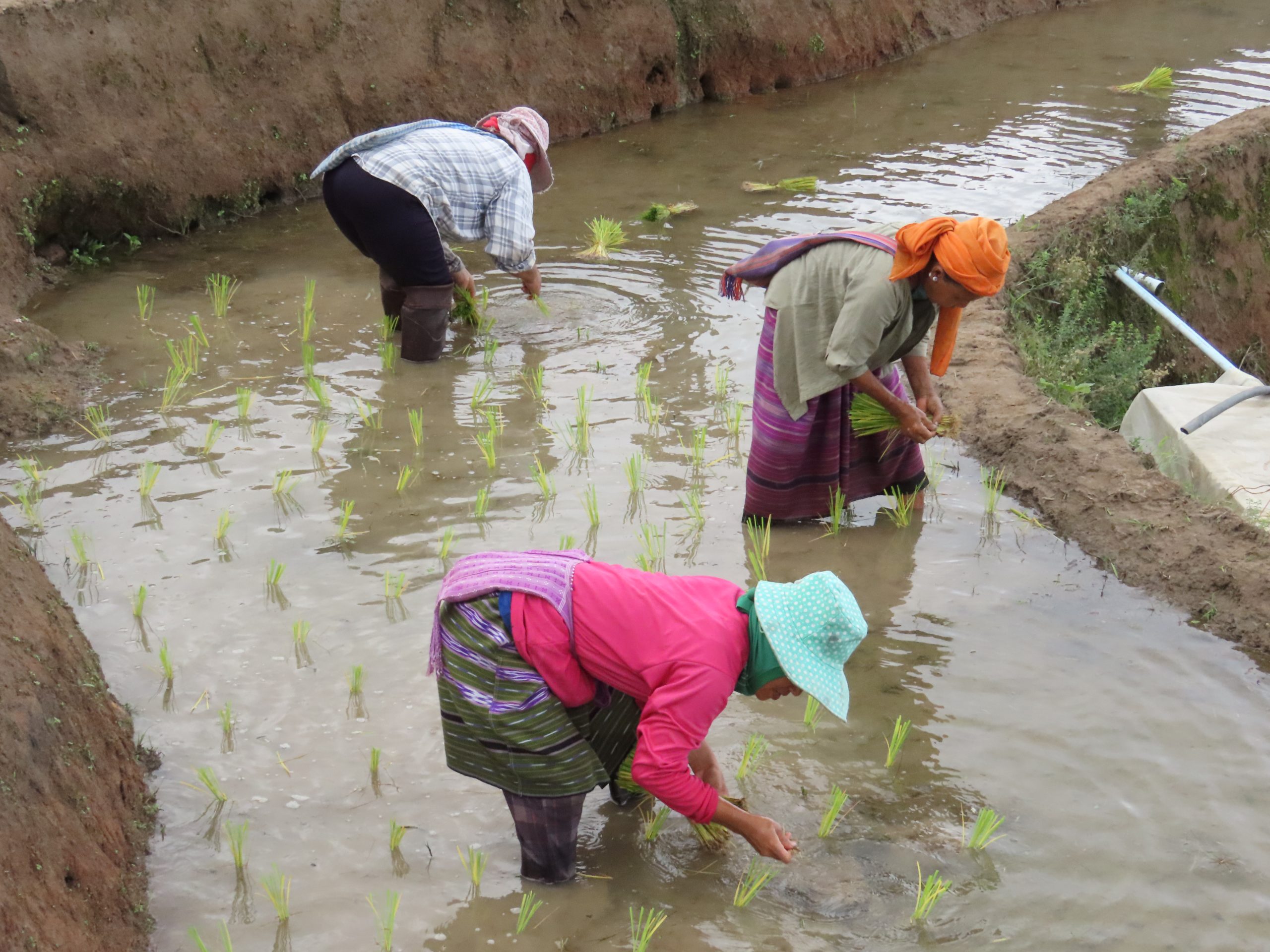
These are cultivated fields and a living village, not a landscaped viewpoint. Paths may be muddy, irrigation edges fragile and daily work more important than visitor access. Stay on permitted routes, ask before entering a paddy and never move tools, seedlings or water gates for a photograph. Drone use requires explicit local permission.
Choose Day Trip Or Overnight
A day trip offers the view but spends many hours in transit. An overnight stay gives sunset and early morning, reduces pressure on the return drive and supports a local host. Accommodation is deliberately simple, commonly with basic bedding, limited power and no hotel-style climate control. Confirm the actual facilities before romanticising the hut.
The Final Road
Prices vary by host, transport and meal package. Ask for a single written total covering pickup point, local vehicle, room, meals and any park or route fees. Cheap lodging does not mean cheap travel once Chiang Mai transfers are added. Pay deposits only through a verified host or operator and keep the contact details offline.
Weather And Safety
Leave Chiang Mai early enough to cross the mountain section in daylight. September showers can arrive quickly, and sunset is not a reason to rush a wet descent. The terraces become greener from August into October, then turn gold towards harvest. Verify current field colour with the host because planting varies each year.
Route From Chiang Mai
A common route runs from Chiang Mai towards Chom Thong and Doi Inthanon, then into Mae Chaem before the local approach. Navigation apps can favour a short but unsuitable track. Ask the host where an ordinary car should stop and where a local four-wheel-drive or experienced pickup begins. Never pressure a driver to continue when conditions feel unsafe.
Book The Homestay Carefully
Book directly with an identifiable homestay or a reputable Mae Chaem operator. Confirm the exact village, map pin, meeting point, vehicle type, driver, meals, bathroom, electricity, bedding and cancellation policy. Pa Bong Piang and similarly named places can be confused, so exchange the Thai address and a phone number before leaving the city.
Pack For Simple Comfort
Pack a rain shell, warm layer, grippy shoes, insect repellent, personal medication, headlamp, power bank and dry bags. Bring only the water and snacks agreed with the host so waste stays manageable. Mobile signal and power can be limited. Anyone needing refrigerated medicine or step-free access should discuss the details before booking.
Photograph With Respect
Mae Chaem town is the practical place for fuel, cash and supplies. Doi Inthanon can fit the broader route, but combining too many stops creates a hazardous late drive. Choose one park stop on the way or save it for another day. The terraces deserve an evening and morning rather than a five-minute photo call.
Before You Set Out
Contact the host on departure morning for rain, road and field conditions. Verify national-park rules if the selected route passes controlled areas. Share the route and expected arrival with someone outside the vehicle, download maps and carry cash. If heavy rain closes or degrades the approach, postpone rather than invent a shortcut.
Who It Suits
Pa Bong Piang suits patient photographers, green-season travellers and guests comfortable with simple rural accommodation and uncertain mountain weather. It is not a good fit for a tight flight day, nightlife-led holiday or anyone who needs luxury facilities. Families should assess the road, railings, mud and sleeping setup for their children.
The Verdict
The terraces are magnificent because they are farmed, watered and lived beside, not because they were built for visitors. Go with a confirmed host, an experienced local driver and flexible expectations. September green is worth the effort when the journey protects the community, the fields and everyone in the vehicle.
Practical Information
- Location: Ban Pa Bong Piang, Mae Chaem district, Chiang Mai.
- Green period: Usually August to October; verify the current crop.
- Golden period: Often late October to early November, depending on harvest.
- Road: The final approach can be steep, narrow and rough, especially after rain.
- Stay: Simple community homestays; confirm facilities and transport directly.
- Map: Open in Google Maps
Keep Planning
Browse more TFT coverage in Travel, Travel and Deals.
Questions
Is September a good time?
Usually yes for green terraces, but rain and yearly planting affect the exact appearance and road.
Can I drive a normal car all the way?
Do not assume so. Confirm the current final-road condition and local transfer with the host.
Do homestays have full hotel facilities?
Often not. Ask about electricity, bathroom, bedding, meals and mobile signal before paying.
Can I walk into the rice fields?
Only on permitted paths and with local guidance. The paddies are working farmland.