
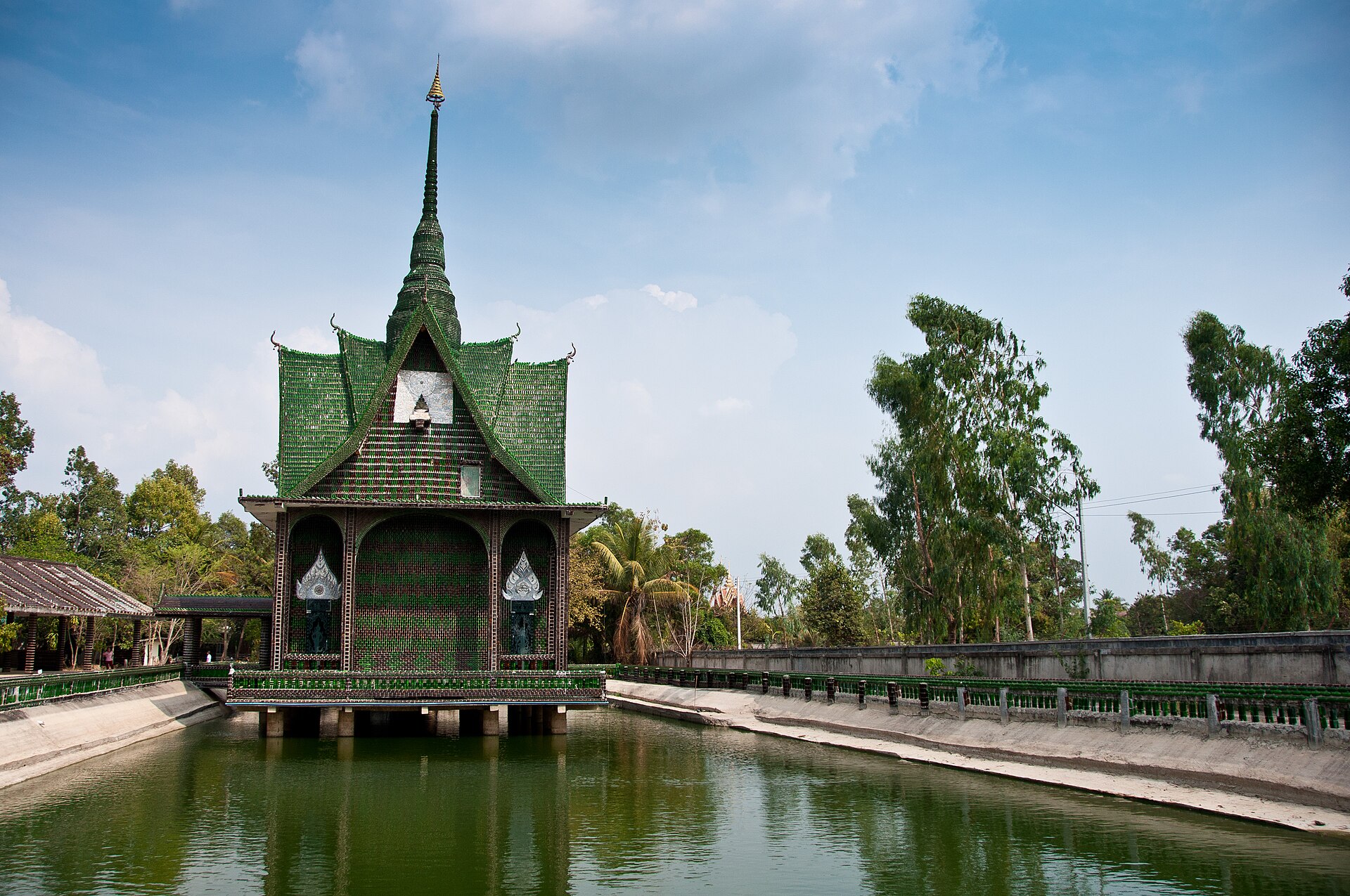
Wat Pa Maha Chedi Kaew in Khun Han, Si Sa Ket, is better known as Wat Lan Khuat, the Million Bottle Temple. Green and brown glass bottles donated by the public have been incorporated into the chedi, halls, walls, monk accommodation and even utilitarian buildings, turning recycled material into a coherent religious complex rather than a single novelty facade.
The Tourism Authority of Thailand lists the temple on Sukhaphiban Road in Khun Han and gives contact number 045 243 770. Its Si Sa Ket guide lists daily hours from 8am to 5pm and free entry. Hours and access can change for ceremonies, maintenance or local decisions, so verify before a long drive.
Why The Temple Matters
The appeal is not simply that many bottles were used. Repetition, colour and light turn ordinary containers into textured walls and mosaics. The project also reflects community donations and a monk-led idea developed over time. Treat it as a working Buddhist temple whose unusual material rewards attention, not as a roadside prop.
Look Beyond The Bottle Count
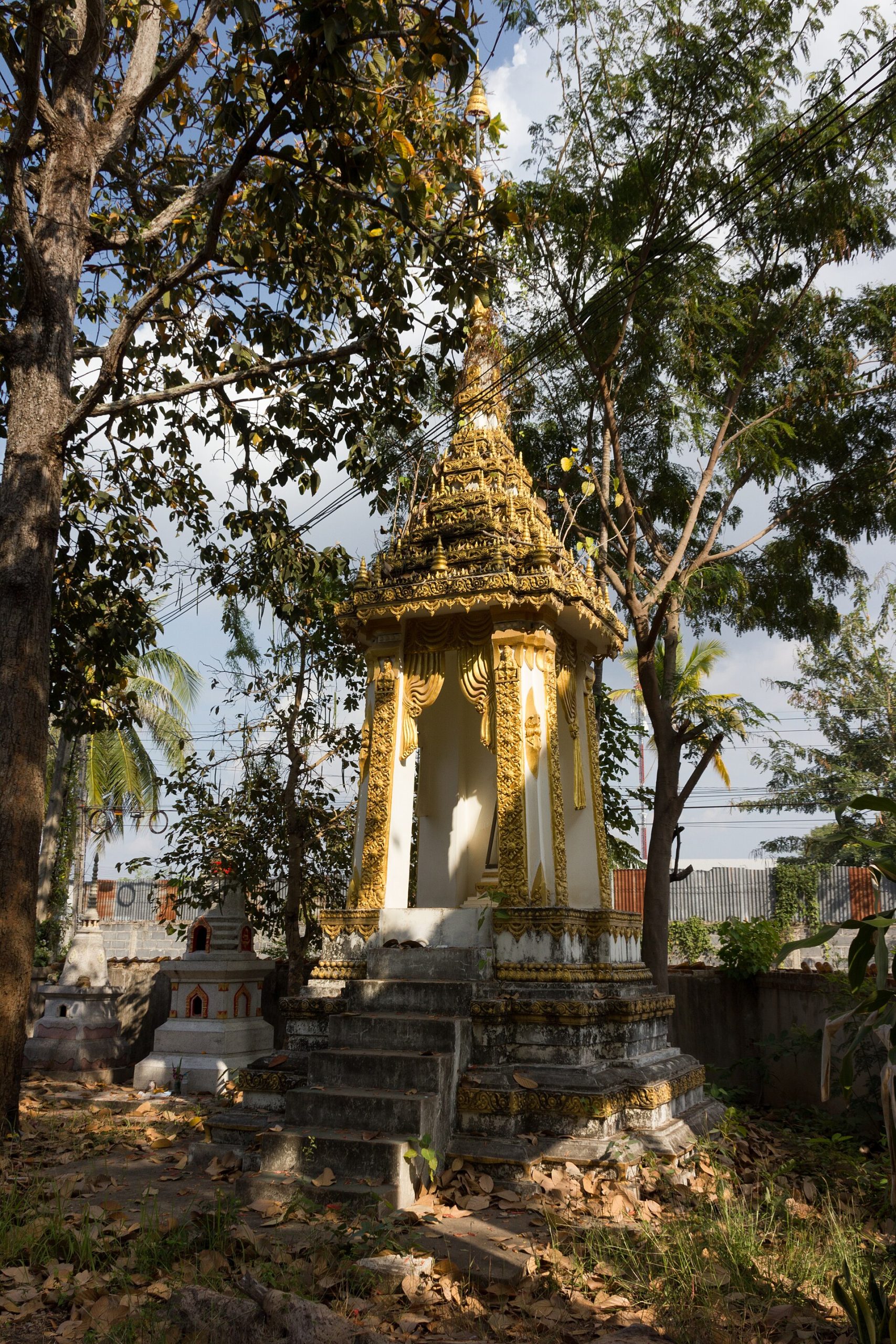
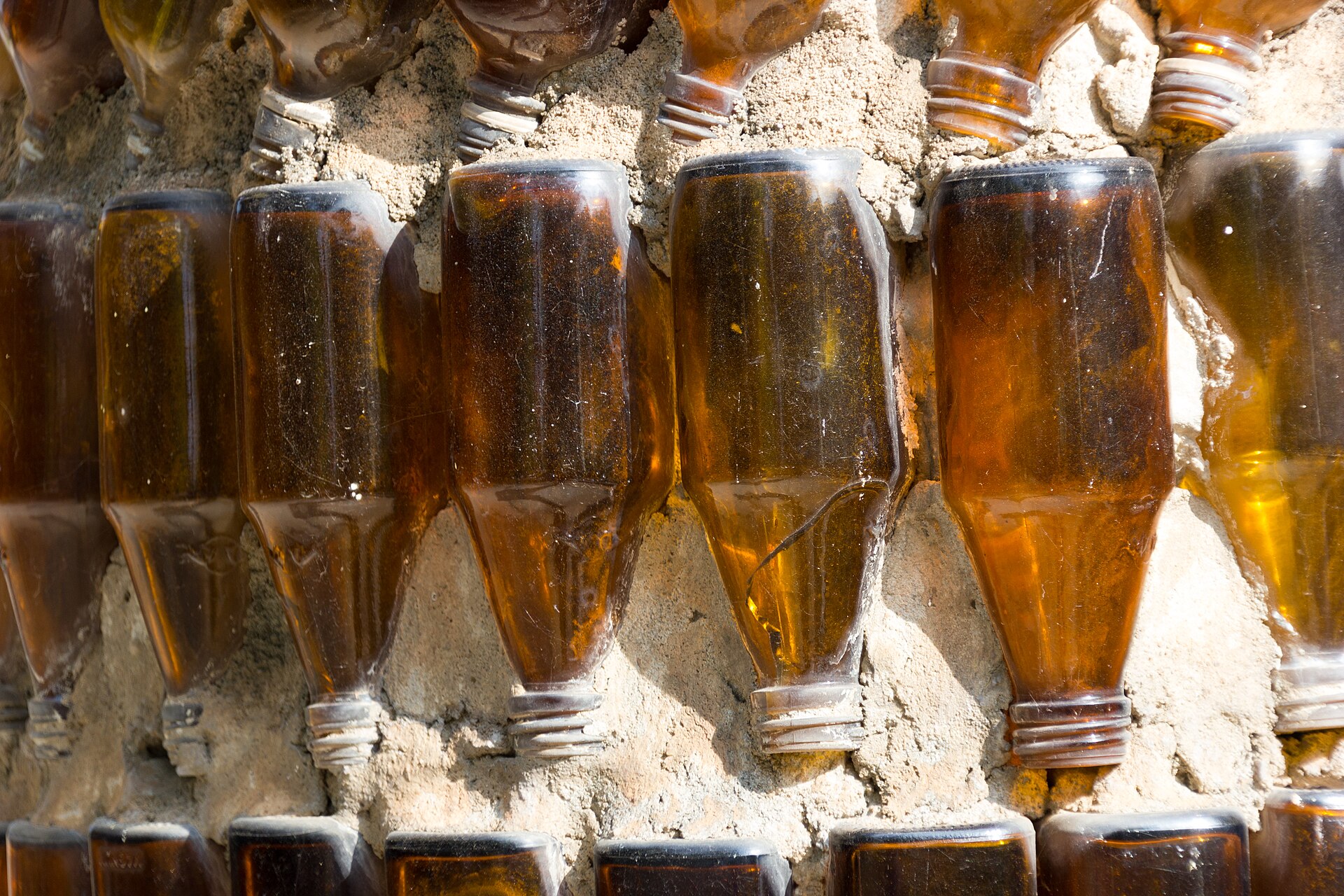
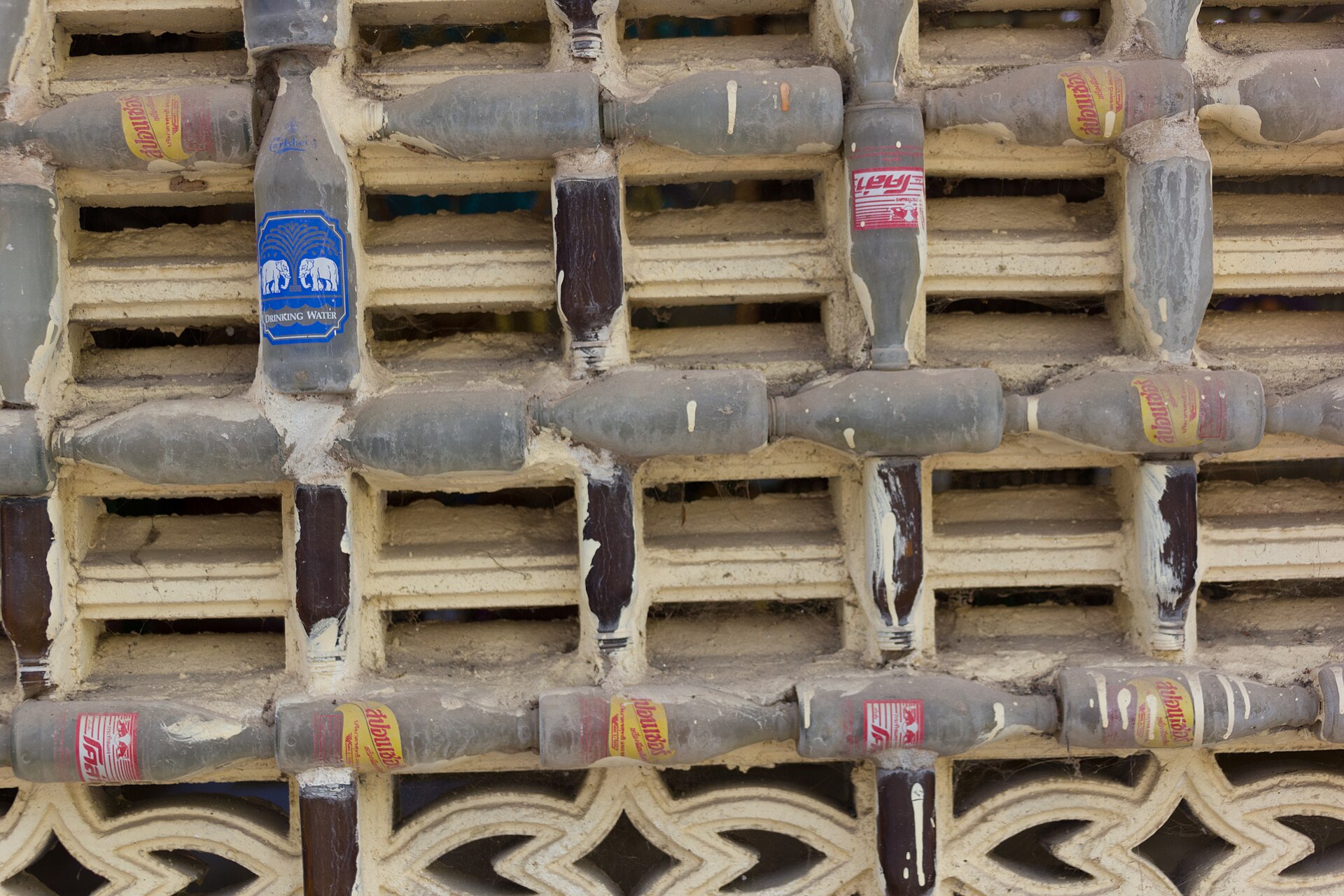
Walk through several structures rather than searching for one famous angle. Bottle bases create circular patterns, necks form lines and green-brown contrasts define roofs and walls. Some parts are more elaborate than others. Maintenance or religious use may close an area temporarily, and the complex remains quieter than a commercial attraction.
The Pond-Side Ubosot
Give special attention to Sala Thansmo Maha Chedi Kaew and the ubosot set in the pond, where the white jade Buddha image provides a calm focal point. Move slowly enough to notice how glass is held in mortar and how the architecture changes from a distance to close inspection.
Temple Etiquette
TAT has listed entry as free. Carry small cash for a respectful temple donation if you wish, but do not treat a donation as payment for privileged access. Budget instead for the regional transport, food and driver time required to reach Khun Han from Si Sa Ket city or another Isan base.
Best Time To Visit
Morning offers cooler temperatures and softer light, while late afternoon can bring warm reflections through the glass. Avoid arriving near closing time after a long drive. Buddhist holidays and ceremonies may make the temple more active; visitors should accept that worship takes priority over a perfect photograph.
Getting There
From Si Sa Ket city, TAT directs travellers towards Khun Han using Highways 221 and 2211, then local Highway 2128 near the district roundabout. Road numbering and map routing can differ, so save the Thai name วัดป่ามหาเจดีย์แก้ว and telephone number for the final approach. A private car or driver is simplest.
Plan The Stop
Ordinary independent visitors do not normally need a reservation. Larger groups, journalists and anyone planning organised photography should contact the temple or local tourism office. Ask before flying a drone, using tripods in worship areas or arranging any activity that changes how other visitors can move and pray.
Photograph Respectfully
Dress for a temple: shoulders and knees covered, shoes easy to remove and voices low. Glass in the buildings is fixed, but ordinary outdoor hazards still apply, including heat, wet paths and uneven surfaces. Carry water for the journey and keep food outside worship areas unless local signs say otherwise.
Add Context In Si Sa Ket
Khun Han can be combined with other Si Sa Ket sights, but distances are meaningful and border-area access can change. Build the day around one or two confirmed places instead of chasing a long checklist. Food and fuel stops in the district centre are more reliable than assuming services beside every attraction.
Before You Leave
Call 045 243 770 or check current local information for hours, ceremonies and access. Reconfirm the road if travelling after heavy rain. Border-region headlines do not necessarily affect Khun Han, but official travel advice and local instructions should override an old itinerary whenever conditions change.
Who It Suits
The temple suits architecture, craft, recycling and Isan-culture travellers, as well as families able to explain respectful behaviour to children. It is less useful as a rushed detour between distant provinces. Anyone expecting an amusement-style attraction may miss the skill and religious purpose that make the place memorable.
The Verdict
Wat Pa Maha Chedi Kaew earns its reputation through the patient transformation of donated glass into a living temple. Arrive early, dress properly and look at details instead of counting bottles. The visit becomes richer when Khun Han is treated as a real community and the temple as a place of worship first.
Practical Information
- Thai name: วัดป่ามหาเจดีย์แก้ว, also called วัดล้านขวด.
- Location: Sukhaphiban Road, Khun Han, Si Sa Ket 33150.
- Published hours: Daily, 8am to 5pm; verify before travel.
- Entry: TAT has listed free entry.
- Telephone: 045 243 770.
- Map: Open in Google Maps
Keep Planning
Browse more TFT coverage in Culture, Travel and Deals.
Questions
Why is it called the Million Bottle Temple?
Glass bottles donated by the public cover buildings throughout the complex; the name describes the scale rather than an admission claim.
Is there an entrance fee?
TAT has listed entry as free, though visitors may make a voluntary temple donation.
What should I wear?
Cover shoulders and knees, remove shoes where required and keep clothing suitable for worship spaces.
Can I visit from Si Sa Ket city?
Yes, but Khun Han is a substantial drive. Use a current map, allow time and avoid a late arrival.