
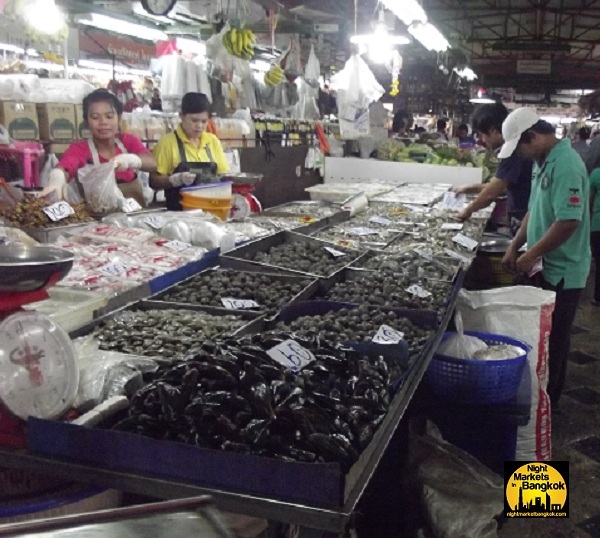
Bang Kapi Market is a working local market where fresh ingredients and ready-to-eat food share the same busy aisles. It is a better choice for travellers who want to understand everyday Bangkok shopping than for anyone seeking a polished night-market production. Seafood, poultry, vegetables, curry, noodles, fruit and packaged snacks can all appear within a short walk. The market is listed by the Bangkok Metropolitan Administration Market Office, but visitors should confirm current opening hours before travelling because different sections and vendors may keep different schedules.
Arrive with a plan
Choose whether the visit is for breakfast, ingredients or a complete meal. Fresh-market trading often starts earlier than cooked-food browsing, while some prepared dishes sell out before late afternoon. Contact the market office or check a current local listing on the day. Bring a compact bag, small notes and a phone with the destination pinned. A focused first circuit is easier than buying the first dish you see in a crowded entrance.
Start with a full circuit
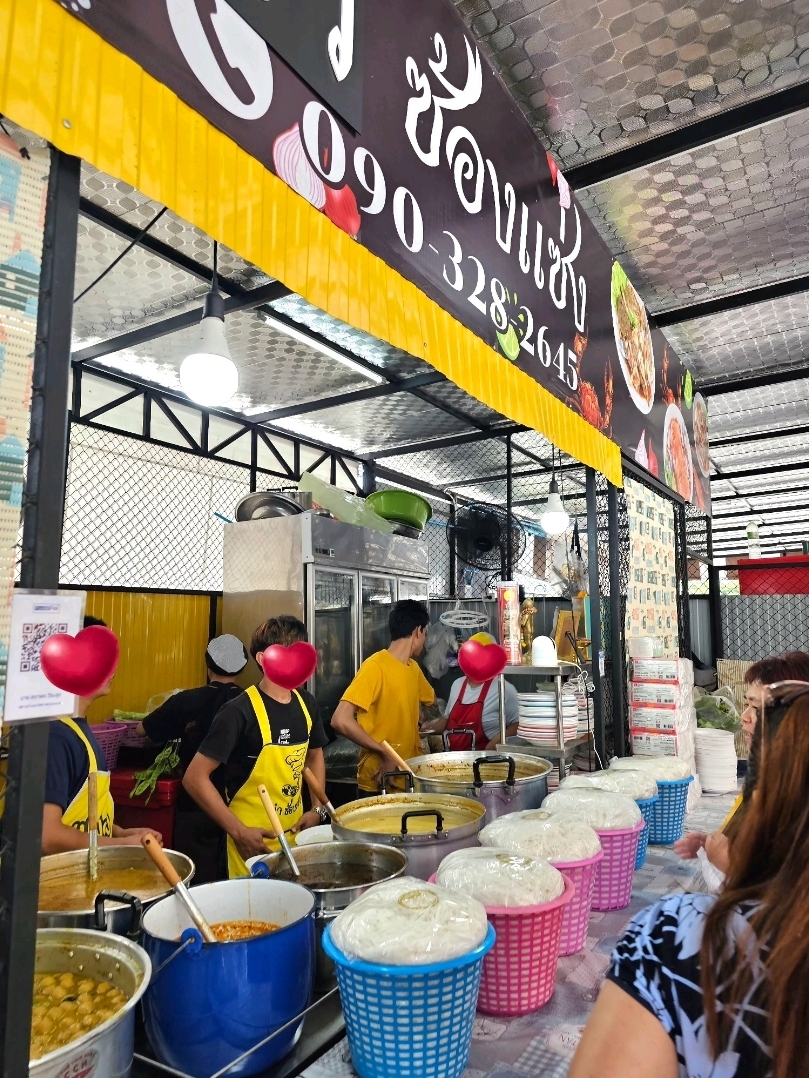
Walk once without ordering. Notice which stalls have steady local queues, covered food, clean utensils and clear prices. The seafood and poultry areas can be wet, so closed shoes with grip are more useful than sandals. Keep bags close to the body and do not block narrow aisles while deciding. After the first circuit, return to the two or three foods that looked freshest and most suited to your appetite.
Choose cooked dishes
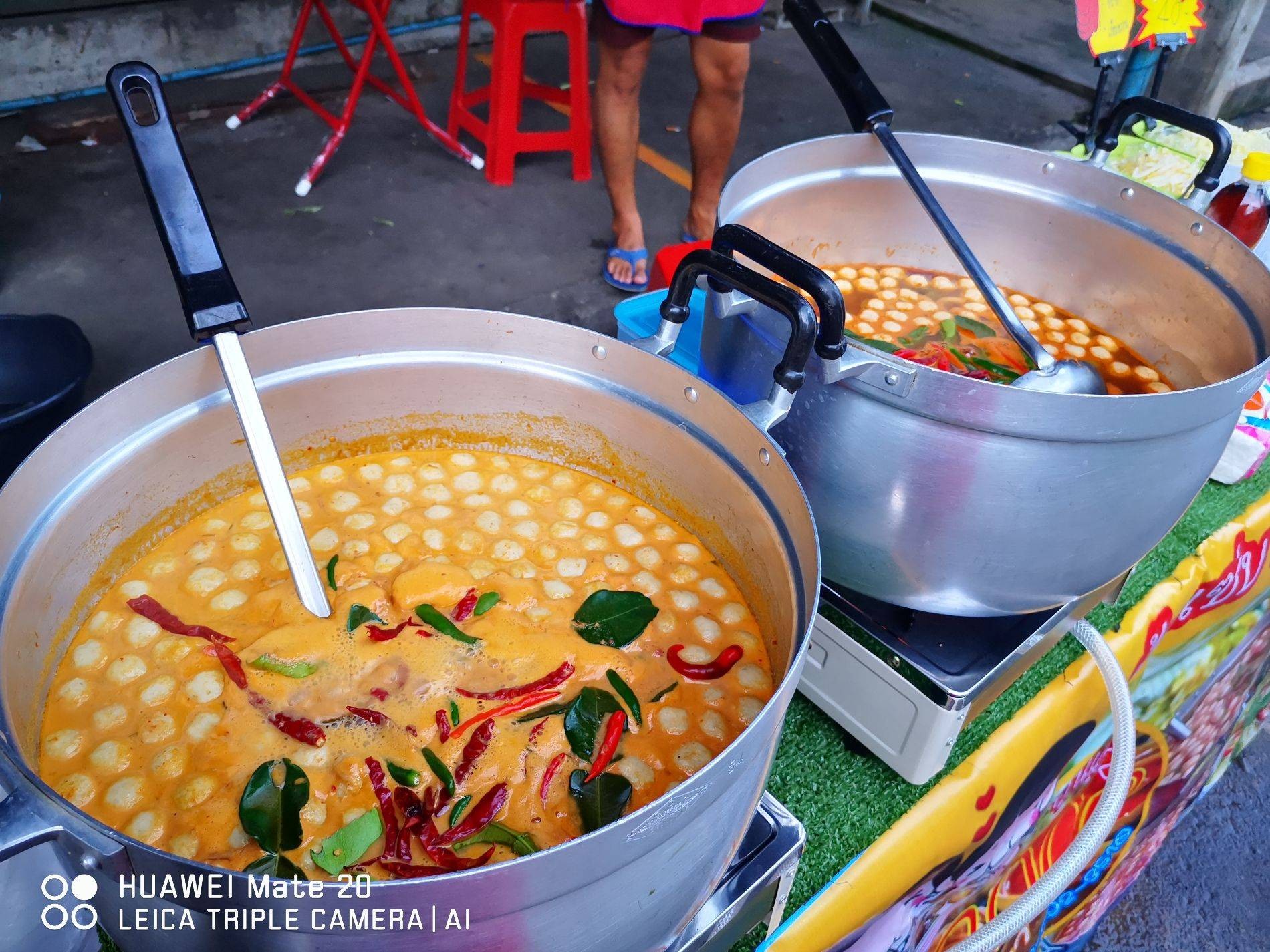
Noodle soups, coconut curries, grilled skewers and rice dishes are practical entry points because portions are easy to share. Look for food being cooked or replenished rather than trays sitting uncovered for long periods. Ask whether a curry contains coconut milk, offal, shellfish or peanuts if those ingredients matter. Pointing is acceptable, but learn simple quantity words and confirm the final price before the vendor starts packing several items.
Explore fresh seafood
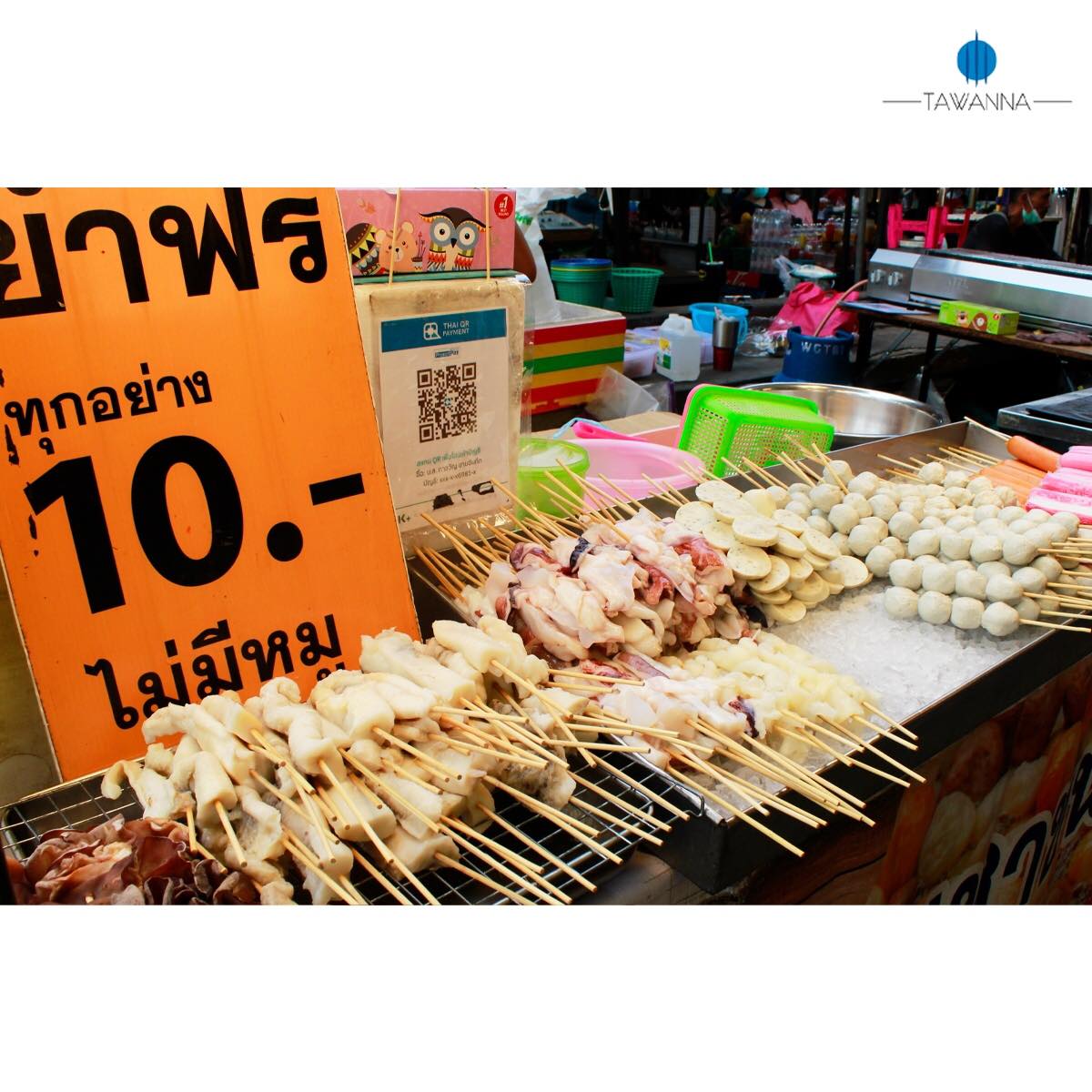
Bang Kapi Market is also an ingredient market, and its displays of shellfish, fish and other seafood reveal what local kitchens are buying. Do not touch produce without permission. If purchasing raw food, ask whether ice is available and take it directly to refrigeration. Travellers without cooking facilities should enjoy the visual education and choose a cooked stall instead. A low raw price is not useful when safe transport and preparation are impossible.
Order to your spice level
Thai curry and dipping sauces can be hotter than their colour suggests. Ask for a small taste when offered, and say mai phet for not spicy or phet nit noi for a little heat, while understanding that prepared curries cannot be remade. Keep plain rice nearby and avoid wasting a full portion. Chilli is only one source of intensity; fermented fish, herbs, sour fruit and roasted spices shape the market food just as strongly.
Check hygiene cues
Busy turnover, separate raw and cooked tools, covered ingredients and proper refrigeration are useful signs. They do not guarantee safety, but they help with selection. Choose food served hot, peel fruit yourself where practical and use bottled or properly filtered water. Anyone with serious allergies should carry translated instructions and recognise that shared woks, ladles and chopping boards make complete separation difficult in a compact market environment.
Pay without slowing queues
Cash remains useful for small purchases, although some vendors display Thai QR payment. International visitors may not have access to the local bank system, so carry small denominations. Confirm the amount and count change away from the serving space. Do not bargain over a clearly priced bowl or snack. Negotiation may be more normal for larger ingredient purchases, but courtesy and proportion matter more than winning a tiny reduction.
Reach the market
Bang Kapi is in eastern Bangkok near major shopping and transport corridors. Rail and bus connections have improved, but the final walking route depends on the entrance you choose and current construction. Use the official market pin rather than a similarly named mall or night market. During rain, allow extra time for wet pavements and traffic. A taxi pickup point on a major road may be easier than calling a car inside a congested lane.
Eat with consideration
Market seating can be limited and tables may be shared. Clear space quickly, return dishes where requested and dispose of rubbish in the correct place. Ask before photographing vendors or close-up preparation. A market is a workplace, not a staged attraction. Patient ordering, a greeting and a simple thank-you create a better exchange than holding up a queue for an elaborate video while hot food waits behind you.
Build a balanced meal
Combine one starch, one savoury dish, vegetables or fruit and a drink rather than collecting only fried snacks. Share portions to taste more without waste. If buying food to take away, consider travel time and temperature. Coconut curries, seafood and cut fruit should not remain warm for a long ride. Finish the visit with a note of the stall location, because market layouts can be difficult to reconstruct from a photo alone.
Bang Kapi Market rewards attention more than a checklist. Confirm the schedule, walk the aisles once, then choose vendors with active turnover and food that suits the moment. Treat the place as the neighbourhood market it is, and the visit becomes a useful look at Bangkok food culture rather than another stop built only around photographs.