
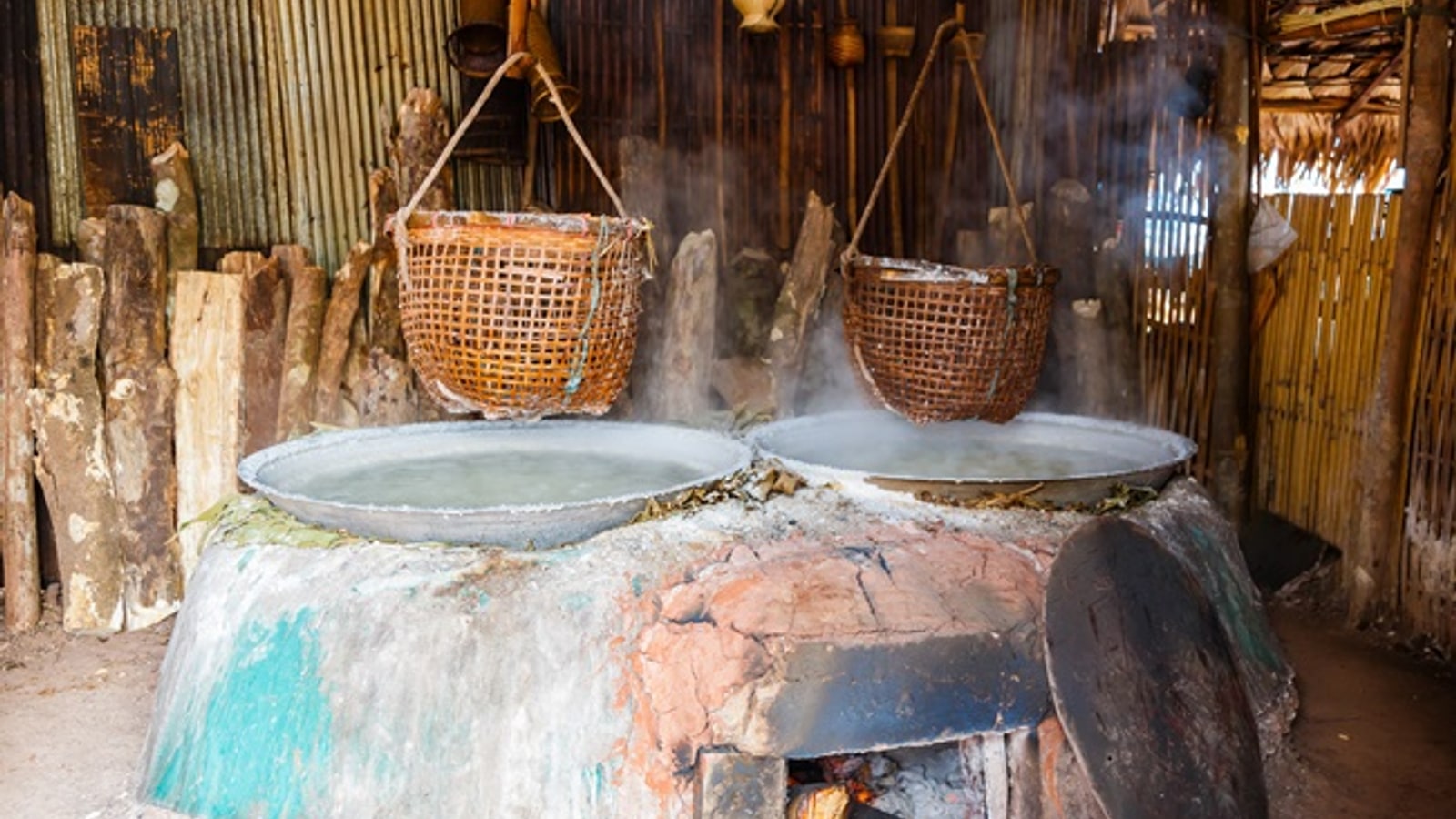
Bo Kluea and Sapan sit in the mountain folds of eastern Nan, linked by beautiful roads that demand attention. Bo Kluea is known for natural brine wells and traditional salt boiling. Sapan is a riverside village where the Wa and Sapan rivers meet, with rice fields, an old temple and a three-tier waterfall in the surrounding forest.
The route works best as an overnight journey rather than a rushed out-and-back drive from Nan city. Daylight, weather and a rested driver matter more than squeezing in another viewpoint. Base yourself near Bo Kluea or Sapan, visit the working sites respectfully and leave room for the road itself.
Choose the right season
The landscape is green during and just after the rainy season, while cool-season mornings can bring mist. Rain also means reduced visibility, loose material and slick corners. Check local forecasts and road conditions on the day, not only when booking.
Traditional salt production may pause during the Buddhist Lent period, so a visit does not guarantee an active boiling demonstration. The wells and village still have cultural value, but ask locally whether the workshops are operating before building the day around them.
Drive in daylight
Route 1081 and connecting mountain roads contain long curves, steep sections and limited passing space. Start early, keep speed conservative and use lower gears on descents. Do not overtake unless the entire manoeuvre is clearly visible and legal.
A driver unfamiliar with Thai mountain roads should consider hiring a local driver. Fuel up before remote sections and keep offline maps, water and a charged phone. Mobile reception can weaken between settlements.
Visit the salt wells
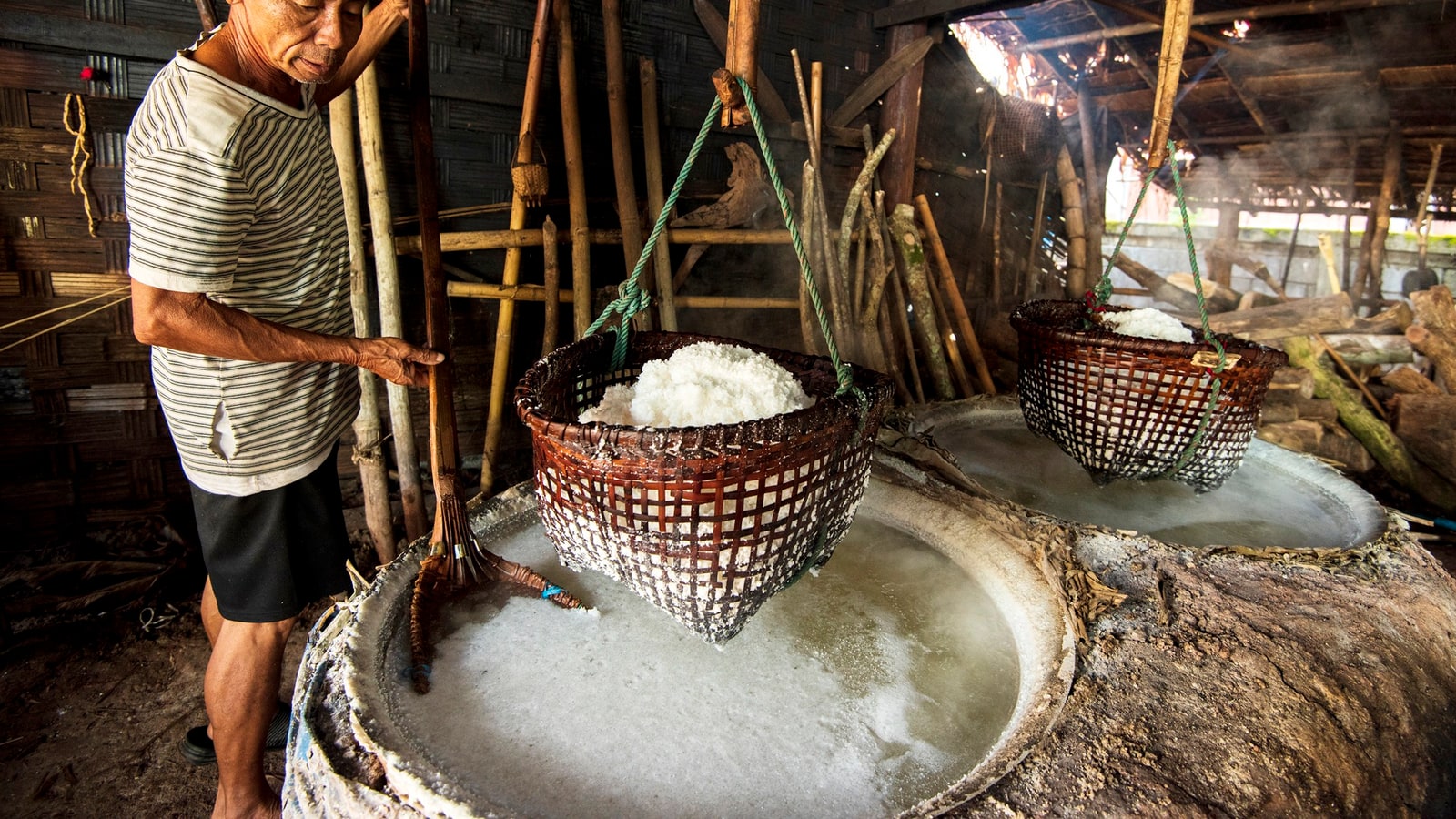
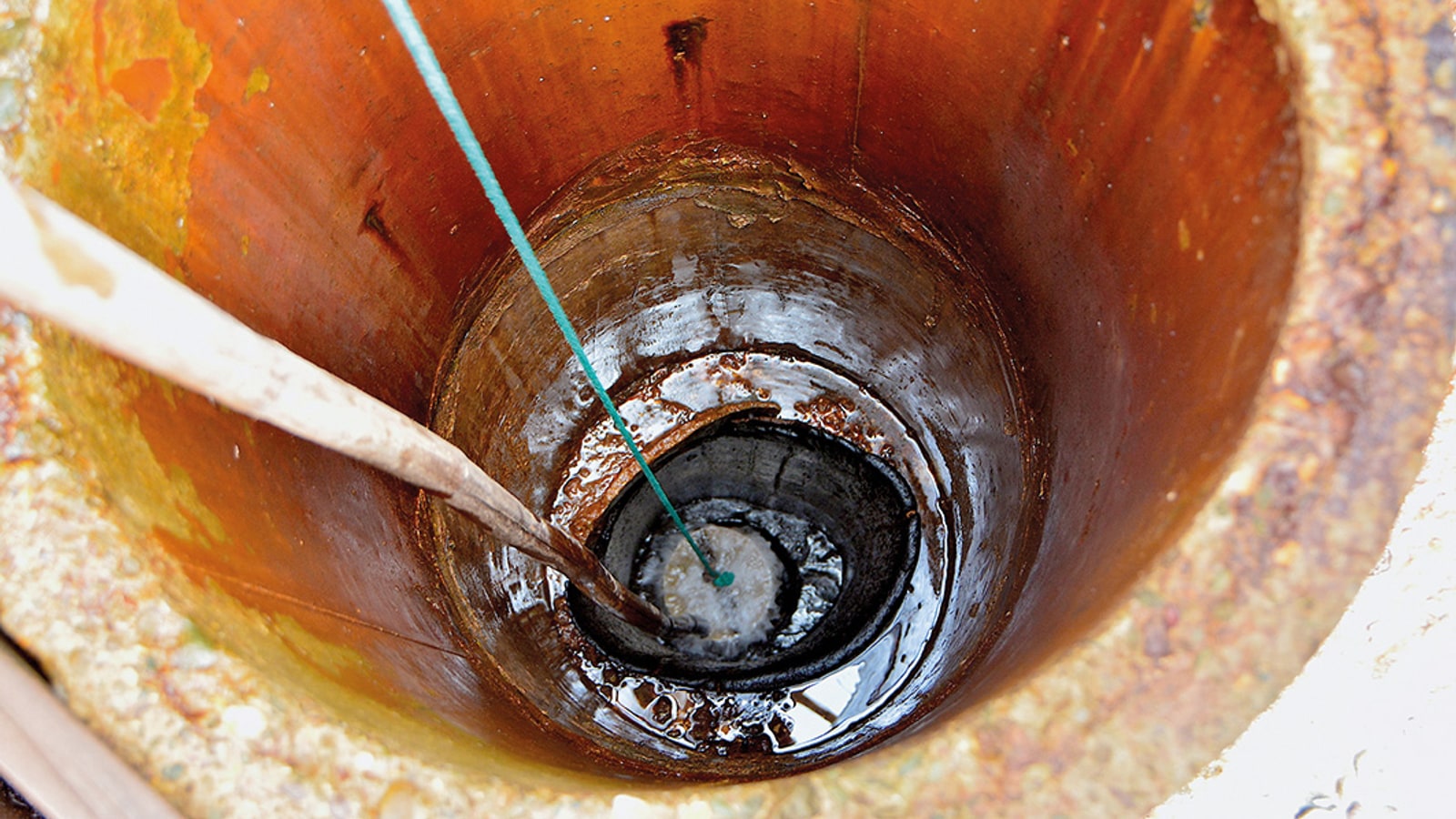
The Bo Kluea wells draw mineral-rich brine from underground. Families boil it in pans until crystals remain, then dry and package the salt. Observe from the visitor areas and ask before photographing people at work.
Buy directly when possible and choose quantities you can use. Salt, spa products and local foods make practical souvenirs, but check airline weight and agricultural rules for your destination. Do not lean over wells or touch equipment without invitation.
Slow down in Sapan
Sapan Village lies where the Wa and Sapan rivers converge. Walk rather than driving between every viewpoint, greet residents and avoid blocking narrow lanes for photographs. Early morning and late afternoon show the valley at its quietest.
Wat Sapan is part of the community’s history, not simply a photo prop. Dress modestly, remove shoes where required and keep voices low. Spend at local cafés, homestays and shops if you use village space and scenery.
Walk to the waterfall
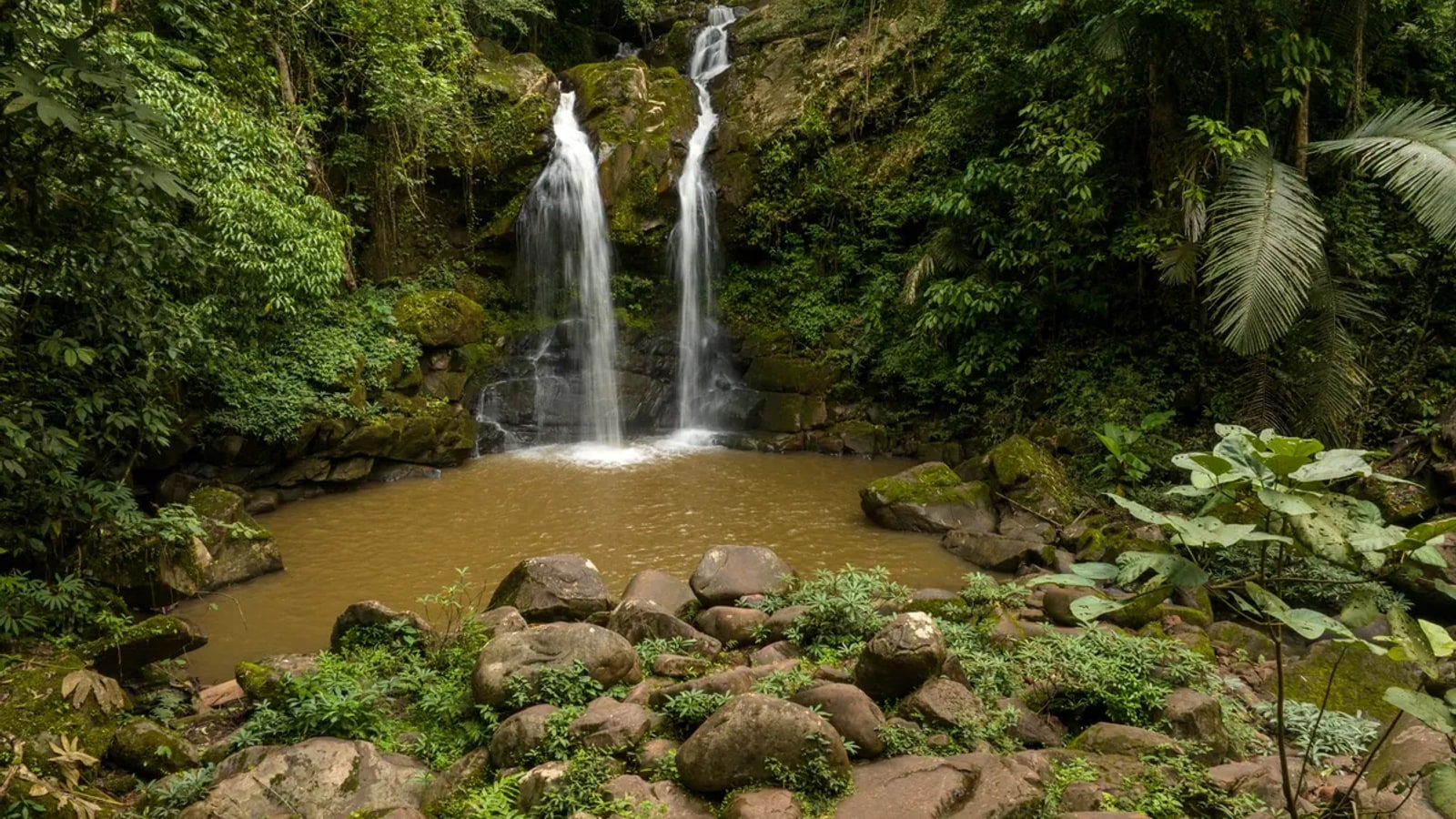
Sapan Waterfall has three tiers and is described as flowing year-round, but volume changes with weather. Forest paths, roots and rocks can be slippery. Wear closed footwear with grip and turn back if rain intensifies or staff restrict access.
Do not climb wet rock faces or enter fast water for a photograph. Carry out rubbish and avoid soaps or food near the stream. The forest experience is more rewarding when visitors keep noise low and leave the pools undisturbed.
Stay overnight
An overnight stay lets you separate the salt wells, village and waterfall without racing sunset. Confirm parking, road access, breakfast and heating or hot water with the property. Mountain nights can feel cool compared with Nan city.
Book directly through a traceable channel and retain the address in Thai for the driver. Small properties may have limited card acceptance, so carry modest cash while keeping it secure. Tell the host your expected arrival before entering the mountain section.
A simple itinerary
Leave Nan city after breakfast, stop at viewpoints only where parking is safe, and reach Bo Kluea before lunch. Visit the salt area, then continue to Sapan for a late-afternoon walk and overnight stay.
The next morning, see the village in softer light and visit the waterfall after checking conditions. Return by the safest recommended route with generous daylight. The itinerary is deliberately modest; mountain travel becomes memorable through attention, not speed.
Travel responsibly
Water and waste services are limited in small mountain communities. Refill bottles where safe, refuse unnecessary packaging and carry rubbish back to a proper bin. Drones can disturb residents, wildlife and temple spaces, so fly only with clear permission and within Thai aviation rules.
Keep music low at viewpoints and avoid entering fields for a photograph. Ask before photographing residents or working salt makers at close range. A respectful visit protects the calm character that draws travellers to Bo Kluea and Sapan in the first place.
Keep exploring
Continue with related TFT coverage, browse more Thailand guides and compare the latest TFT recommendations.
Common questions
How many nights should I allow?
One night is the minimum comfortable plan; two nights give more weather flexibility and a slower village stay.
Does Sapan Waterfall flow year-round?
It is described as a year-round waterfall, but water volume and trail conditions still vary with weather.
Will the salt workshops always be active?
No. Production can pause, including during the Buddhist Lent period, so ask locally before relying on a demonstration.