
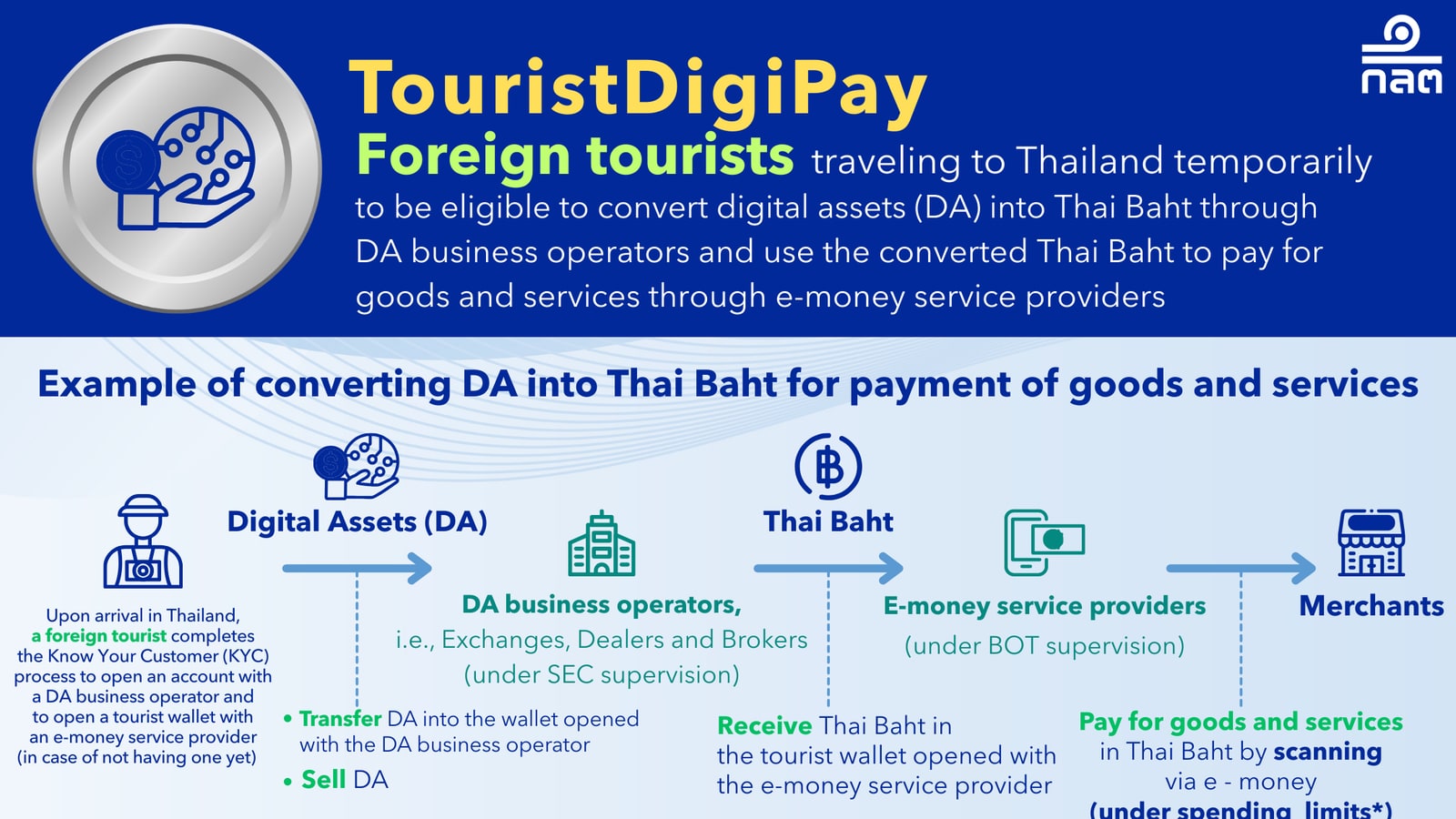
TouristDigiPay is a Thai regulatory sandbox that lets eligible foreign visitors convert digital assets into Thai baht through participating licensed businesses, then spend the baht through an e-money service. It does not make cryptocurrency legal tender, and merchants do not receive digital assets. The conversion and payment layers remain separate.
The project is useful only when the operator is genuinely approved. The Thai Securities and Exchange Commission publishes the participant list and service period. As of the 6 October 2026 update, Bitazza Co., Ltd. and Whale Exchange Co., Ltd. are listed with active sandbox periods. Check the list again immediately before opening an account.
How the flow works
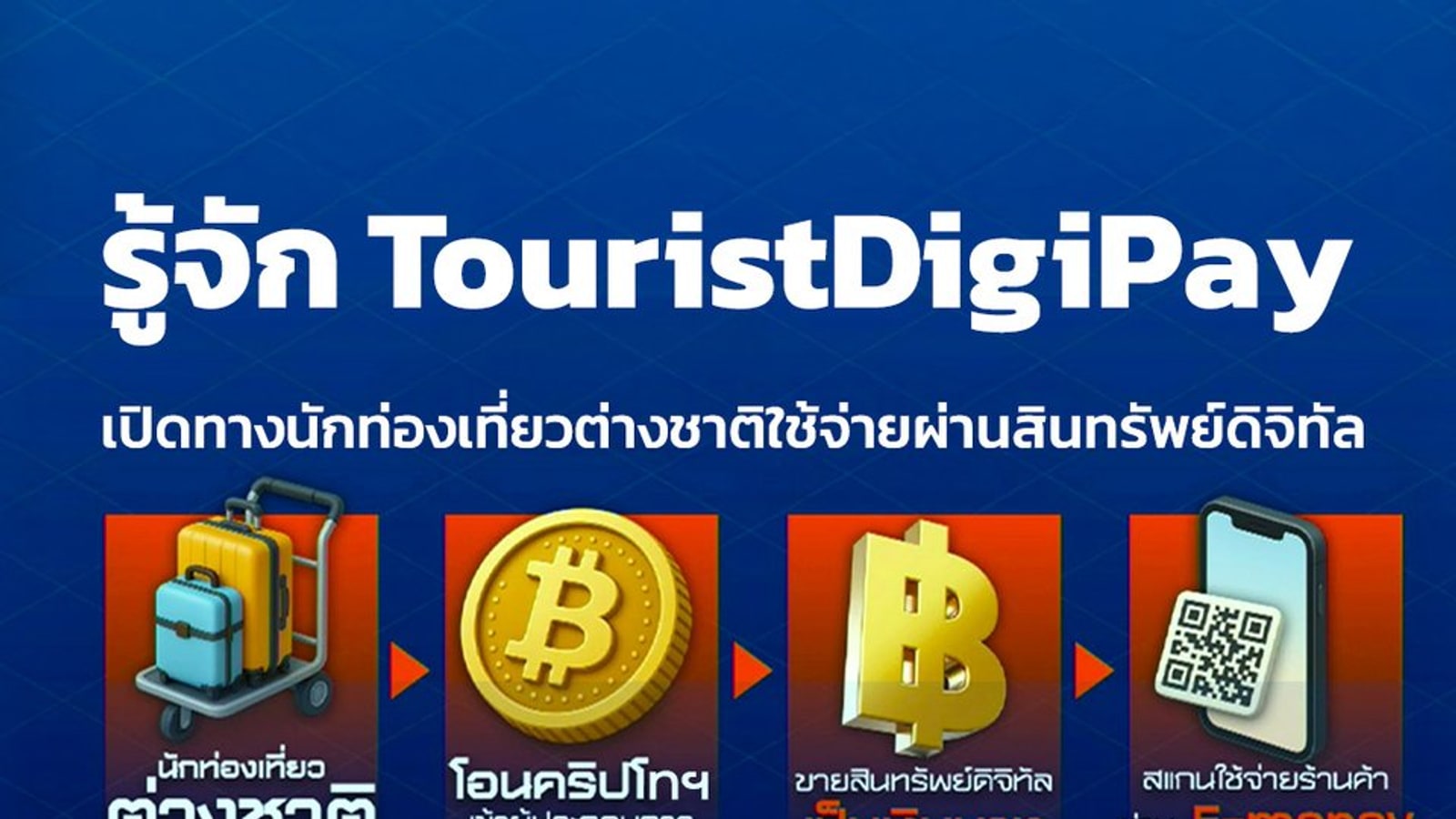
A traveller completes identity checks with a participating digital-asset operator and opens or links the required e-money service. Digital assets are transferred to the operator, sold for baht and credited to the payment wallet. The traveller then pays participating merchants in baht.
This separation matters. A shop should not ask you to send crypto directly to a personal wallet as part of TouristDigiPay. If a payment route bypasses the regulated operator and e-money account, stop and verify it independently.
Who may use it
The sandbox is designed for foreign tourists temporarily visiting Thailand. Identity, travel-status and anti-money-laundering checks apply, and an operator may ask for a passport, entry information, source-of-funds details or other evidence. Approval is not automatic.
Use a secure connection and begin the process through a link reached from the regulator’s participant record or the named company’s established channel. Do not upload passport scans to a page reached through an unsolicited message, social advertisement or QR sticker.
Current participants
The participant record lists Bitazza Co., Ltd. from 9 September 2026 to 10 February 2028 and Whale Exchange Co., Ltd. from 25 September 2026 to 26 February 2028. Dates can change if a participant exits, is suspended or completes testing.
A familiar brand name alone is not enough. Match the legal company name, web domain and current service status. Contact details should agree across the regulator record and the operator’s long-standing channels. Save a screenshot of the verified entry before transferring value.
Know the limits
Sandbox controls can include spending, conversion and reconversion limits, merchant categories and enhanced checks. Fees and exchange rates are set by participating providers within the programme framework, so compare the net baht you receive rather than a headline rate.
Ask how unused baht can be handled and what evidence is required to convert it back, noting that reconversion may be limited to the original digital-asset value. Understand withdrawal, refund and dispute processes before committing a large amount.
Avoid impostors
The regulator’s investor-alert database has warned that touristdigipay.net used the programme name without being a licensed digital-asset business. Do not treat a matching name, polished design or search advertisement as proof. Domains and warnings can change, so repeat the check each time.
Never share a seed phrase, private key, one-time password or remote-screen access. A legitimate identity process does not need control of your self-custody wallet. Send only the amount required for the intended conversion after every address and network has been confirmed.
Keep records
Record the quoted exchange rate, fee, asset amount, baht amount, transaction identifier and wallet receipt. Keep support conversations within the provider’s authenticated channel. For a merchant purchase, obtain a normal baht receipt.
If a transfer is delayed, do not send a second amount merely because someone says the first is stuck. Open a ticket through the verified provider, then preserve screenshots and timestamps. Urgency is a common pressure tactic in financial scams.

Decide if it suits you
TouristDigiPay may suit a visitor already holding digital assets who accepts identity checks, conversion costs and sandbox limits. It is not automatically cheaper than cards, cash or international QR-payment links. Compare total cost, consumer protection and ease of refunds.
For most travellers, diversification is sensible: keep a modest amount of cash and a conventional payment card even if the wallet works well. A phone problem, compliance review or merchant outage should not leave you unable to pay for transport or accommodation.
Keep exploring
Continue with related TFT coverage, browse more Thailand guides and compare the latest TFT recommendations.
Common questions
Does a merchant receive cryptocurrency?
No. Digital assets are converted through a participating operator and the merchant receives baht through an e-money payment flow.
Which operators are currently listed?
The 6 October 2026 participant update lists Bitazza Co., Ltd. and Whale Exchange Co., Ltd.; check the regulator list again before use.
Is touristdigipay.net approved?
The regulator’s alert database says that domain is not licensed as a digital-asset business. Do not use it as proof of programme participation.