
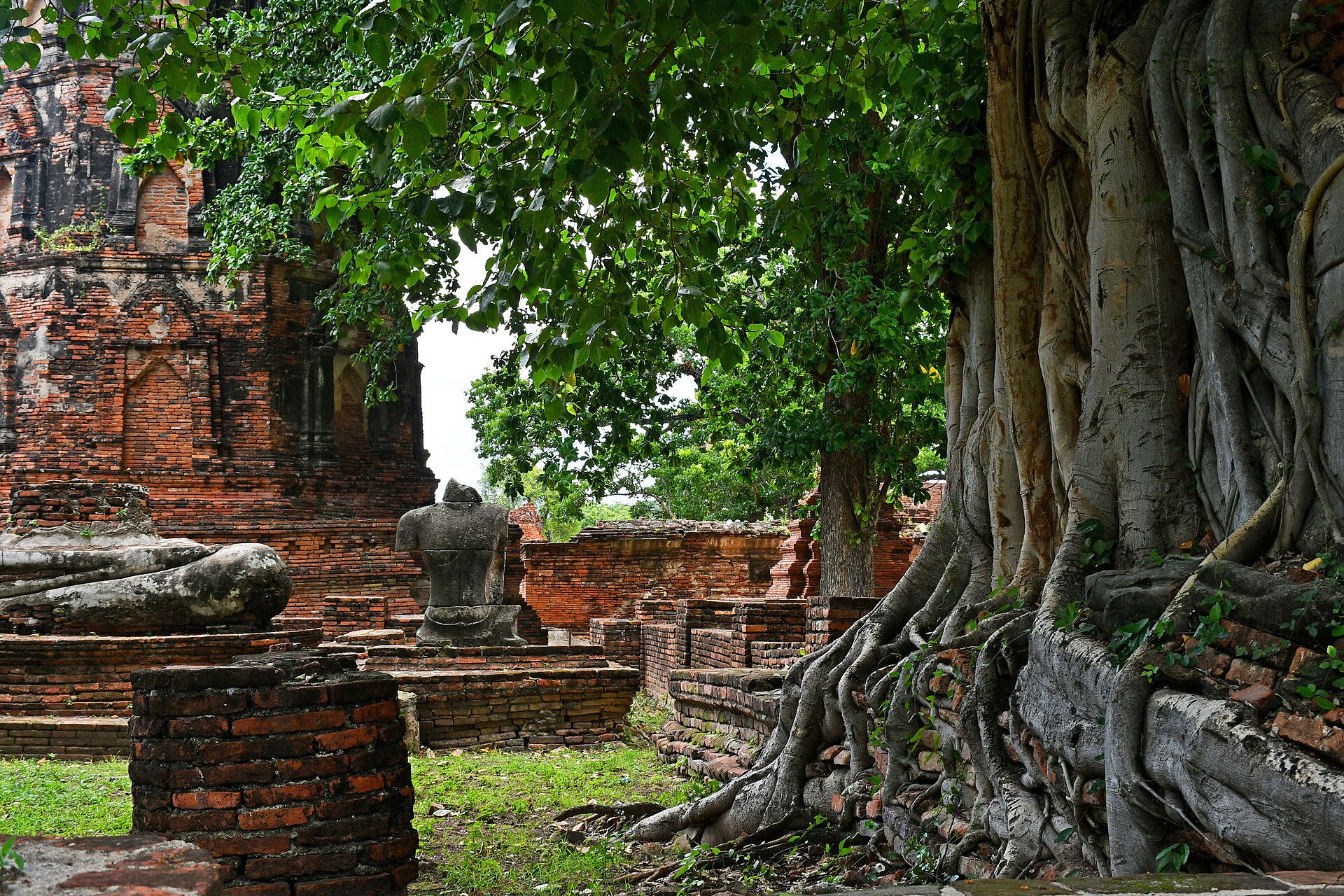
Ayutthaya Historical Park is Thailand’s essential World Heritage day trip, with temple ruins, river geography, cycling routes and deep royal history. UNESCO describes Ayutthaya as a former centre of global diplomacy and commerce, now an archaeological ruin of tall prang towers and monumental monasteries.
Founded in 1350, the city was shaped by rivers, canals, moats and water-management systems. That geography still matters for visitors because the ruins are spread across a broad former capital rather than gathered in one compact temple compound.
Why Ayutthaya Matters
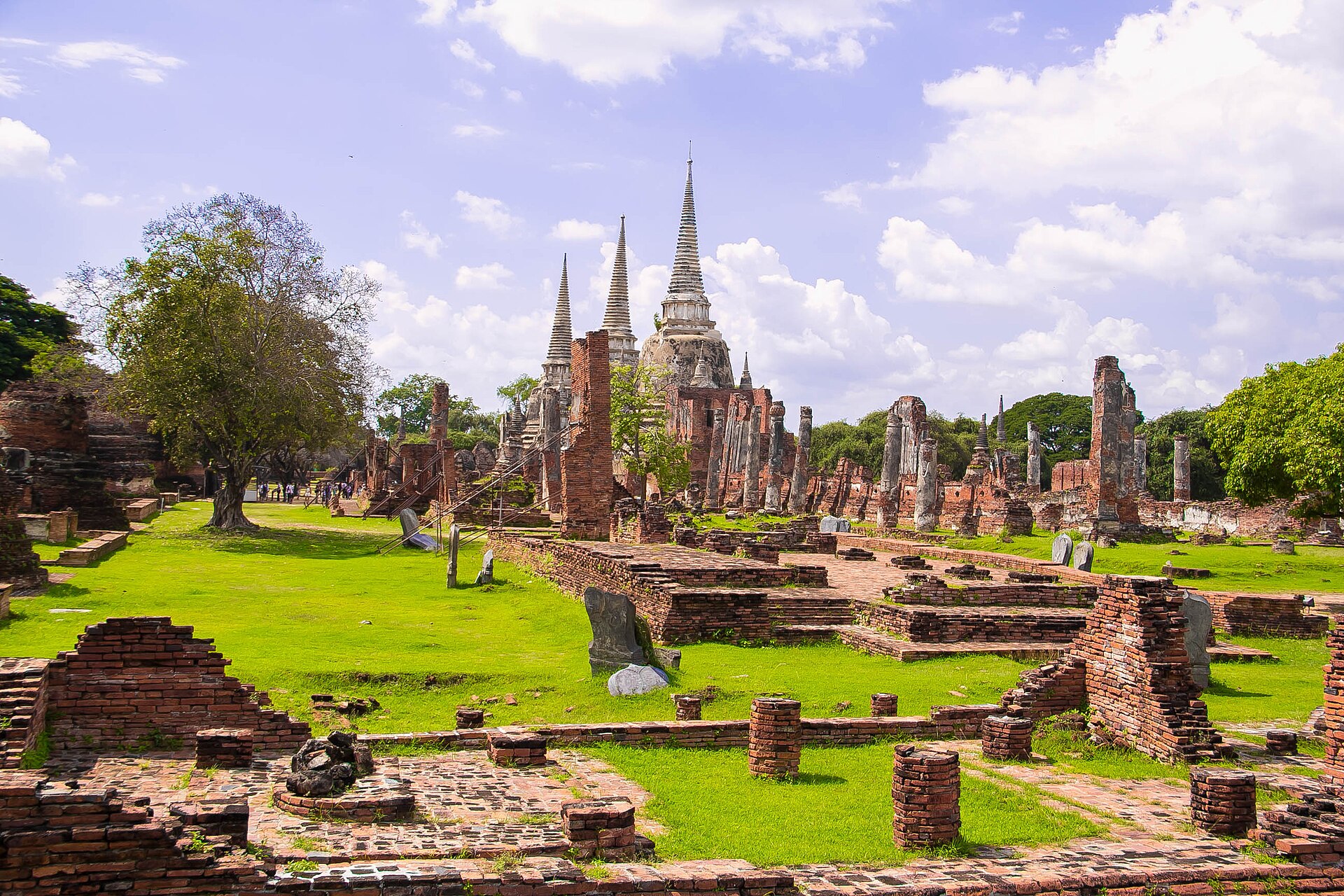
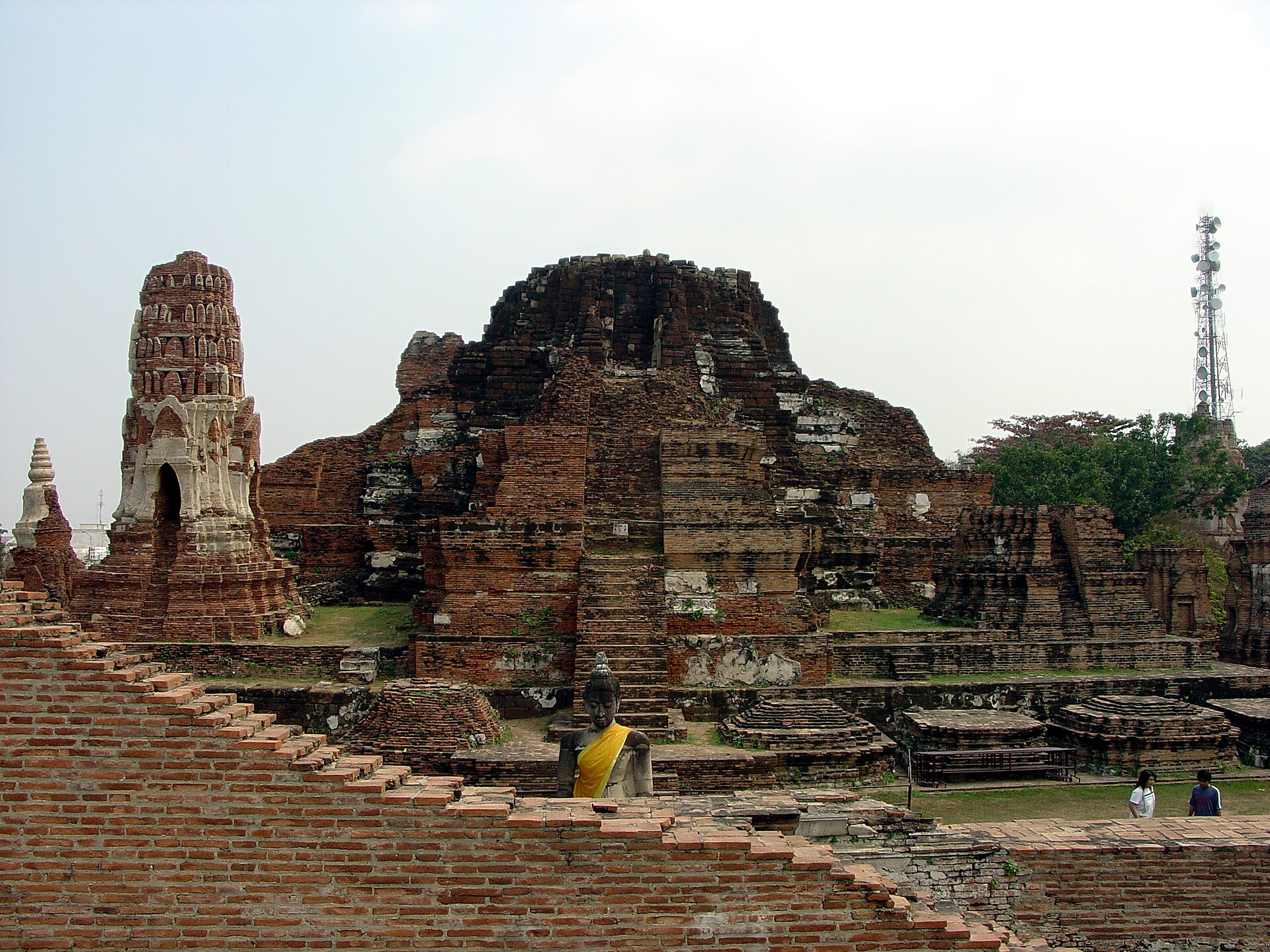
The biggest planning mistake is treating Ayutthaya as one famous photo. Wat Mahathat and the Buddha head in tree roots are important, but they are only one part of a wider city landscape that includes Wat Ratchaburana, Wat Phra Si Sanphet, Viharn Phra Mongkhon Bophit and Wat Chaiwatthanaram.
First-time visitors should choose a route before arrival. Two or three major temples in the morning, a shaded lunch or museum break, then one late-afternoon riverside stop will feel better than racing through every ruin in peak heat.
Planning The Temple Route
Cycling can be atmospheric in cooler months, but it is not automatically the best choice. In hot season, with children or with older travellers, a tuk-tuk, private car or guided vehicle loop can preserve energy for the temples themselves.
Temple etiquette still matters. Dress modestly, keep shoulders and knees covered for active religious areas, do not climb on fragile brickwork, and avoid using Buddha images as casual props. Respectful behaviour makes the visit smoother and protects the site.
Getting There
From Bangkok
From Bangkok, train travel is atmospheric and affordable, but private transport gives more control over heat, timing and temple order. River-cruise combinations can be enjoyable if the route itself is part of the day, though they require more time.
Ayutthaya also works as a culture pairing with Sukhothai and Phimai. Sukhothai feels calmer and earlier; Phimai shows Khmer influence; Ayutthaya feels denser, royal, commercial and river-driven. Together they explain different chapters of Thai history.
Before You Go
Bring a hat, water, sunscreen, small cash and shoes that can handle uneven ground. A local guide can add value if you care about royal history, trade routes and temple symbolism rather than simply moving between photo points.
The best visit leaves space to look. Ayutthaya is powerful because its scale is still visible in brick, foundations, prang towers and river geography. Let the ruins feel large instead of reducing the day to a checklist.
For a day trip, start earlier than feels necessary. Bangkok traffic and railway timing can steal the cool part of the morning, and Ayutthaya is far less forgiving at midday. If you arrive late, reduce the route rather than trying to recover by rushing.
Readers who like photography should plan around light rather than only temple fame. Wat Chaiwatthanaram is often more rewarding late in the day, while central ruins are easier in the morning. Museums and lunch are better uses of the hottest hours.
If you are travelling with mixed interests, make the history legible. Pair one iconic ruin with one quieter temple and one riverside stop. That gives enough variety for people who are not temple specialists while still respecting the site.
Common Mistakes
- Trying to see every ruin in one day.
- Cycling at midday in hot season without enough water.
- Treating Buddha images and fragile brickwork as photo props.
- Forgetting that the best light and coolest weather are early and late.
Suggested First-Time Route
A simple first-time route starts with Wat Mahathat for the most recognisable image, then moves to Wat Ratchaburana or Wat Phra Si Sanphet for scale and architectural context. After lunch or a shaded break, finish with Wat Chaiwatthanaram if you can time it for softer late-afternoon light.
Do not underestimate travel between stops. The sites are close enough to feel connected, but not so close that everyone will enjoy walking all day in heat. If you are with children, older relatives or anyone sensitive to sun, a tuk-tuk or car loop will usually create a better historical visit than a forced cycling plan.
Museums And Guides
A guide or museum stop can make Ayutthaya easier to read. Without context, the ruins risk becoming a sequence of brick towers and photo angles. With even a little background on trade, diplomacy, royal ritual and the 1767 destruction, the scale of the former capital becomes much clearer.
If you only have one day, choose depth over quantity. A slower route through three or four well-chosen places will teach more than a rushed circuit of every famous name.
Need To Know
Location: Ayutthaya Historical Park, Phra Nakhon Si Ayutthaya Province, around 80 kilometres north of Bangkok. Status: UNESCO World Heritage Site, inscribed in 1991. Transport: train, private car, tour van or river-cruise combinations.