
The World’s Best Beach You Have Probably Never Heard Of
In 2023, a small, car-free island off the coast of Trang province was voted the world’s best beach by World Beach Guide, ranking number one on their Top 100 Beaches on Earth list. The announcement sent ripples of disbelief through the travel world — not because Koh Kradan’s Paradise Beach did not deserve the honour, but because this slender sliver of an island, measuring just four kilometres from north to south and averaging 300 metres across, had somehow remained one of Thailand’s best-kept secrets despite decades of mass tourism engulfing islands further north. In 2025, Koh Kradan earned a further distinction: a five-star Beach Star environmental rating, reflecting its commitment to cleanliness, managed facilities and eco-conscious tourism.
What makes Koh Kradan extraordinary is not any single attribute but the combination of everything that modern beach tourism has systematically destroyed elsewhere. There are no cars. No motorbikes. No roads, in the conventional sense. No ATMs, no convenience stores, no nightclubs. What there is: 1.5 kilometres of powder-white sand shelving into turquoise water so clear that you can count individual fish from the shoreline; a coral reef beginning just 200 metres offshore that ranks amongst Thailand’s finest for snorkelling; and a silence — broken only by waves, birdsong and the occasional creak of a longtail boat — that feels almost hallucinatory to anyone arriving from Bangkok or Phuket. Part of Hat Chao Mai National Park, Koh Kradan exists in a state of preservation that feels less like a tourism destination and more like a nature reserve that reluctantly tolerates visitors.
Paradise Beach: Why It Won the World
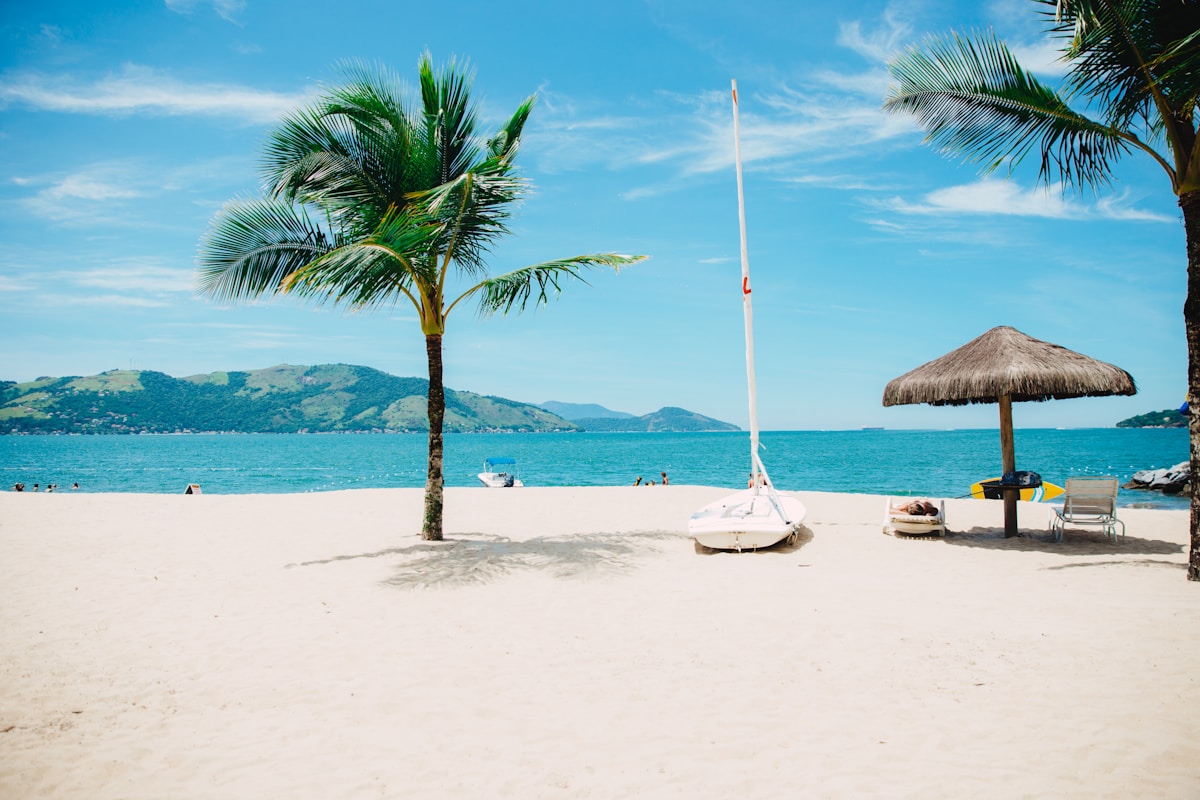
The beach that secured Koh Kradan’s global accolade stretches along the island’s western coast, a gently curving expanse of fine white sand backed by coconut palms and casuarina trees. The sand is soft enough to sink into without being the powdery nuisance that clings to everything; the gradient is gentle enough for children yet interesting enough for swimmers. But the beach’s defining feature lies just offshore: the turquoise water extends roughly 200 metres at barely waist depth before dropping away to reveal one of Thailand’s most accessible coral reef systems. This natural shallow shelf creates the effect of an enormous natural swimming pool, its floor clearly visible through water of almost absurd clarity.
The snorkelling here is exceptional by any standard, and extraordinary for a reef accessible simply by wading in from the beach. Large schools of reef fish patrol the coral heads — parrotfish, butterflyfish, triggerfish and the occasional blacktip reef shark — whilst the reef structure itself remains in notably good condition, thanks in part to the island’s national park protections and relatively low visitor numbers. For more ambitious underwater exploration, Ao-niang Beach on the island’s eastern side offers the finest snorkelling on Koh Kradan, with denser coral coverage and even fewer visitors. Professional diving services are available through Pro Scuba Diving Service, which operates from the island and offers excursions to nearby sites including the spectacular reefs around Koh Rok.
Where to Stay: From Beachfront Luxury to Jungle Bungalows
Koh Kradan’s accommodation options are deliberately limited — there are no high-rise hotels and, given the island’s national park status, there likely never will be. This constraint is precisely what preserves the island’s character, and the properties that do exist have adapted thoughtfully to their setting.
Luxury and Upper Mid-Range
Mali Kradan represents the island’s most polished offering: a four-star beachfront property with villas set amongst gardens, a restaurant and bar serving both Thai and international cuisine, complimentary Wi-Fi and an airport shuttle service that smooths the multi-stage journey from the mainland. Seven Seas Resort occupies another prime beachfront position, offering luxury accommodation with direct access to Paradise Beach’s crystal-clear waters and a level of service that belies the island’s remote setting.
Mid-Range and Boutique
Kalumè Eco Boutique Resort strikes an appealing balance between comfort and environmental sensitivity, with rooms positioned directly on the beach and a restaurant that has earned a devoted following for its homemade bread, freshly baked desserts and wood-fired pizza — an unexpected luxury on an island with no mains electricity. Reef Resort caters well to families, offering 3.5-star amenities with direct beach access and dedicated facilities for children, including a level of organisation and planning that makes the logistics of visiting a remote island with young ones considerably less daunting.
The Car-Free Island Experience
Koh Kradan’s complete absence of motorised transport is not a limitation but its single greatest luxury. The island can be traversed on foot in roughly 15 minutes, and the walking trails that connect the western and eastern beaches thread through jungle dense enough to feel genuinely wild. You walk, you swim, or you kayak — these are your options, and the simplicity is liberating in a way that is difficult to appreciate until you have spent a few days adapting to the island’s pace. Most resorts provide complimentary kayaks and paddleboards, and the reef’s natural breakwater keeps the waters calm enough for leisurely paddling along the entire western coast.
The absence of vehicles also means an absence of noise pollution that is remarkable even by island standards. Evenings on Koh Kradan are genuinely silent — no engine noise, no music from competing bars, no traffic. The loudest sound you are likely to hear after dark is the crash of waves and the chorus of cicadas, a soundtrack that makes the star-gazing from Paradise Beach an almost meditative experience. This is an island where the digital detox happens naturally, not through any enforced policy but simply because there is so little competing for your attention beyond the natural world.
Dining on the Island
Koh Kradan’s dining scene is intimate and unpretentious, shaped by the practical constraints of island logistics and elevated by the quality of ingredients that arrive fresh from the sea each morning. Most resorts operate their own restaurants, and these double as the island’s social hubs — there are no standalone bars or late-night venues.
Reef Resort Restaurant serves a well-executed mix of Italian and Thai dishes, with pad thai, pasta, green curry and massaman curry amongst the most popular options. Kalumè’s restaurant has carved out a particular reputation for its homemade bread and wood-fired pizza, which — combined with a beachfront setting and a glass of wine as the sun drops behind the Andaman horizon — constitutes one of Thailand’s most quietly perfect dining experiences. Restaurants typically operate across three service periods: breakfast from 08:00 to 10:00, lunch from 12:00 to 15:00 and dinner from 18:00 to 21:00.
One practical note that bears emphasis: food and supplies on Koh Kradan cost significantly more than on the mainland, as everything must be transported by boat. Savvy visitors bring supplementary snacks, water and any preferred beverages from Trang or the ferry pier. This is not a hardship but a sensible economy that allows you to budget more generously for the restaurant meals that deserve your full attention.
Getting to Koh Kradan
From Bangkok
The most practical route combines a flight to Trang Airport (TST) — served by Air Asia and Nok Air from Don Mueang Airport, with a flight time of approximately 1 hour 20 minutes — followed by a minivan and boat transfer to the island. King Travel operates a direct service from Trang Airport to Koh Kradan with a total journey time of 1.5 to 2 hours, including a short minivan ride to Hat Yao Pier and a longtail boat crossing. The entire Bangkok-to-beach journey can be completed in under four hours, making this one of Thailand’s most accessible remote islands.
Alternative access points include Krabi Airport (approximately 90 kilometres from the nearest pier) and Hat Yai Airport, though Trang remains by far the most convenient gateway. For those with more time and less urgency, a combined bus and ferry service operates from Bangkok’s southern bus terminal, though the 20-hour journey is recommended only for the genuinely adventurous.
Ferry Services
During the high season (November to April), regular longtail boats and speedboats connect Koh Kradan to the mainland and neighbouring islands. Services depart from Hat Yao Pier near Trang and typically run several times daily. During the low season (May to October), services become less frequent and may be suspended entirely during rough weather — a factor that makes careful seasonal planning essential.
Nearby Islands and Day Trips
Koh Kradan’s position within the Trang island archipelago makes it an ideal base for exploring a constellation of equally unspoilt neighbours. Koh Mook, just 3.6 miles away and easily reached by longtail boat, is home to the legendary Emerald Cave (Tham Morakot) — a sea cave that you swim through in near-total darkness before emerging into a hidden beach entirely enclosed by limestone cliffs, open to the sky above. It is one of Thailand’s most magical natural attractions, and arriving by private longtail from Koh Kradan rather than on a crowded tour boat transforms the experience entirely.
Koh Ngai (also spelled Koh Hai) offers excellent snorkelling and a handful of resorts with a slightly more developed infrastructure than Koh Kradan — useful for a change of pace or a longer lunch. Koh Libong, the largest island in the Trang group, is home to a significant dugong population and offers wildlife experiences that complement Koh Kradan’s beach-focused appeal. The popular four-island tour — combining Koh Kradan, Koh Mook, Koh Ngai and Koh Chueak in a single day excursion with snorkelling, the Emerald Cave swim and a Thai buffet lunch — provides an excellent overview of the archipelago for those staying on any of the islands.
Best Time to Visit
The dry season from November to April represents the optimal window, with January, February, March and December offering the driest conditions and most reliable ferry services. Temperatures remain consistently warm throughout the year at 29°C to 31°C, but the dry season’s clear skies and calm seas make for the finest beach and snorkelling conditions. September is the wettest month, with average rainfall of 349mm, and some accommodation and ferry services close entirely during the monsoon period.
Practical Tips for Visitors
Cash is essential. There are no ATMs on Koh Kradan, and whilst most resorts accept card payments, you will need cash for boat transfers, smaller purchases and any services outside your resort. Bring more than you think you will need — running out of cash on an island with no banking facilities is an experience best avoided.
Pack wisely. There are no pharmacies or doctors on the island, so bring any essential medications, quality reef-safe sunscreen and insect repellent. A basic first-aid kit is sensible for any stay longer than a couple of nights. Snorkel gear is available at most resorts, but bringing your own ensures a better fit and avoids availability issues during peak season.
Respect the reef. Koh Kradan’s coral is its most precious asset and the foundation of its world-class snorkelling. Use only reef-safe sunscreen (mineral-based, without oxybenzone or octinoxate), avoid standing on or touching coral, and resist the temptation to feed the fish — practices that seem harmless but disrupt the reef ecosystem over time.
Embrace the pace. Koh Kradan rewards those who slow down. Bring books, not itineraries. Let mealtimes structure your day. Swim when the water calls. Sleep when the heat peaks. This is an island that asks very little of its visitors except that they be present — and in return, it offers something increasingly rare in the modern world: the experience of a place that remains, despite its global accolade, genuinely and beautifully itself.