
Thailand’s temporary credit-card relief remains in place through 31 December 2026. Card issuers must keep the minimum monthly repayment at 8% of the outstanding balance rather than returning it to 10% during the year. For a THB 50,000 statement balance, 8% is THB 4,000 before any issuer-specific rounding or past-due amount is considered.
Paying the minimum keeps an account from missing that month’s required amount, but it does not make card borrowing cheap. Interest continues on the unpaid balance, and new purchases can keep the debt from falling. Anyone unable to meet the minimum should contact the issuer early; the relief framework includes restructuring routes before an account becomes non-performing.
Check current visitor information on the Thailand credit card minimum payment 2026 page before making a special journey or payment.
What 8% Means
The minimum is calculated from the statement balance under the issuer’s terms, then combined with any fees, arrears or other required amounts shown on the bill. Read the actual statement rather than multiplying a current app balance, because transactions after the closing date belong to a later cycle.
Paying more than 8% reduces principal faster. Paying the full statement balance by the due date is generally the way to avoid purchase interest where the card’s grace-period conditions are met. Cash advances and some transactions can accrue charges differently, so check the product’s rate sheet.
The 0.25% Incentive
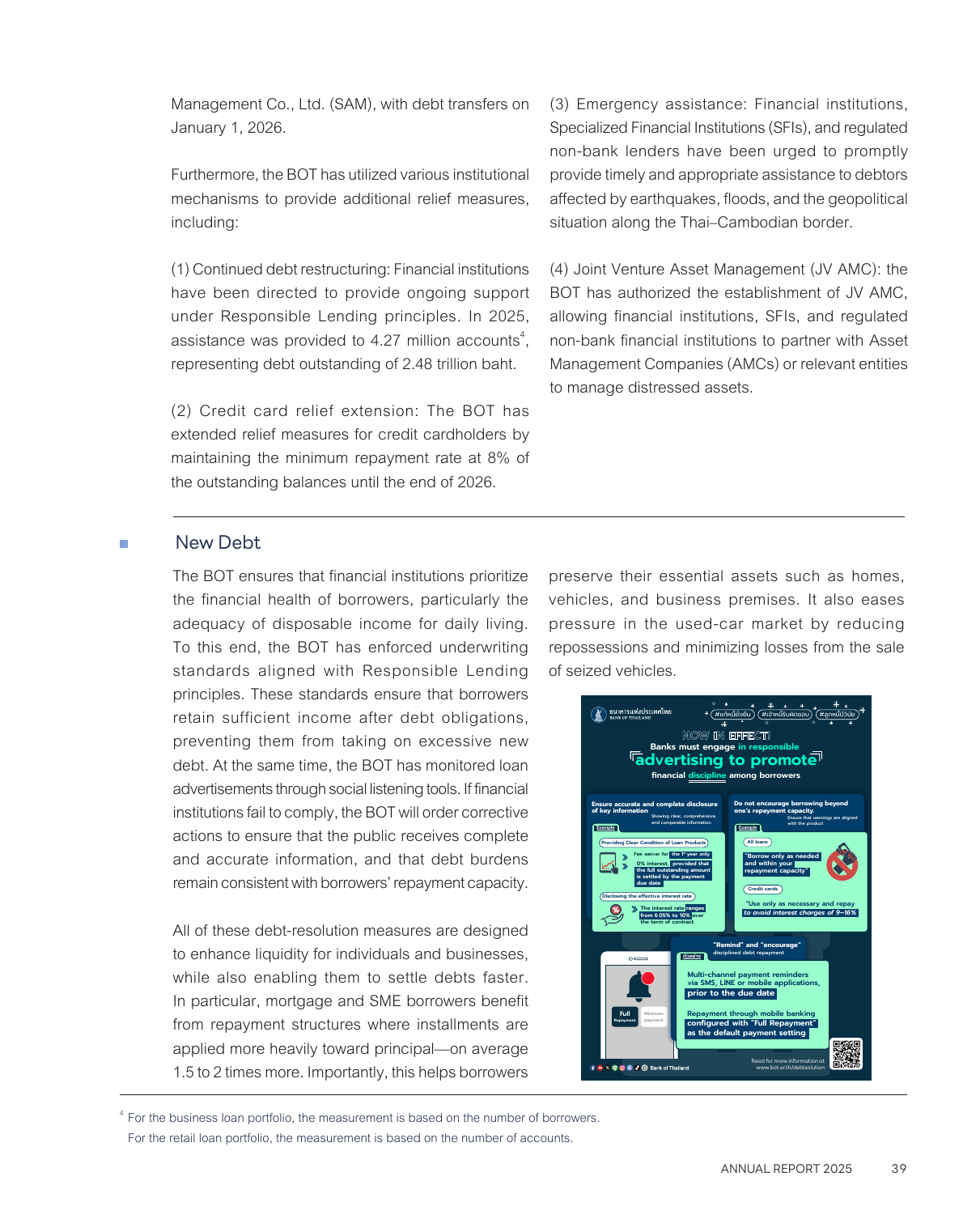
The Bank of Thailand says borrowers who pay at least 8% receive cashback equivalent to a 0.25 percentage-point reduction in the interest rate on the outstanding balance. This is an incentive for repayment, not a 0.25% rebate on the purchase value.
The benefit is small beside the cost of carrying a large balance. If an issuer’s effective annual rate is near the regulatory ceiling, a quarter-point reduction does not transform revolving debt into a low-cost loan. Confirm how and when the issuer applies the cashback on the statement.
Interest Adds Up
Credit-card interest in Thailand can be charged at up to the applicable regulated limit, commonly presented by issuers as no more than 16% per year including relevant charges. The exact product rate and calculation method belong in the issuer’s disclosure and the Bank of Thailand comparison tool.
A declining minimum also declines as the balance falls, which can stretch repayment if the cardholder pays only the stated floor. A fixed payment above the minimum usually clears principal faster, provided the card is not used for new spending. Run the numbers with the issuer’s actual rate rather than a generic calculator from another country.
If 8% Is Too High
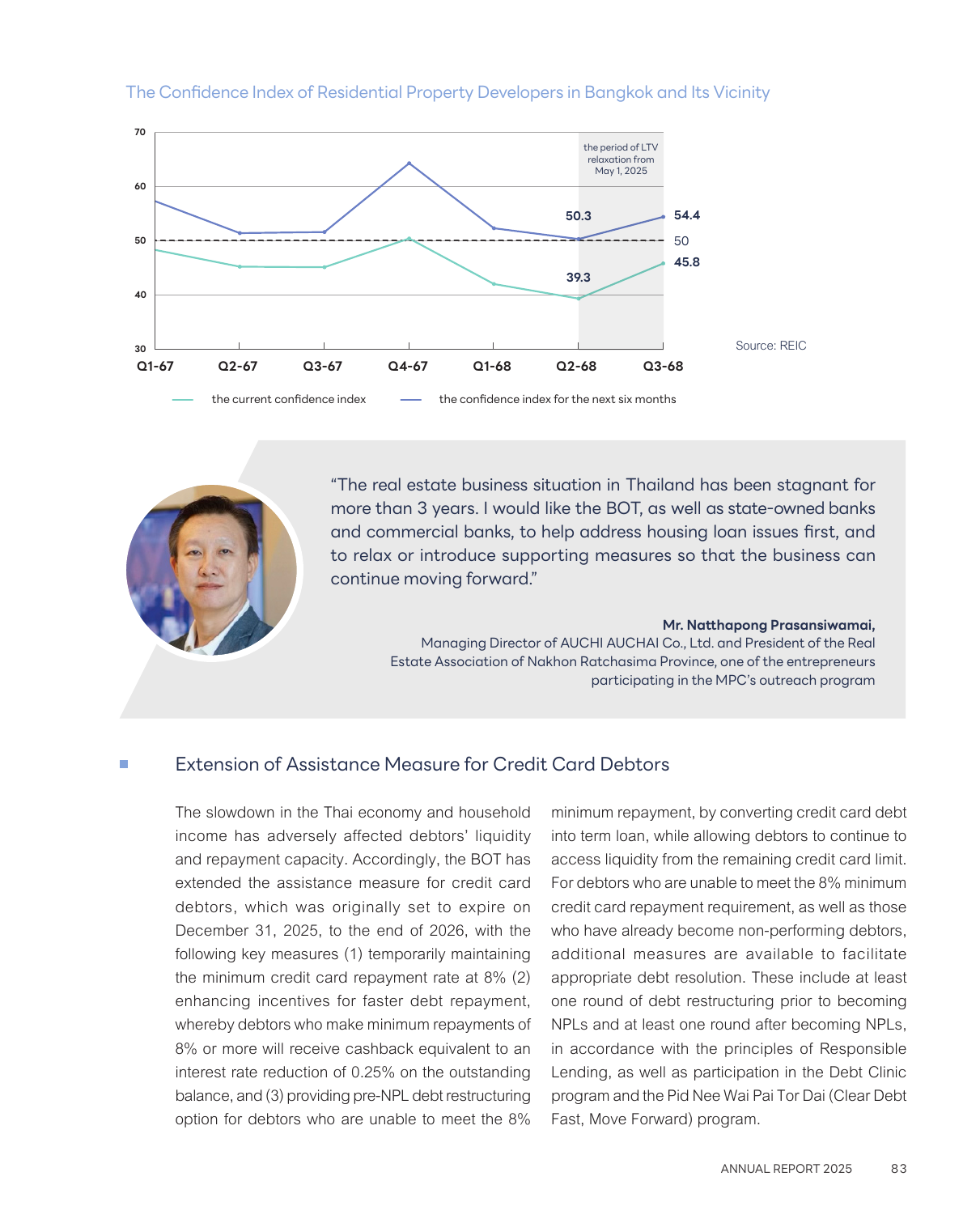
The relief framework permits pre-NPL restructuring that can convert credit-card debt into a term loan while allowing access to the remaining card limit under the agreed arrangement. A term loan can provide a fixed schedule, but the rate, duration, card access and total repayment must be reviewed before accepting.
Borrowers who are already in difficulty may also be entitled to at least one restructuring attempt before becoming non-performing and another after, under responsible-lending principles. Options can include the Debt Clinic and other programmes depending on lender, status and eligibility. Contacting the issuer before the due date preserves more choices.
A Safer Checklist
List every card balance, statement date, due date, rate and minimum in one place. Stop optional new card spending while testing whether the household budget can cover more than the minimum. Direct extra money to the costliest balance while maintaining required payments on the others, unless a formal adviser recommends a different structure.
Ask the issuer for a written illustration showing monthly payment, term, rate and total cost under any restructuring proposal. Check whether the card will be suspended, whether insurance or fees remain and what happens after a late instalment. Keep records of calls and submissions.

Where To Verify
The Bank of Thailand’s fee-comparison service shows credit-card rates and charges by provider, while its consumer pages explain responsible use and repayment. Issuers publish their own current schedules and statement calculations. Use both, because a system-wide rule does not replace product-specific terms.
This guide explains the 2026 framework and is not personal financial advice. A borrower facing missed essentials, multiple arrears or collection contact should seek qualified debt help promptly. Do not borrow from an unlicensed lender to meet a card minimum; that can replace a regulated problem with a more dangerous one.
Plan At A Glance
- Rule period: through 31 December 2026
- Minimum: 8% of the outstanding statement balance, subject to issuer calculations
- Incentive: cashback equivalent to a 0.25 percentage-point interest-rate reduction for paying at least 8%
- Help route: ask the card issuer about pre-NPL restructuring before missing payments
- Verification: use the Bank of Thailand comparison tool and the issuer’s current disclosure
Keep Exploring
Continue with Money, Travel and Deals on The Finest Thai.
Common Questions
Will the minimum return to 10% in 2026?
No. The Bank of Thailand has extended the 8% minimum through the end of 2026.
Does paying 8% stop interest?
No. Interest generally continues on the unpaid balance under the card’s terms.
Can debt be converted to instalments?
The relief framework includes pre-NPL restructuring into a term loan, but terms and eligibility must be agreed with the issuer.