
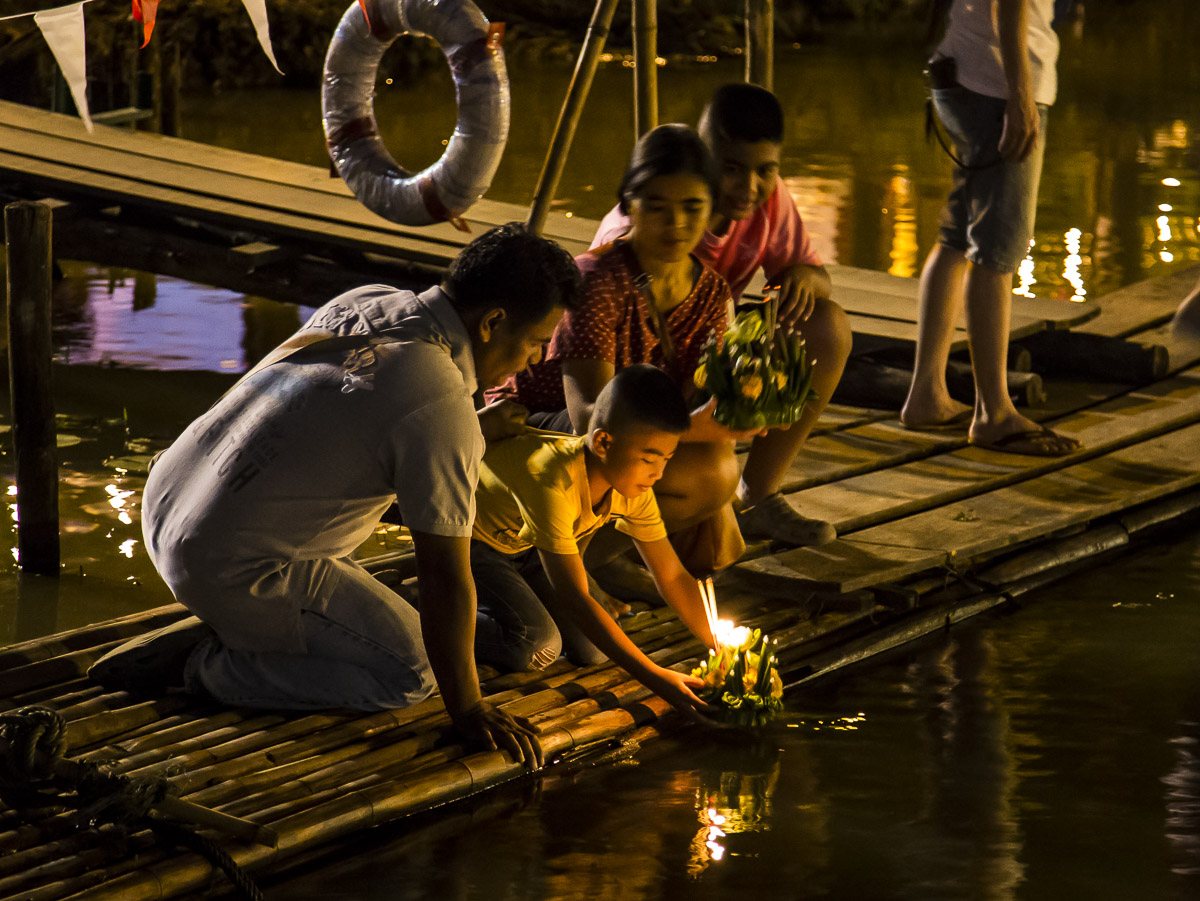
On the evening of the full moon in the twelfth month of the Thai lunar calendar — typically falling in November — the waterways of Thailand come alive with a spectacle of extraordinary beauty. Thousands upon thousands of small floating offerings, each carrying a candle, incense sticks, and flowers, are gently released onto rivers, canals, lakes, and ponds across the kingdom. This is Loy Krathong (ลอยกระทง) — the Festival of Light — one of the most visually enchanting and spiritually meaningful celebrations in the Thai cultural calendar.
Origins and Meaning
The word “Loy” means “to float,” and “Krathong” refers to the small, lotus-shaped vessel that carries the offering. The festival’s origins are debated by historians, but the most widely accepted account traces it to the Sukhothai Kingdom (13th–14th centuries), where it was first observed as a Brahmanical ceremony honouring the water goddess Phra Mae Khongkha — a deity of rivers and waterways. Over centuries, the festival absorbed Buddhist elements, and today the act of floating a krathong carries multiple layers of meaning.
For most Thais, releasing a krathong is an act of both gratitude and release. The candle and incense honour the Buddha and express thanks to the water spirits for the life-sustaining gift of water — a resource upon which Thai agriculture, transport, and daily life have depended for millennia. Simultaneously, the krathong is believed to carry away misfortune, negativity, and bad karma, floating them downstream and leaving the devotee spiritually cleansed. Many Thais also place a small coin, a lock of hair, or fingernail clippings in their krathong as a symbolic offering of self.
The romantic dimension of the festival should not be overlooked. Loy Krathong is widely considered the most romantic evening of the Thai year — the equivalent of Valentine’s Day in Thai cultural terms. Couples release their krathong together, and tradition holds that if the candles remain lit as the vessels float away, the relationship will endure. Single people make wishes for love, and the entire evening is suffused with a gentle, candlelit romanticism that is utterly beguiling.
The Krathong: Art and Tradition
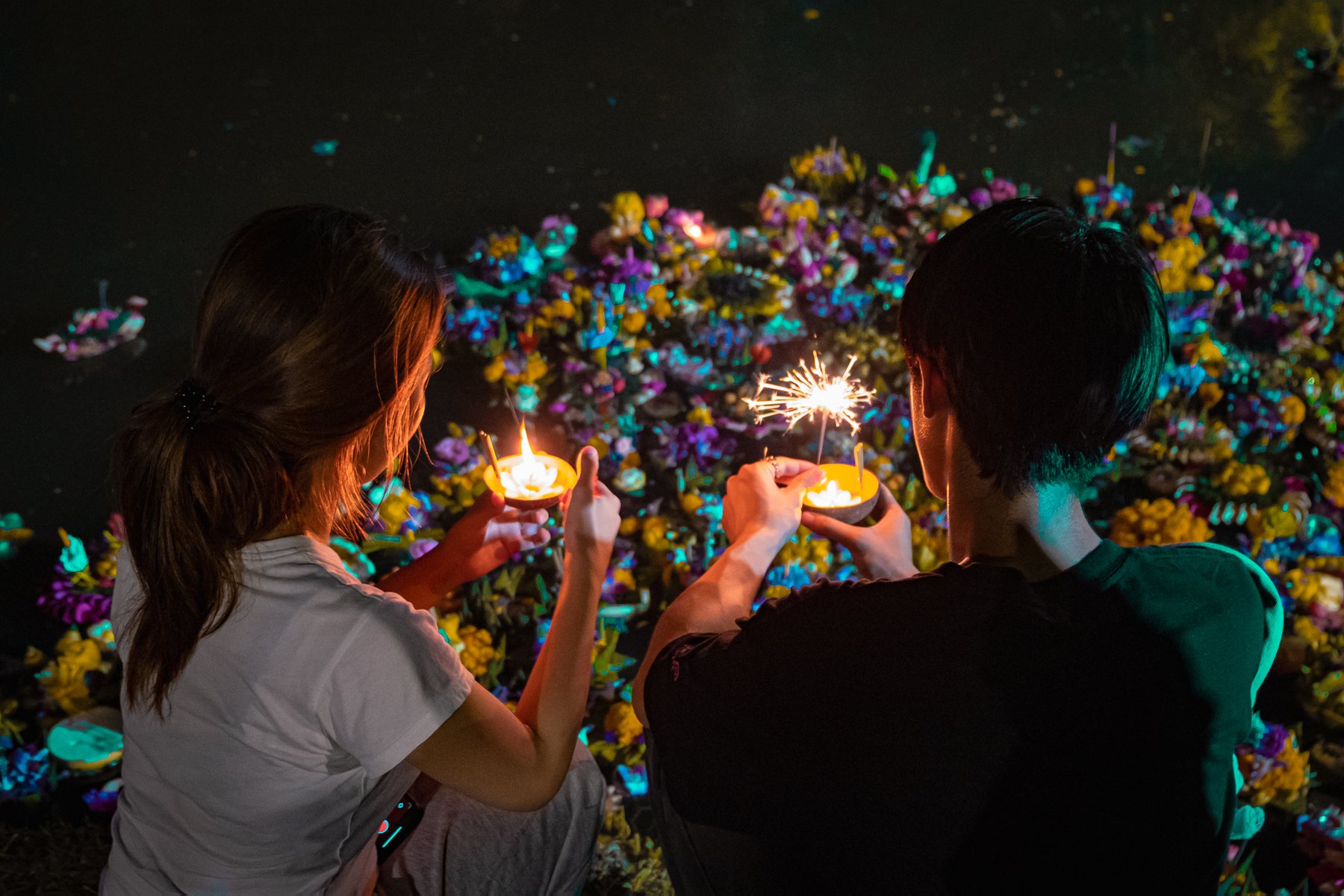
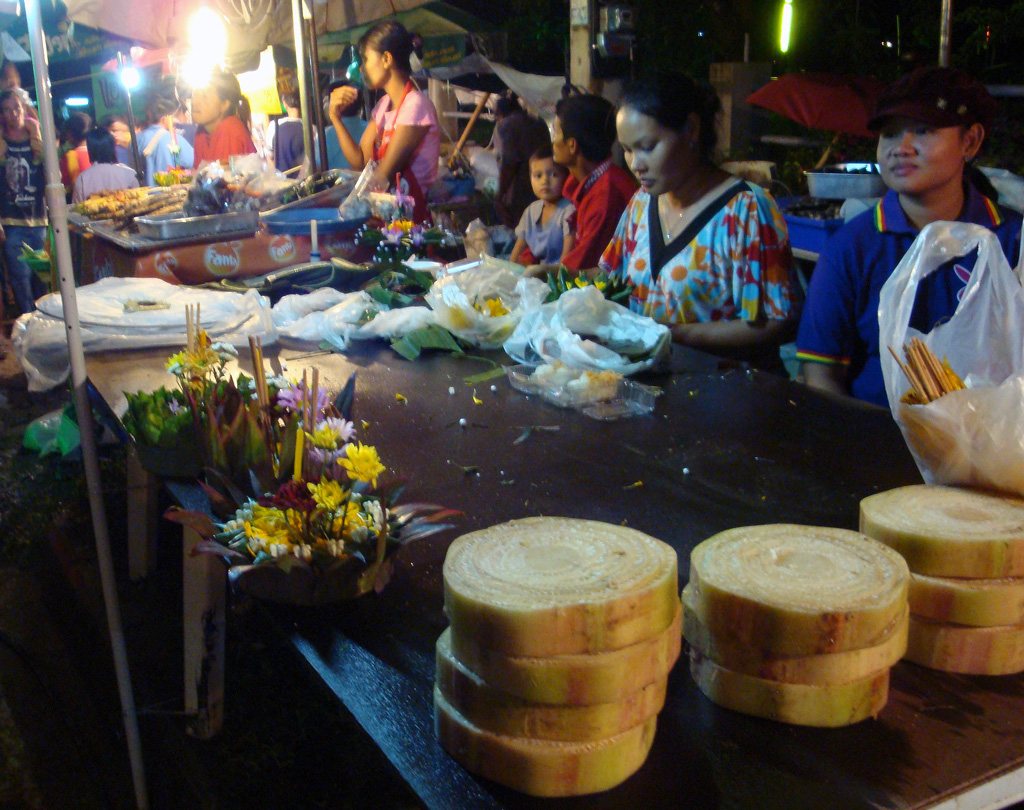
Traditional krathong are fashioned from banana tree trunks, sliced into circular cross-sections and elaborately decorated with folded banana leaves, flowers (typically marigolds and orchids), incense sticks, and a candle. The craftsmanship can be remarkable — experienced artisans create krathong of breathtaking beauty, with folded banana leaves forming intricate petal patterns that rival the finest origami.
In recent years, environmental consciousness has influenced krathong design. Traditional banana-leaf krathong are biodegradable, but commercially produced foam versions — popular in the 2000s for their low cost and durability — created significant waterway pollution. Today, there is a strong cultural movement back toward natural materials, with many municipalities banning foam krathong entirely. Creative alternatives have also emerged: bread krathong (which fish can eat), ice krathong (which melt harmlessly), and even krathong made from compressed fish food. These innovations demonstrate the Thai capacity for honouring tradition whilst adapting to modern environmental concerns.
Where to Celebrate Loy Krathong
Sukhothai — The Spiritual Heartland
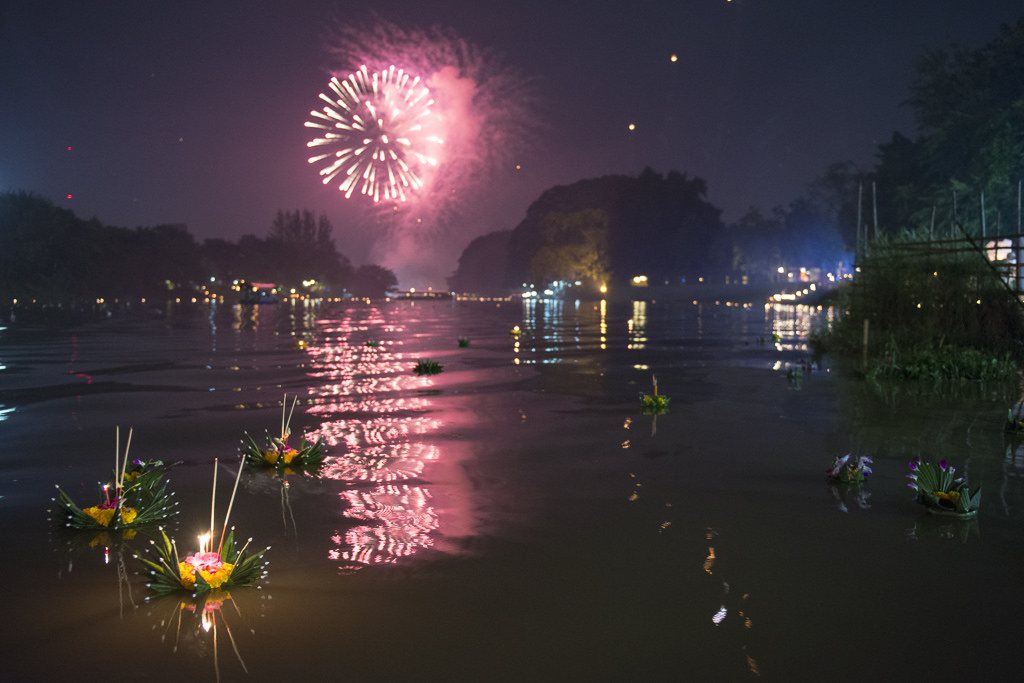
If Loy Krathong can be said to have a spiritual home, it is Sukhothai — the ancient capital where the festival is believed to have originated. The annual Sukhothai Loy Krathong Festival, held within the atmospheric ruins of the Sukhothai Historical Park (a UNESCO World Heritage Site), is the largest and most spectacular celebration in Thailand. The festival extends over five days and features light and sound shows, traditional performances, fireworks, parades, and a nightly krathong-floating ceremony set against the hauntingly beautiful backdrop of 700-year-old temple ruins reflected in lotus-filled ponds.
The combination of ancient architecture, candlelight, fireworks, and the gentle flow of krathong across the park’s waterways creates an atmosphere of almost otherworldly beauty. Admission to the park during the festival is typically free or nominal, and accommodation in Sukhothai town — though limited — is affordable at 500–1,500 THB per night for mid-range options.
Bangkok — The Metropolitan Celebration
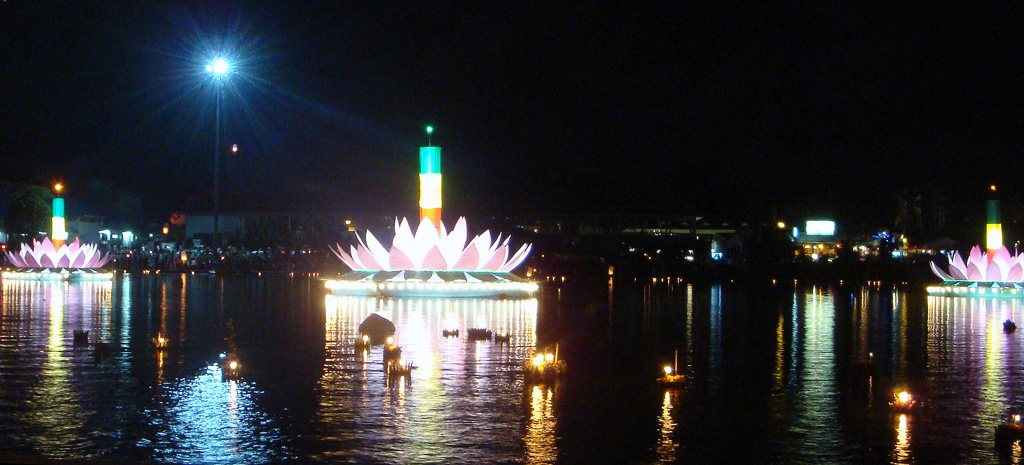
In Bangkok, Loy Krathong is celebrated citywide along the Chao Phraya River, in public parks, and at temple ponds. Asiatique the Riverfront hosts one of the most accessible celebrations for visitors, combining riverside krathong floating with live performances, food markets, and river views. Benjakitti Park and Lumpini Park provide beautiful lakeside settings for the ceremony within the city centre. Many riverside hotels — including the Mandarin Oriental, the Peninsula, and the Shangri-La — host exclusive Loy Krathong dinner events with premium krathong, live music, and privileged river access.
Chiang Mai — Loy Krathong Meets Yi Peng
In Chiang Mai, the Loy Krathong festival coincides with Yi Peng — the northern Thai tradition of releasing sky lanterns (khom loi) into the night sky. The combination of floating krathong on the water and glowing lanterns ascending into the heavens creates a double spectacle of extraordinary beauty. The Ping River and the moat surrounding the Old City serve as the primary venues, with thousands of participants releasing both krathong and lanterns in a celebration that draws visitors from around the world.
The Evening Experience
A typical Loy Krathong evening unfolds gently. As afternoon gives way to dusk, Thais begin gathering near waterways — rivers, canals, lakes, or even modest temple ponds. Many families craft their own krathong at home, a process that is itself a cherished tradition, with children and parents working together to fold banana leaves, arrange flowers, and position the candle and incense. Others purchase ready-made krathong from the countless vendors who appear at every waterside location — prices range from 20 THB for a simple offering to 200 THB or more for elaborate creations.
As night falls, the ceremony begins. Devotees kneel at the water’s edge, light the candle and incense on their krathong, close their eyes in prayer — offering thanks, asking forgiveness, making wishes — and then gently place the vessel on the water. The sight of a single krathong floating away, its candle flickering in the darkness, is moving; the sight of hundreds doing so simultaneously, creating a river of trembling light, is one of the most beautiful things you will ever witness.
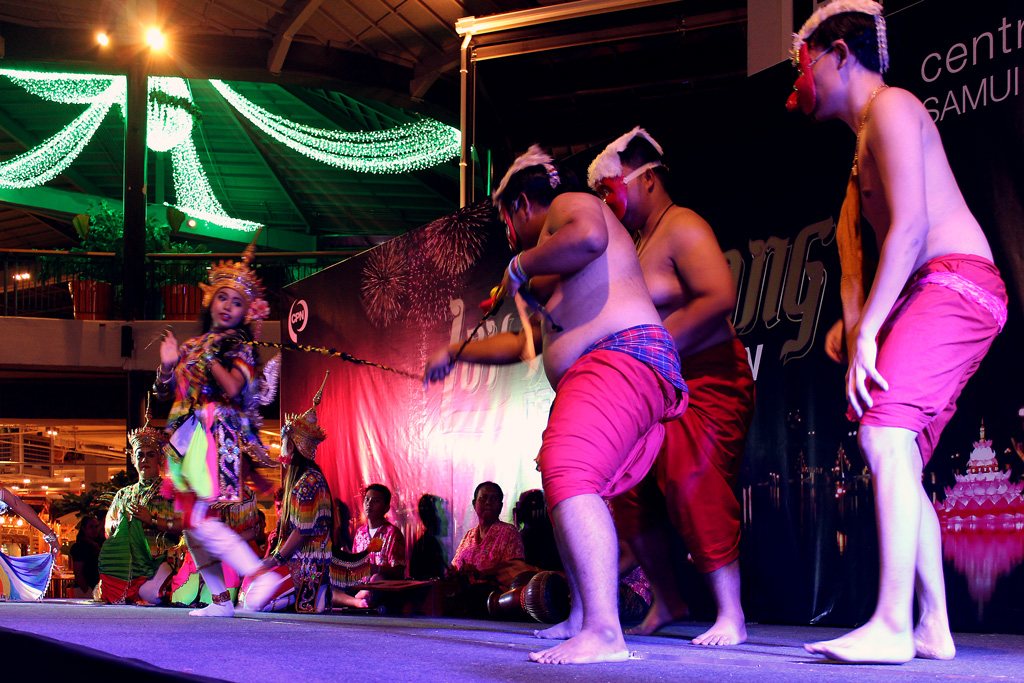
The evening typically continues with fireworks displays, beauty pageants (the Noppamas Queen contest, named after a legendary Sukhothai court lady credited with creating the first krathong), traditional Thai music and dance, and abundant street food. The atmosphere is joyful but gentle — more contemplative than raucous, more romantic than festive.
Practical Guide
When
Loy Krathong falls on the full moon of the 12th Thai lunar month, typically in November. The 2026 date is expected to fall in mid-to-late November (exact date dependent on the lunar calendar). The main celebration occurs on a single evening, though major venues in Sukhothai and Chiang Mai extend festivities over several days.
What to Bring
Comfortable clothing, a camera (the candlelit scenes photograph beautifully but require steady hands or a tripod), and cash for purchasing krathong and street food. Many visitors wear traditional Thai clothing for the occasion — a lovely touch that is warmly appreciated by locals.
Environmental Responsibility
Choose a krathong made from natural, biodegradable materials — banana trunk and leaves, bread, or ice. Avoid foam or plastic-based krathong. Remove any non-biodegradable elements (such as metal pins used to hold decorations) before floating. This small act of mindfulness honours both the spiritual intent of the festival and the waterways that make it possible.
Loy Krathong is one of those rare cultural experiences that requires no explanation, no guidebook, and no prior knowledge to appreciate. The simple act of placing a candlelit offering on dark water — watching it join a constellation of flickering lights that stretches into the distance — speaks to something universal in the human spirit. It is an evening of gratitude, hope, and beauty that has been repeated across Thailand for more than seven centuries, and it remains one of the most moving and magical experiences that this extraordinary country has to offer.
Date: Full moon of the 12th Thai lunar month (typically November)
Best Locations: Sukhothai Historical Park, Chiang Mai (with Yi Peng), Bangkok riverside
Cost: Free participation; krathong 20–200 THB