
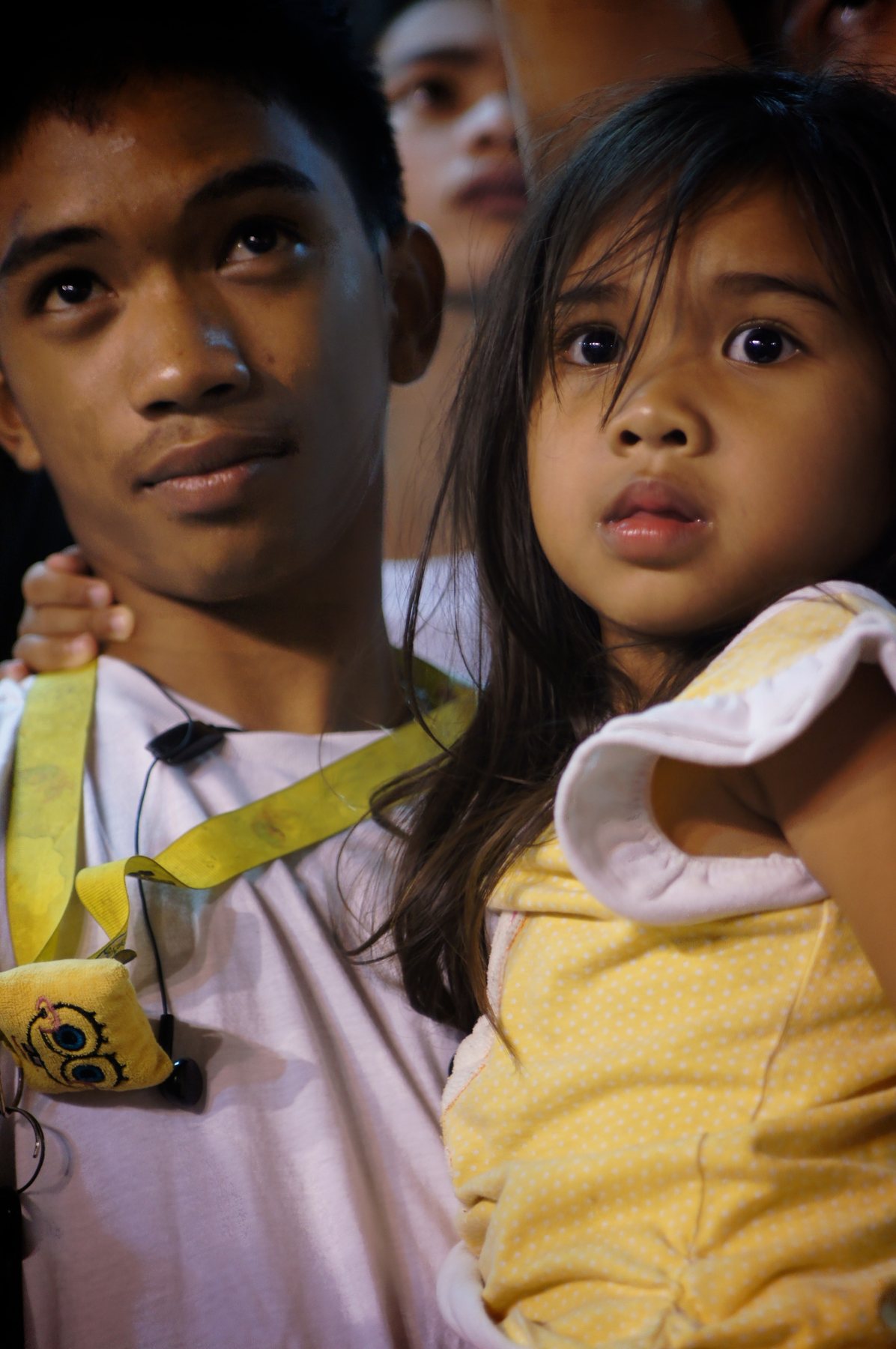
Every autumn, the island of Phuket undergoes a transformation that is at once deeply spiritual and profoundly startling. For nine days, the predominantly Chinese-Thai communities of Phuket Town observe the Vegetarian Festival — known locally as the Jay Festival (เทศกาลกินเจ) — a celebration of purification, devotion, and faith so intense that it has become one of the most extraordinary cultural events in all of Southeast Asia. Processions of devotees in white clothing, faces and bodies pierced with swords, skewers, and elaborate constructions, walk through streets lined with yellow-flagged vegetarian food stalls, creating a spectacle that challenges, inspires, and astonishes in equal measure.
Origins and Cultural Significance
The Vegetarian Festival honours the Nine Emperor Gods — a significant Taoist deity tradition — and its roots in Phuket trace to the Chinese immigrant communities who arrived to work the island’s tin mines during the 19th century. These predominantly Hokkien and Teochew settlers brought their Taoist religious practices with them, and the Nine Emperor Gods Festival became a major cultural observance that has been maintained and elaborated upon for over 150 years.
According to local legend, the festival’s particular intensity in Phuket dates to a pivotal incident when a visiting Chinese opera troupe fell ill with malaria. The troupe members prayed to the Nine Emperor Gods and adopted a strict vegetarian diet, and their subsequent recovery was attributed to divine intervention. The practice of vegetarian purification spread through the community, and over the decades, the festival developed increasingly elaborate expressions of devotion — including the extreme ritual practices for which it is now internationally known.
At its core, the festival celebrates the purification of mind, body, and spirit. Participants believe that nine days of vegetarianism, moral discipline, and spiritual focus bring blessings, good fortune, and the cleansing of negative karma. The white clothing worn by devotees symbolises purity, and the entire community is expected to observe heightened ethical standards: abstaining from alcohol, tobacco, and dishonesty, and practising kindness and restraint.
The Nine Days: What Happens
Vegetarian Diet
The dietary discipline is the festival’s foundational practice. For nine days, all participants observe a strict vegetarian or vegan diet — no meat, poultry, seafood, eggs, or dairy. Many stricter observers also avoid pungent vegetables such as garlic and onion, which are believed to stimulate earthly desires. Throughout Phuket, restaurants and food stalls display bright yellow flags (เจ) indicating that they serve vegetarian food, and the island’s culinary landscape transforms entirely into a plant-based paradise.
The festival food itself is a revelation. Far from the bland, ascetic fare one might expect, Phuket’s vegetarian festival cuisine is rich, flavourful, and enormously varied. Highlights include vegetarian pink noodle soup (using mushrooms to replicate the colour and texture of pork blood cubes), elaborate tofu preparations, crispy spring rolls, fragrant curries made with vegetables and plant-based proteins, and an impressive range of Buddhist-style meat substitutes. Street food vendors offer meals from 40–80 THB, established restaurants serve festival menus at 60–120 THB, and temple-prepared food — often free or donation-based — is of remarkably high quality.
Processions and Street Performances
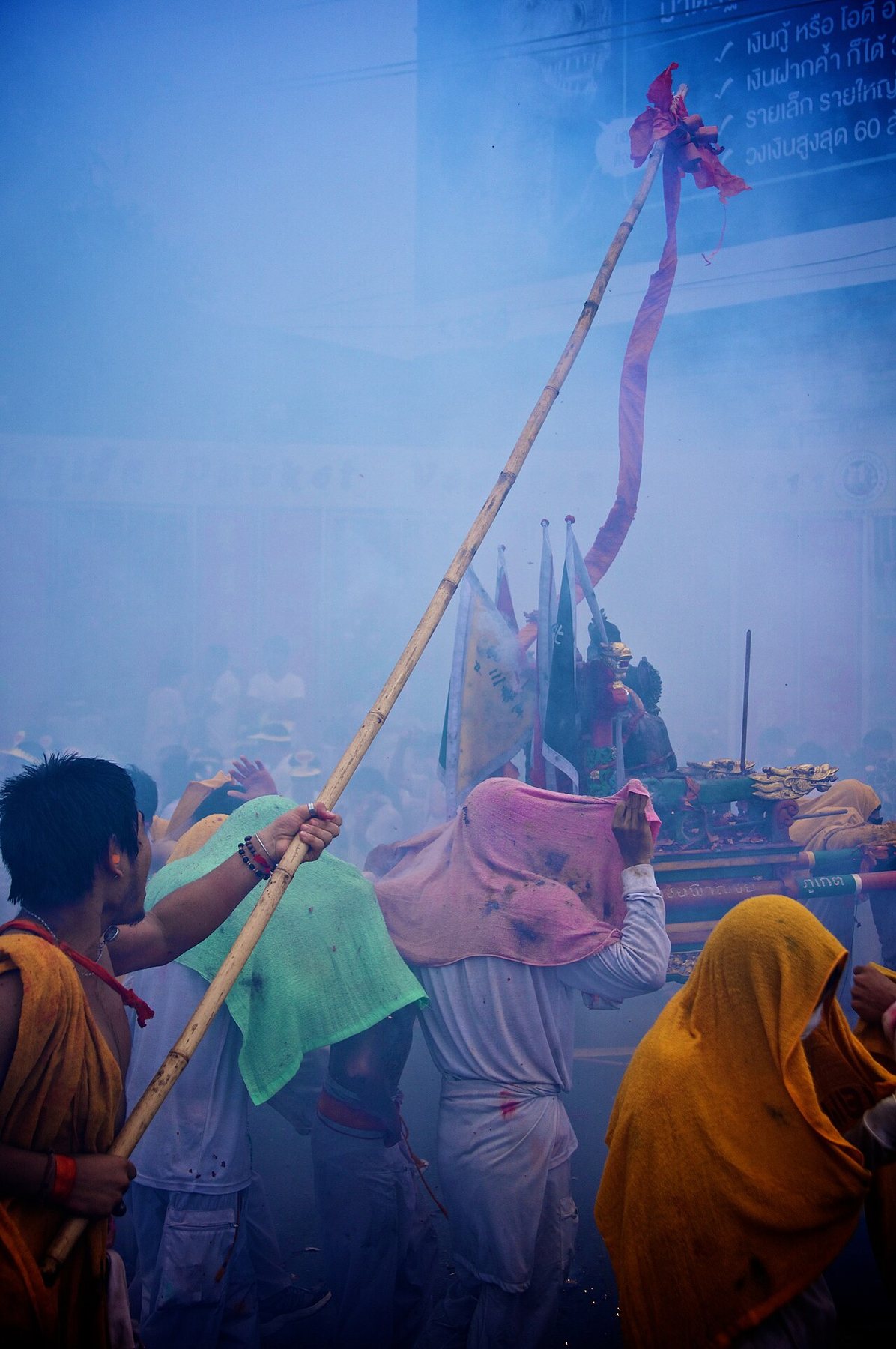
Daily processions wind through the streets of Phuket Town, featuring decorated palanquins carrying religious statues, marching bands playing traditional Chinese music, and participants in ceremonial robes bearing banners and religious symbols. These processions create a sensory-rich spectacle — the clang of cymbals, the crack of firecrackers (believed to drive away evil spirits), the chanting of devotees, and the thick haze of incense smoke that hangs over the streets.
Extreme Ritual Practices
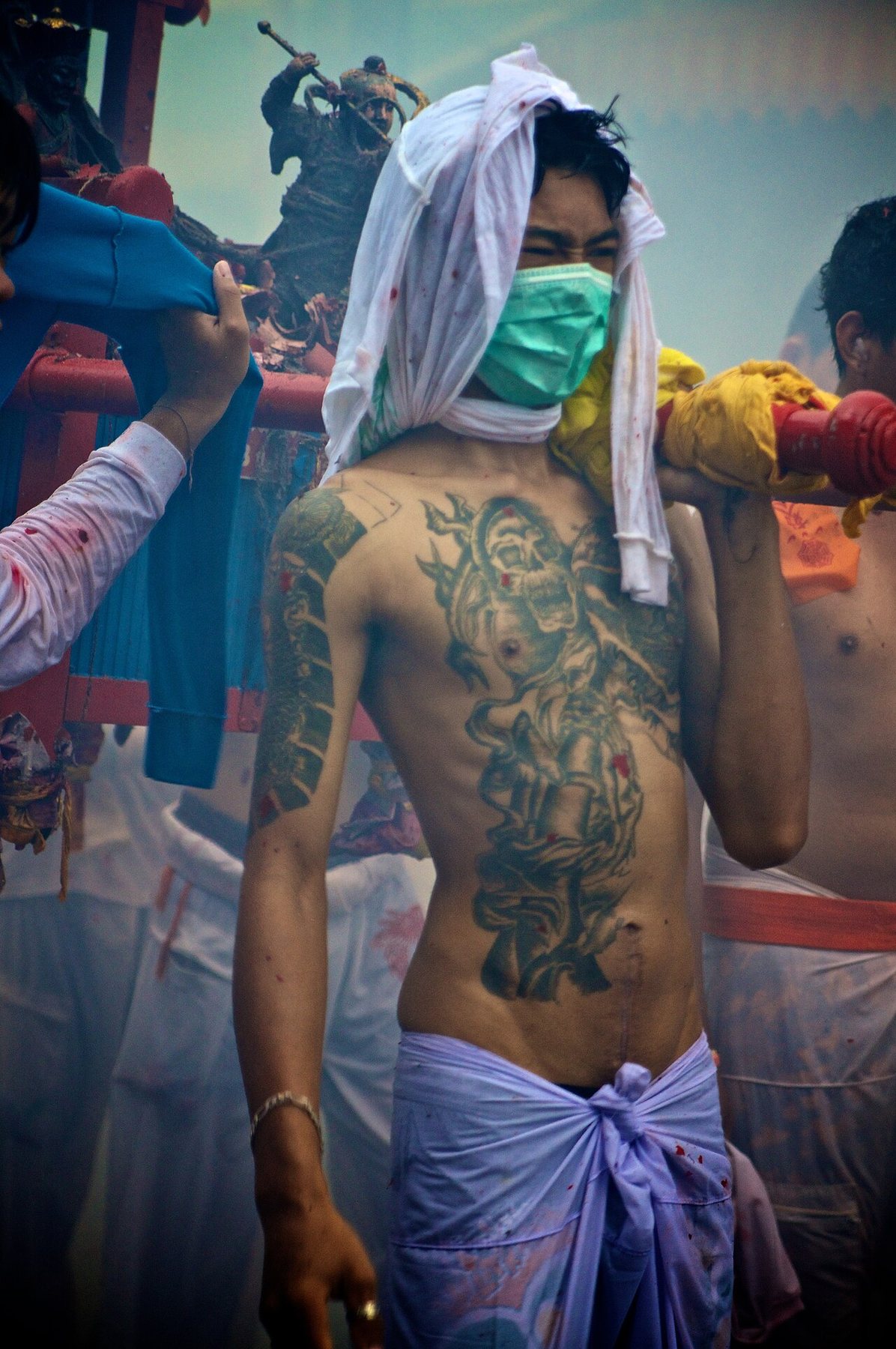
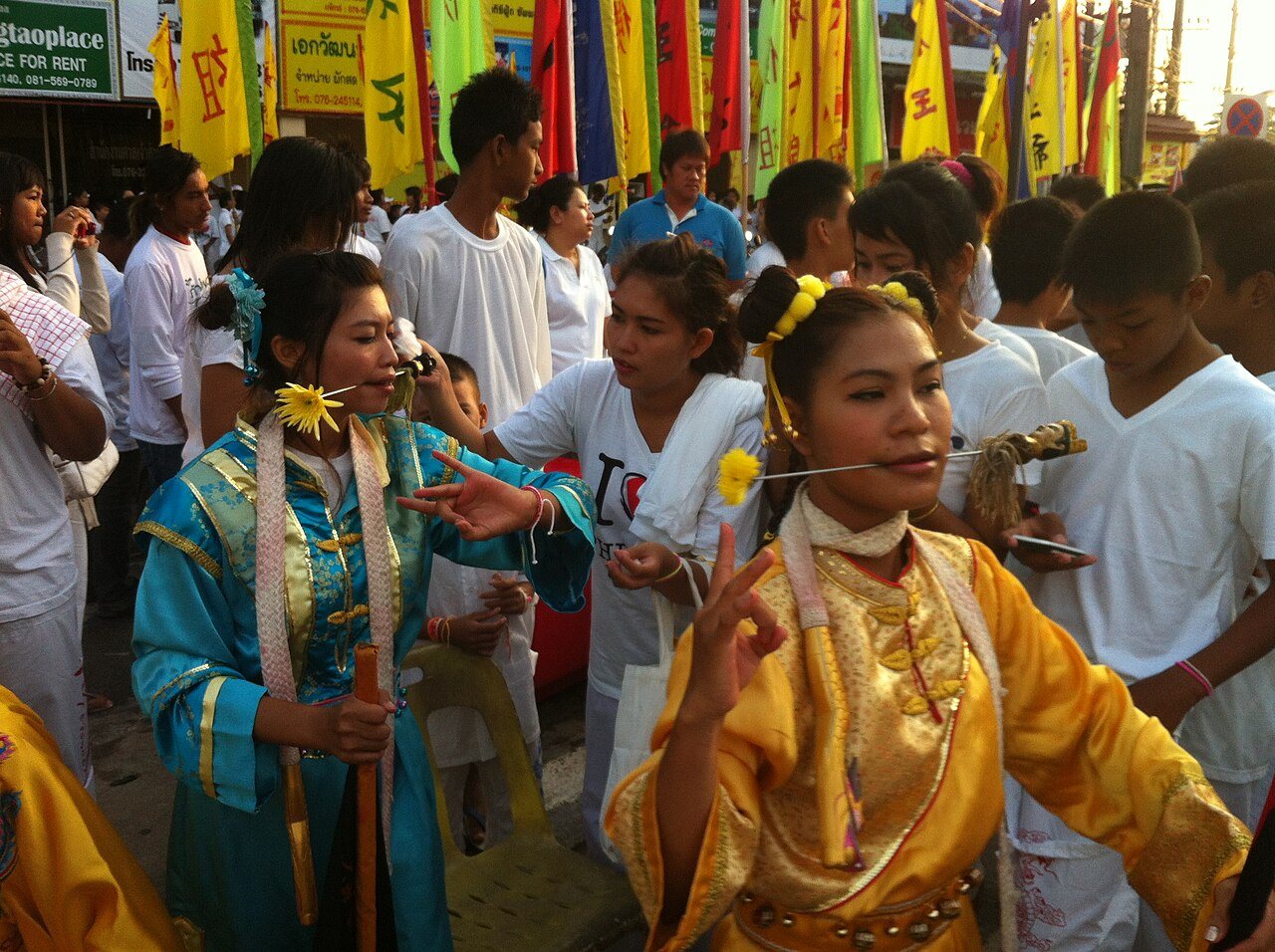
The aspect of the Vegetarian Festival that draws international media attention — and the element that many visitors find most challenging to witness — is the extreme devotional practices performed by certain participants. Fire walking sees devotees cross beds of hot coals barefoot, reportedly without injury. Most dramatically, body piercing rituals involve participants piercing their cheeks, tongues, and bodies with sharp objects — swords, spears, metal skewers, and increasingly elaborate constructions — reportedly experiencing no pain or bleeding whilst in a trance state believed to indicate divine possession.
These practices are not performed for entertainment or shock value. They are expressions of profound religious faith, undertaken by devotees who believe they are channelling divine energy and demonstrating the protective power of the Nine Emperor Gods. The practitioners enter meditative trance states before the piercings occur, and the community treats them with deep reverence. Observers should approach these rituals with respect and understanding — this is genuine spiritual practice, not spectacle.
Where to Experience the Festival
Phuket Town Shrines
The festival centres on several Chinese shrines in Phuket Town, each of which organises its own ceremonies and processions:
Jui Tui Shrine — The largest and most significant temple, serving as the festival’s primary venue. Located on Ranong Road in the heart of Phuket Old Town, it coordinates the official festival schedule and hosts the most elaborate ceremonies.
Bang Neow Shrine — Another major temple with substantial devotee participation, located on Phuket Road. Its processions are among the most impressive of the festival.
Kathu Shrine — Located in the Kathu district, this shrine holds particular historical significance as the area where the festival is believed to have originated among the Chinese tin-mining communities.
Procession Routes
Main processions travel through central Phuket Town, primarily along Yaowarat Road (the main commercial street) and Phuket Road. Processions typically occur in late afternoon (2:00–6:00 PM) and evening (7:00–10:00 PM), with the final days of the festival featuring the grandest and most elaborate processions. Position yourself along the main routes early — 1 to 2 hours before scheduled times — for the best viewing positions.
Practical Guide
When
The Vegetarian Festival follows the Chinese lunar calendar and typically falls in late September or October. The exact nine-day dates vary annually. The first three days tend to be more temple-focused with fewer public processions; the final three days feature the peak ceremonies and the grandest street processions.
Getting There
Phuket International Airport receives domestic flights from Bangkok (approximately 1.5 hours, 1,500–3,500 THB) and international flights from across Asia. From the airport, a taxi or Grab to Phuket Town costs approximately 300–500 THB (30–45 minutes). Note that Phuket Town is distinct from the beach resort areas of Patong, Kata, and Karon — the festival is centred entirely in the town itself.
Accommodation
Phuket Town offers a range of accommodation: budget hotels from 600–1,200 THB/night, mid-range properties at 1,000–2,500 THB/night, and boutique options at 2,500–6,000 THB/night. Staying in Phuket Town places you within walking distance of all major shrines and procession routes. Beach resort accommodation (30–45 minutes away) is an alternative, though daily transport adds cost and complexity.
What to Wear and Bring
White clothing is appreciated though not mandatory for observers. Remove shoes when entering temples. Bring comfortable walking shoes, sunscreen, a hat, and plenty of water — standing in tropical heat for extended periods is demanding. A camera with a good zoom lens allows you to capture the processions respectfully from a comfortable distance.
Respectful Observation
The Vegetarian Festival is genuine religious devotion, not a tourist attraction. Observers are welcome and generally well-received, but should approach with sensitivity. Avoid mocking or making disrespectful comments about the extreme rituals. Ask permission before photographing individuals at close range. Follow temple protocols (remove shoes, dress modestly). Support local businesses and consider a donation to the shrines that organise the festivals.
Budget Estimate
A three-day Vegetarian Festival visit: accommodation (1,800–4,500 THB), meals — entirely vegetarian and remarkably affordable (600–1,200 THB), local transport (300–600 THB), activities (primarily free observation). Total: approximately 3,000–7,000 THB plus flights.
An Experience Unlike Any Other
The Vegetarian Festival is not an easy event to witness — the extreme rituals can be confronting, and the intensity of devotion on display challenges comfortable assumptions about the boundaries of faith. But it is precisely this intensity that makes the festival so remarkable. In an increasingly secular world, Phuket’s Vegetarian Festival offers a rare window into a community where spiritual practice remains central to daily life, where devotion is expressed through physical as well as mental discipline, and where an entire island transforms itself for nine days in honour of beliefs that have sustained it for more than a century.
Whether you come for the extraordinary processions, the exceptional vegetarian cuisine, or simply the chance to witness one of Southeast Asia’s most unique cultural events, the Vegetarian Festival in Phuket will leave an indelible impression. It is challenging, inspiring, and utterly unforgettable.
Dates: Nine days in late September/October (Chinese lunar calendar)
Location: Phuket Town, Phuket
Cost: Free to observe; meals 40–120 THB
Key Venues: Jui Tui Shrine, Bang Neow Shrine, Kathu Shrine