
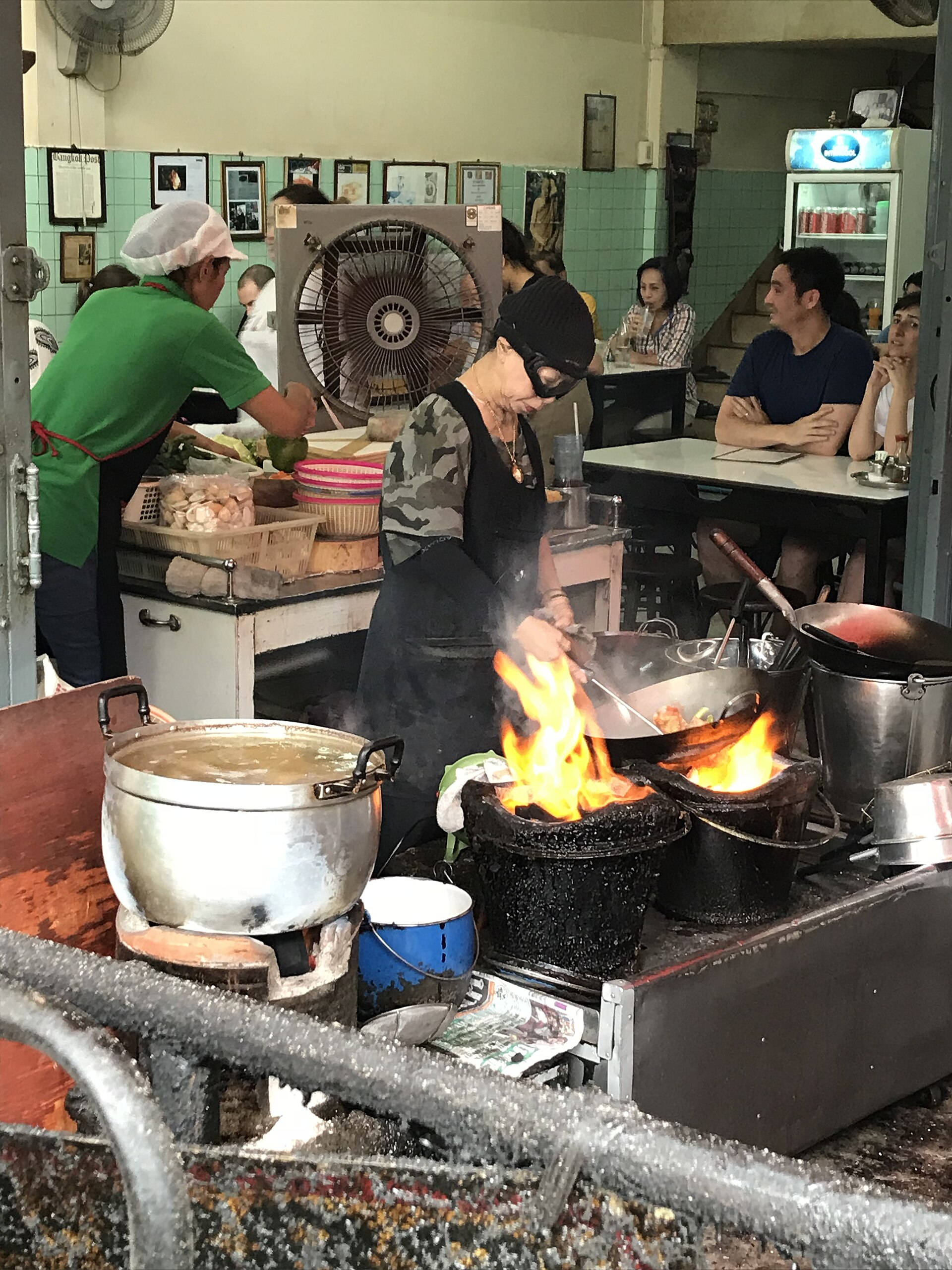
In a city of over 300,000 restaurants, Jay Fai stands alone. This open-air street food stall on Maha Chai Road, operated by 78-year-old Supinya Junsuta — known universally as Jay Fai — has held a Michelin star since 2018, making it one of the most affordable Michelin-starred establishments in the world. The sight of Jay Fai herself, working behind a roaring charcoal wok wearing her trademark ski goggles to protect against the intense heat and smoke, has become one of the most iconic images in global gastronomy. Her crab omelette is legendary, her tom yum is exquisite, and the queue to experience her cooking stretches for hours.
The Woman Behind the Wok
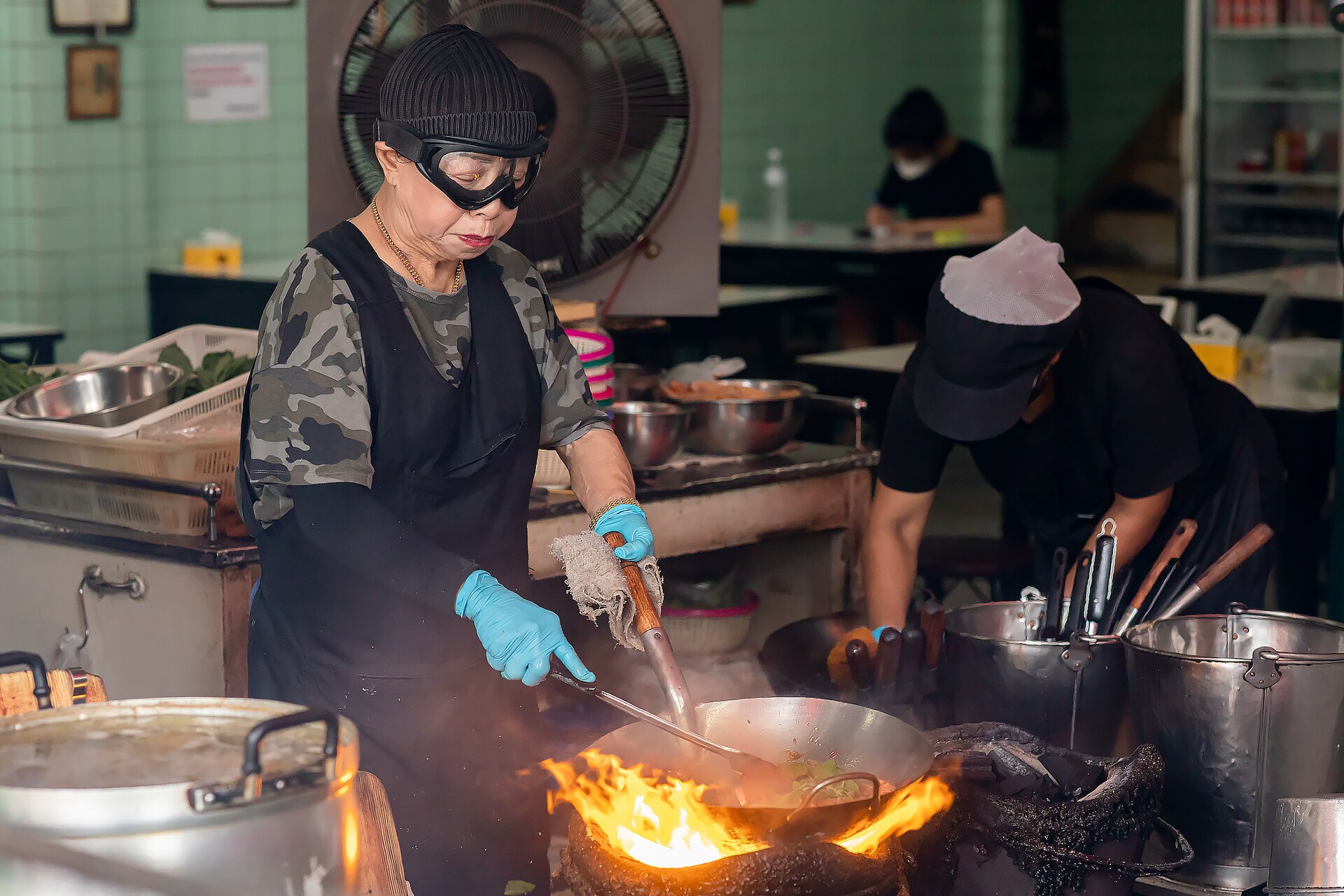
Supinya Junsuta began cooking on this same spot in the 1960s, taking over a simple noodle stall from her mother. Over six decades, she transformed it through sheer skill, obsessive ingredient sourcing, and an unwillingness to compromise on quality that borders on the fanatical. Jay Fai inspects every crab, every prawn, and every fish herself each morning at the market, rejecting anything that doesn’t meet her exacting standards. She insists on cooking every dish personally, working a charcoal-fired wok station that generates temperatures far exceeding those of conventional gas burners.
The ski goggles, which have become her signature accessory, are a practical necessity — the combination of intense charcoal heat and constant smoke would be unbearable without eye protection. She works standing for 12 to 14 hours daily, arriving before dawn to source ingredients and cooking until the last customer is served. Her stamina, at an age when most people have long since retired, is as remarkable as her cooking.
The Michelin star, when it was awarded in the inaugural Bangkok Michelin Guide, brought global attention but changed nothing about how Jay Fai operates. She still cooks alone at her charcoal station, still serves from the same shophouse with its corrugated metal roof and plastic chairs, and still refuses to expand, franchise, or modify her methods. The star, she has said, simply confirmed what her loyal customers already knew.
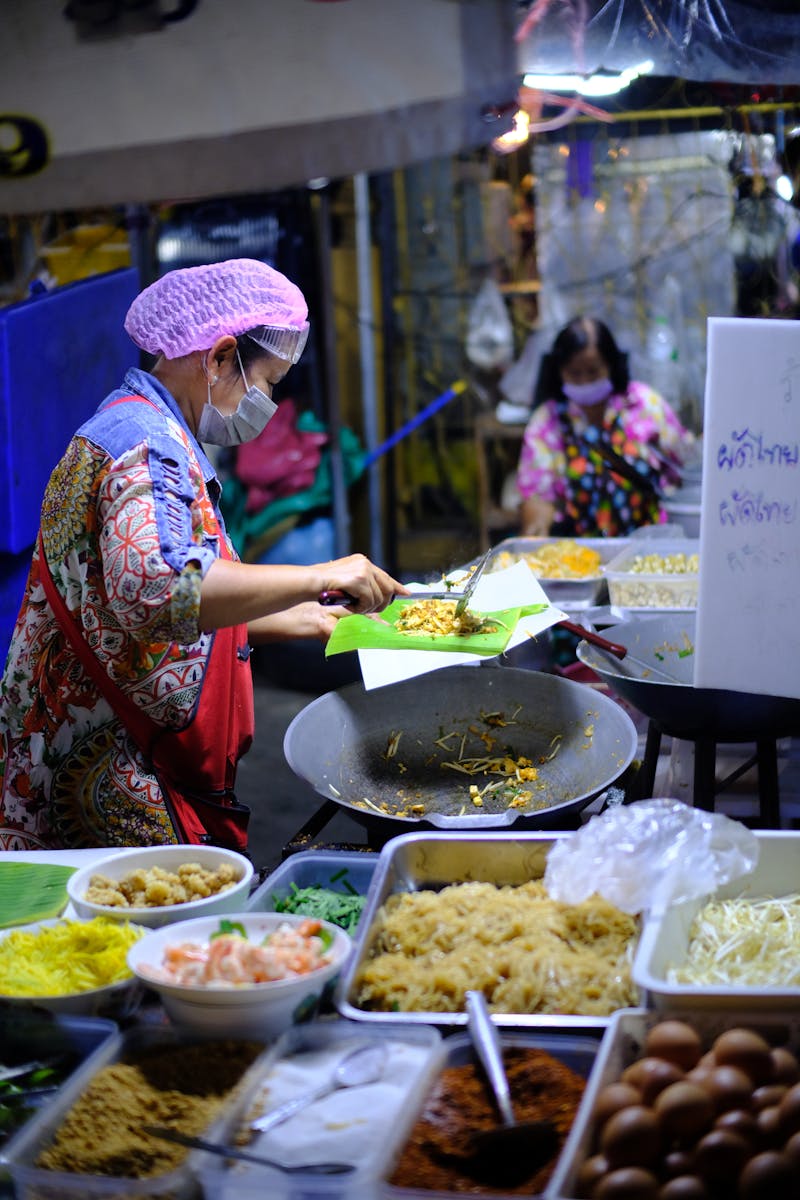
The Famous Crab Omelette
The dish that has come to define Jay Fai — and that most visitors travel specifically to eat — is the khai jeow poo, or crab omelette. Priced at approximately 1,000 to 1,800 THB depending on crab size and market prices, it is by far the most expensive item on the menu and the most expensive street food dish in Bangkok. The price reflects the extraordinary quantity of premium crab meat used: each omelette contains approximately 300 to 400 grams of hand-picked blue swimming crab, enveloped in a perfectly cooked egg wrapper.
The preparation is mesmerising to watch. Jay Fai heats her wok over charcoal until it reaches extreme temperatures, adds oil, and pours in beaten eggs that puff dramatically on contact. She then adds a generous mound of fresh crab meat — not processed, not frozen, but freshly picked that morning — and folds the omelette with practiced precision. The result is a golden, lightly crispy exterior giving way to a molten centre of pure, sweet crab. Served with a tangy Sriracha-based dipping sauce, it is one of the great dishes of Thai cuisine.
The crab omelette is not a budget option, but in context, it represents extraordinary value. The quantity and quality of crab used would cost significantly more in any conventional restaurant, and the skill required to execute the dish — the temperature control, the timing, the folding technique — represents a lifetime of mastery that cannot be replicated by less experienced cooks.
Beyond the Omelette: The Full Menu
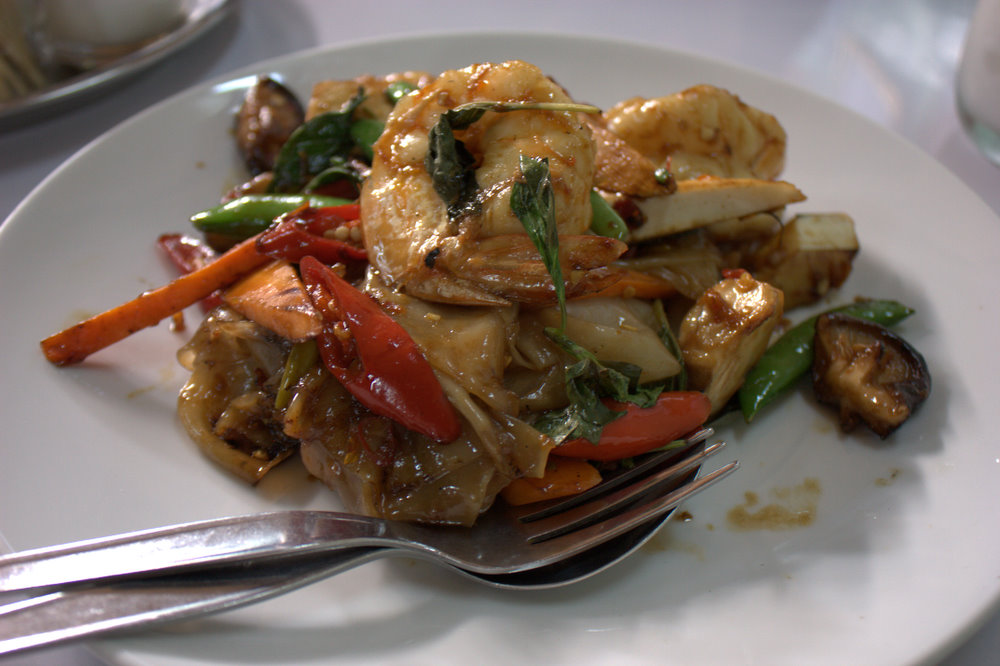
While the crab omelette commands the most attention, Jay Fai’s menu extends to approximately 20 dishes, each prepared with the same uncompromising standards. The drunken noodles (pad kee mao) at 200 to 300 THB are considered by many food critics to be the finest version in Bangkok — the extreme wok heat creates the smoky flavour known as wok hei that elevates simple stir-fried noodles into something transcendent.
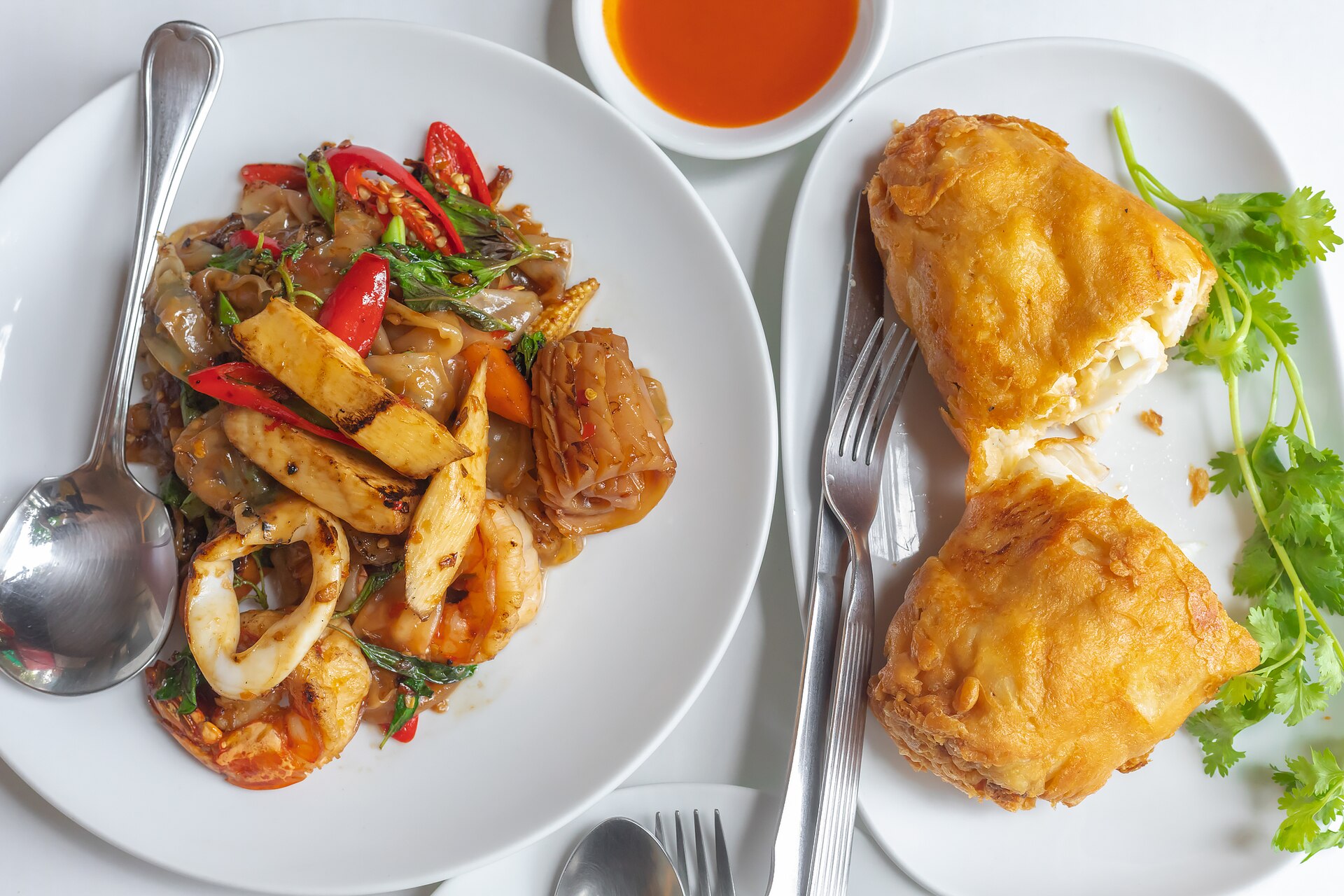
The tom yum soup, available with prawns (500 to 800 THB) or seafood (600 to 1,000 THB), is a masterclass in balance. Jay Fai’s version is intensely aromatic, with a clear, concentrated broth that showcases the interplay of lemongrass, galangal, kaffir lime leaf, and chilli without the excessive sweetness that afflicts many commercial versions. The prawns are large and perfectly cooked — still slightly translucent in the centre, indicating that Jay Fai’s temperature control and timing are flawless even when working under extreme pressure.
The rad na (wide rice noodles in gravy) and kuay tiew kua gai (pan-fried noodles with chicken) are more affordable options at 200 to 400 THB, and both demonstrate the smoky depth that charcoal cooking imparts. The curry crab, when available, is another standout — whole blue swimming crabs in a rich yellow curry sauce, priced at 1,200 to 2,000 THB depending on crab size.
The Queue: Planning Your Visit
Queueing at Jay Fai has become a ritual — and a test of dedication — for food lovers visiting Bangkok. Before the Michelin star, waits of 30 to 60 minutes were common. Post-star, waits of two to four hours are not unusual during peak periods (typically 5pm to 8pm). The restaurant opens for lunch (approximately 11am to 2pm) and dinner (approximately 3pm to midnight, though she stops taking orders earlier when ingredients run out).
Several strategies can reduce your wait. Arriving for lunch rather than dinner is generally less crowded. Weekdays are substantially quieter than weekends. Some visitors arrive before the 3pm dinner opening and join the queue early, using the wait time to explore the nearby Wat Saket (Golden Mount) temple or browse the shops on Ratchadamnoen Road. The restaurant sometimes operates a reservation system through messaging platforms, though this changes periodically — checking Jay Fai’s social media or calling ahead is advisable.
When you do reach the front of the queue, ordering is straightforward. The menu is posted on the wall in Thai and English, and staff are accustomed to helping international visitors navigate the options. Ordering two to three dishes for two people, including the signature crab omelette, provides a comprehensive experience. Expect to pay approximately 1,500 to 3,000 THB per person for a full meal.
The Setting: Street Food in Its Purest Form
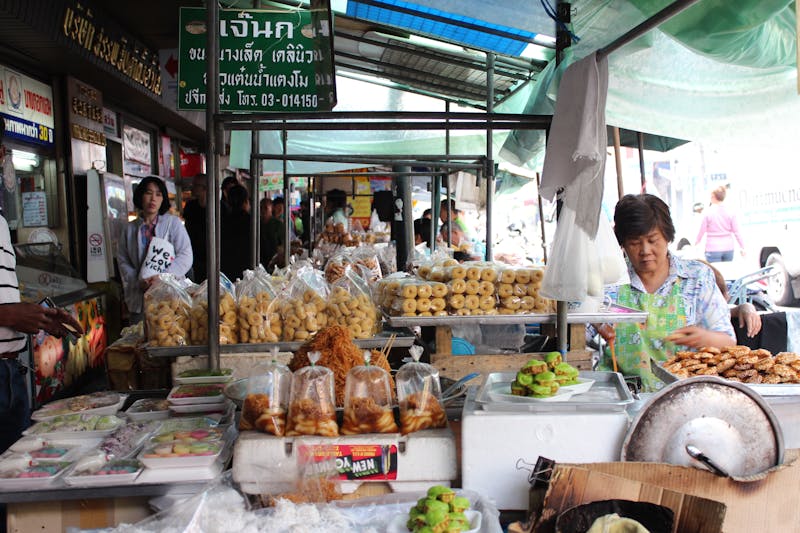
Part of Jay Fai’s charm — and part of what makes the Michelin star so remarkable — is the setting. This is not a restaurant in any conventional sense. You sit on plastic stools at simple tables under a corrugated roof open to the street. Fans provide the only cooling. The kitchen is the pavement, with Jay Fai’s charcoal station positioned where passing pedestrians can (and do) stop to watch. Cats wander through. Motorbikes park alongside. It is, in every visible respect, a Bangkok street food stall — the only difference being the extraordinary quality of what emerges from that roaring charcoal wok.
This setting is not an affectation or a marketing decision. It is simply how Jay Fai has always cooked, and how her mother cooked before her. The corrugated roof, the plastic chairs, the charcoal — these are the tools of street food culture, and Jay Fai sees no reason to change them. The Michelin star hangs in the stall alongside photographs of Jay Fai with visiting celebrities, politicians, and fellow chefs, but the plastic stools remain firmly in place.
Location and Getting There
Jay Fai is located at 327 Maha Chai Road in the Samran Rat area of Bangkok’s Old City, near the intersection with Bamrung Muang Road. The nearest rail station is MRT Sam Yot (approximately a 10-minute walk) or BTS National Stadium (a 15-minute walk or short taxi ride). Tuk-tuks and Grab taxis can navigate directly to the stall, though mentioning “Jay Fai Maha Chai Road” to drivers is more reliable than providing the address.
The restaurant is closed on Sundays and occasionally closes without notice when Jay Fai determines that the available ingredients don’t meet her standards — a practice that, while inconvenient for visitors, perfectly encapsulates the uncompromising philosophy that earned the star in the first place.
Jay Fai is more than a restaurant — it is a testament to what happens when extraordinary skill meets unwavering standards over the course of a lifetime. In an age of celebrity chef empires and multi-venue portfolios, this 78-year-old woman cooking alone over charcoal in a Bangkok shophouse represents something increasingly rare: the pinnacle of a craft pursued with total dedication, in its most honest and essential form.