
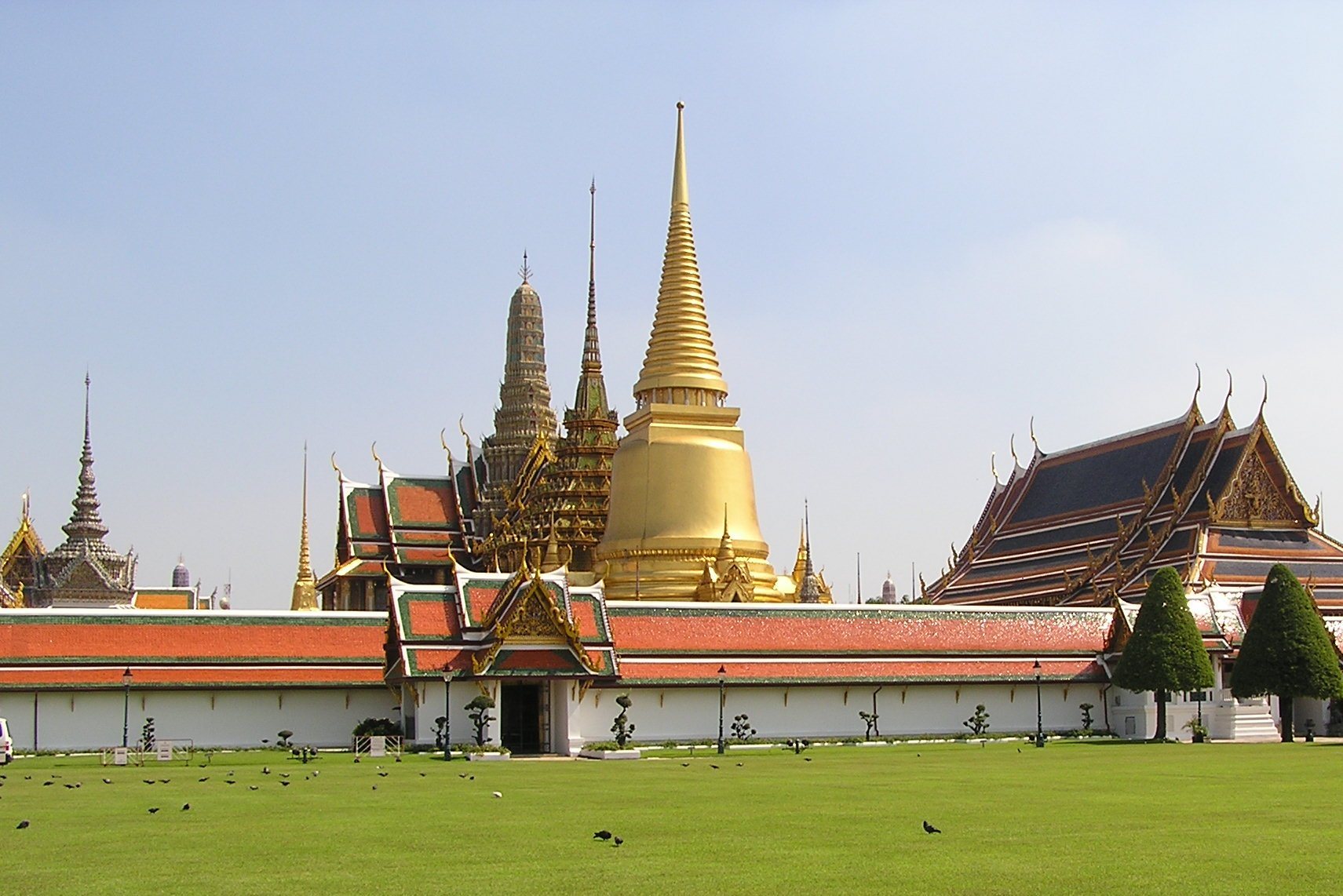
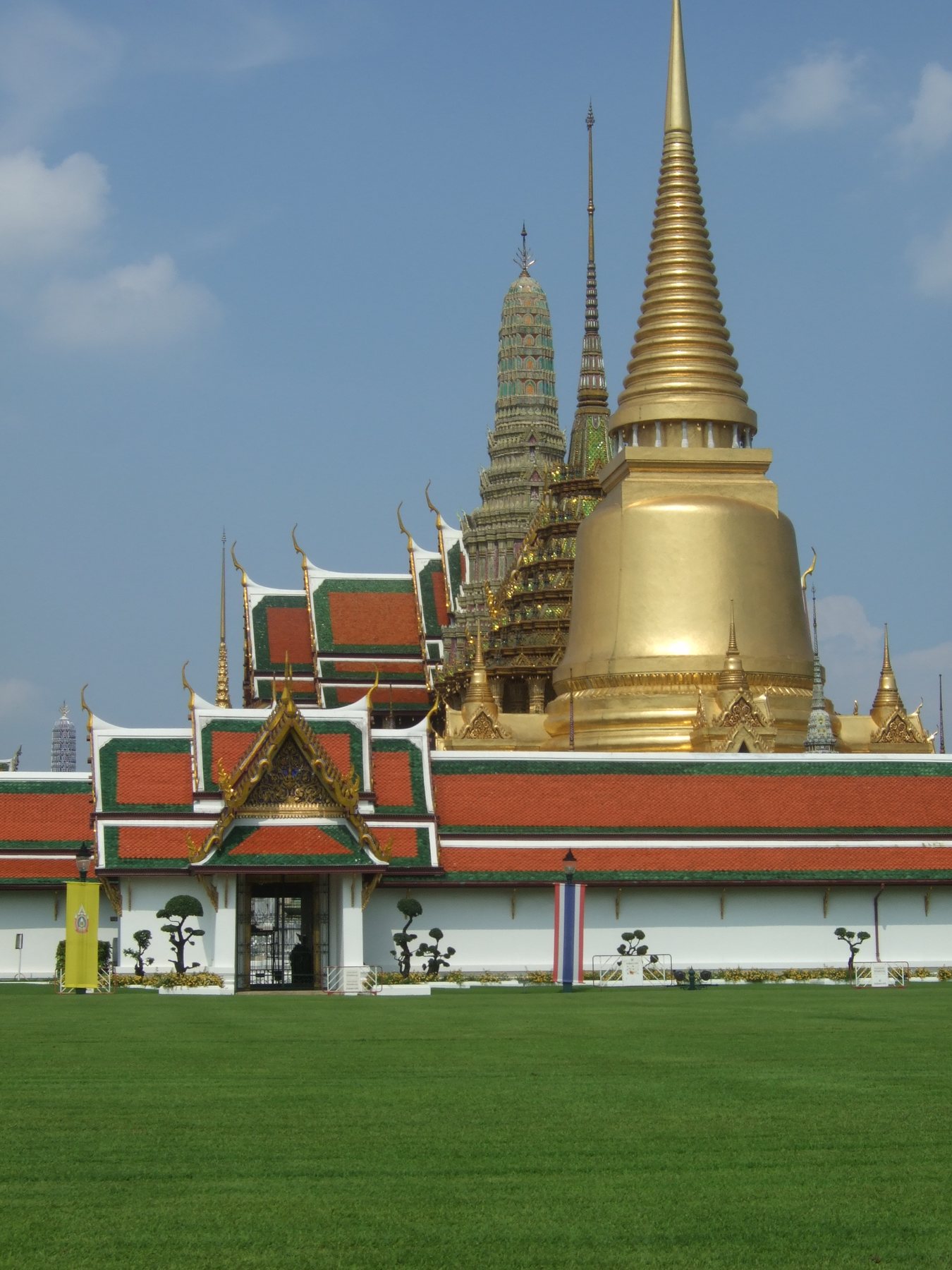
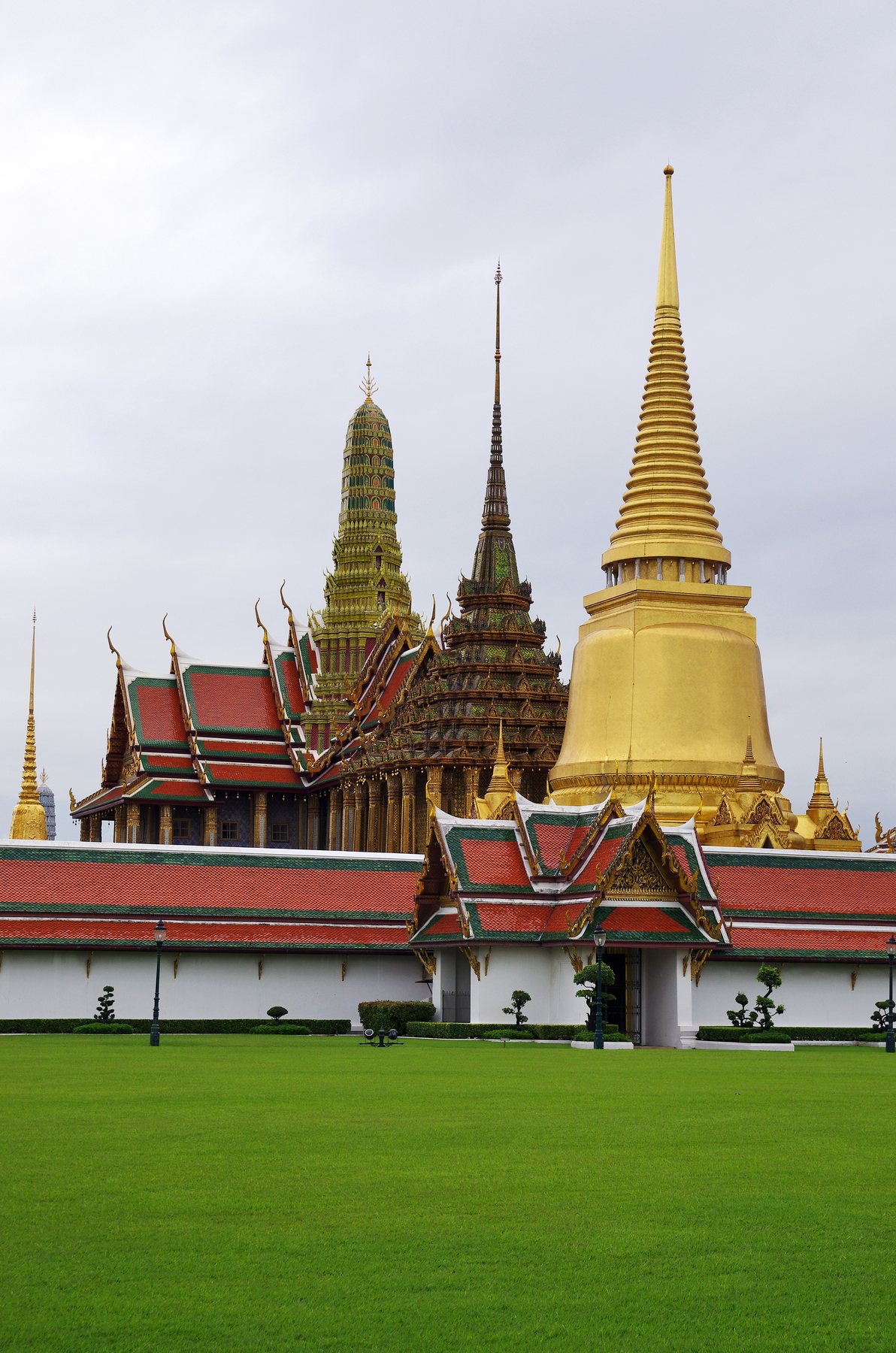
Rising above the banks of the Chao Phraya River in the historic heart of Bangkok, the Grand Palace complex stands as Thailand’s most revered architectural achievement and the spiritual nucleus of the Thai kingdom. Within its fortified walls lies Wat Phra Kaew — the Temple of the Emerald Buddha — home to the most sacred religious artefact in all of Thailand. Together, they form a destination that is not merely recommended for visitors to Bangkok but absolutely essential: a place where 250 years of royal ambition, artistic mastery, and Buddhist devotion converge in a spectacle of gold, glass, and gleaming ceramic.
A Palace Born of a New Dynasty
The Grand Palace’s story begins on 6 May 1782, when King Phutthayotfa Chulalok — Rama I, founder of the Chakri dynasty that reigns to this day — ordered the construction of a royal residence befitting his newly established capital. Having relocated Thailand’s seat of power from Thonburi to the eastern bank of the Chao Phraya River, Rama I envisioned a palace complex that would legitimise the Chakri dynasty’s authority whilst surpassing the grandeur of the former capital at Ayutthaya, which had fallen to the Burmese in 1767.
Construction proceeded at remarkable pace, driven by thousands of labourers and the finest artisans in the kingdom. The complex was designed to be a self-contained city within a city — encompassing throne halls, royal residences, government offices, a royal mint, and, at its spiritual centre, a temple worthy of housing the kingdom’s most precious relic. Over the following two and a half centuries, successive kings expanded and embellished the complex, each adding structures that reflected both their personal taste and the architectural fashions of their era. The result is an extraordinary palimpsest of Thai, Chinese, European, and Khmer architectural influences spread across 218,400 square metres of hallowed ground.
Wat Phra Kaew: The Emerald Buddha’s Home
Consecrated in 1785, Wat Phra Kaew (officially Wat Phra Si Rattana Satsadaram) was built for a single, transcendent purpose: to house the Emerald Buddha, one of the most venerated religious objects in Southeast Asia. Despite its name, the 66-centimetre figure is carved not from emerald but from a single block of jade or jasper, and its relatively modest size belies its immense spiritual significance. Seated in the lotus position atop a towering golden altar within the ubosot (ordination hall), the Emerald Buddha presides over a space of breathtaking beauty.
Three times a year, the reigning monarch personally changes the Emerald Buddha’s golden garments in a ceremony of profound national importance. The three seasonal costumes — for the hot season, the rainy season, and the cool season — are among the finest examples of Thai goldsmithing, each encrusted with precious stones and fashioned with meticulous craftsmanship. The ceremony is considered an auspicious act that ensures prosperity for the kingdom.
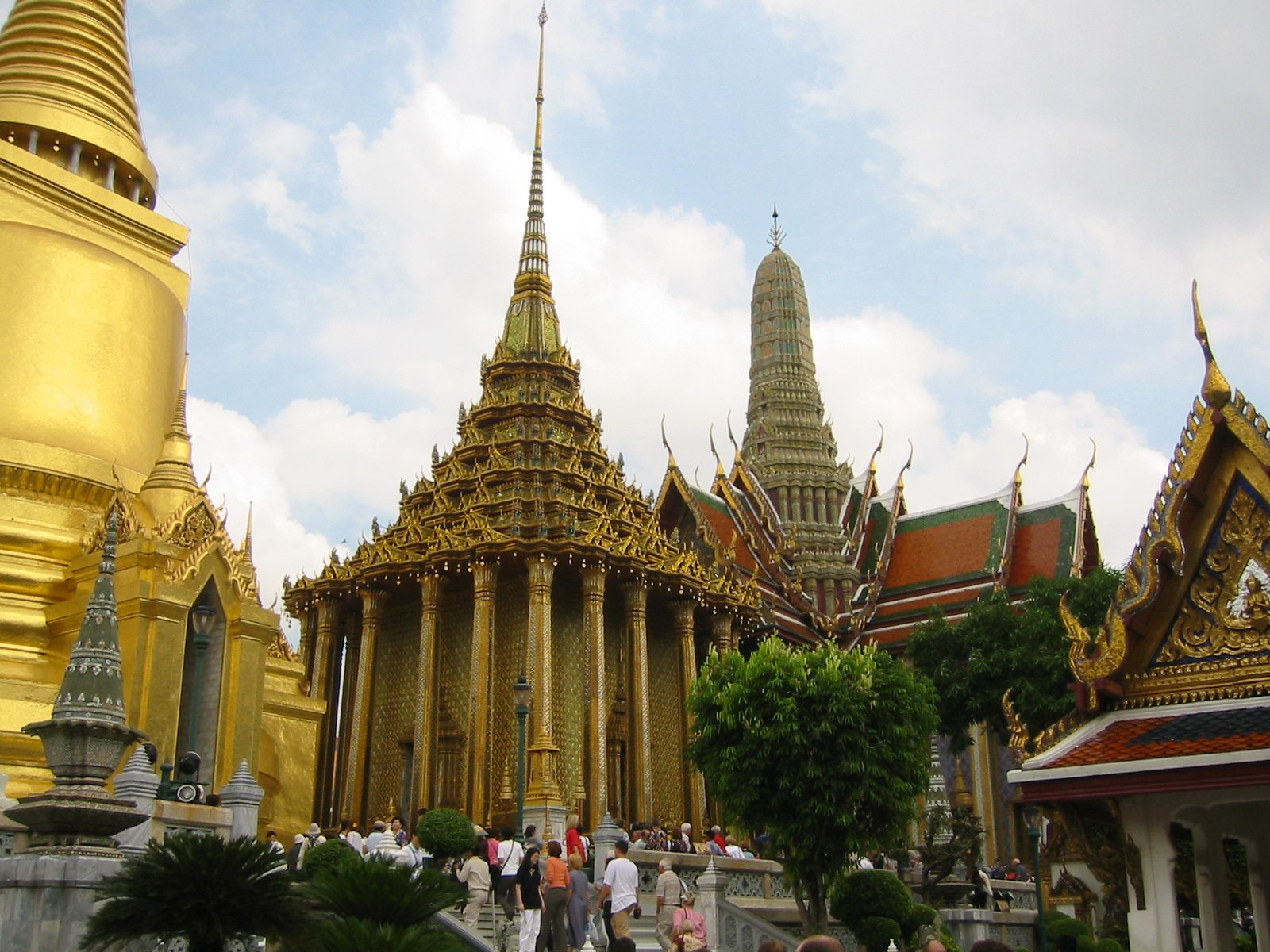
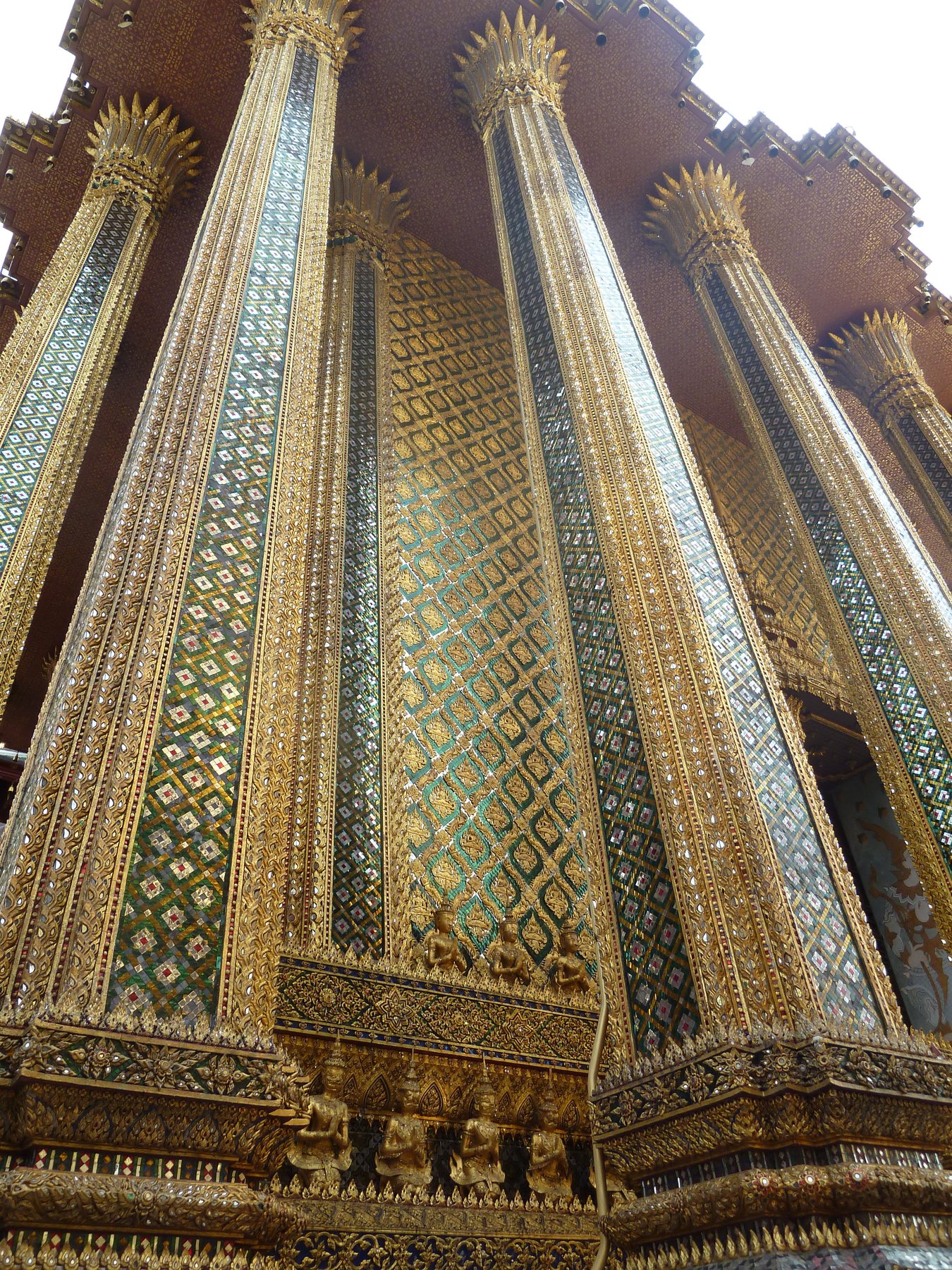
The temple grounds surrounding the ubosot are a masterwork of decorative art. Gilded kinnaree (mythical half-bird, half-woman figures) guard the entrances, whilst towering yaksha (demon guardians) stand sentinel at every gate. The walls of the cloistered gallery that encircles the temple grounds are adorned with murals depicting the Ramakien — the Thai adaptation of the Indian Ramayana epic — in 178 panels of extraordinary detail and colour. These murals, which have been restored multiple times since their original creation under Rama I, represent one of the most ambitious narrative painting projects in Thai art history.
The Throne Halls and Royal Buildings
Chakri Maha Prasat — The Blending of Two Worlds
Perhaps the most visually striking building in the complex, the Chakri Maha Prasat throne hall embodies a fascinating architectural compromise. Commissioned by King Chulalongkorn (Rama V) in 1882, the building was designed by British architect John Clunich in a Renaissance Revival style — a reflection of Rama V’s admiration for European culture following his landmark tour of European courts. However, conservative court advisors insisted that the building should bear Thai rather than European roofing, leading to the distinctive hybrid design: a European neoclassical body crowned by three traditional Thai prasat (spired) roofs in gold and green mosaic tile.
The result, sometimes affectionately referred to as “the farang wearing a Thai hat,” is actually a remarkable success of architectural fusion. The building serves as a reception hall for state occasions and houses the ashes of Chakri dynasty kings in the central spire. Its front terrace offers one of the finest vantage points within the complex for appreciating the scale and beauty of the palace grounds.
Dusit Maha Prasat — Pure Thai Splendour
For those seeking the purest expression of traditional Thai palace architecture, the Dusit Maha Prasat delivers magnificently. Built by Rama I in 1789 to replace an earlier structure destroyed by lightning, this cruciform throne hall is topped by a seven-tiered prasat spire — a form reserved exclusively for the king. The hall serves as the venue for the lying-in-state of deceased kings and senior members of the royal family, and its interior houses the original mother-of-pearl throne from the Thonburi period.
Practical Guide for Visitors
Admission and Opening Hours
The Grand Palace is open daily from 8:30 AM to 3:30 PM (last admission at 3:30 PM, grounds close at 5:00 PM), except on days when royal ceremonies are being conducted. Admission costs 500 THB per person for foreign visitors, which includes access to both the Grand Palace grounds and Wat Phra Kaew, as well as admission to the Queen Sirikit Museum of Textiles and the Coin Pavilion within the complex. Thai nationals enter free of charge with identification.
An optional audio guide is available for an additional fee and is highly recommended — the sheer density of historical and artistic detail within the complex is impossible to absorb without context, and the audio guide provides an excellent narrative framework for the visit.
Dress Code
The Grand Palace enforces a strict dress code as a mark of respect for this sacred site. Visitors must wear clothing that covers their shoulders, upper arms, and legs to below the knee. Sleeveless shirts, shorts, ripped jeans, see-through clothing, and flip-flops are not permitted. Those arriving in inappropriate attire can borrow clothing from a service point near the entrance (a refundable deposit is required). Shoes must be removed before entering any chapel or temple building.
Getting There
The Grand Palace is located in the Phra Nakhon district of Bangkok’s historic centre. The most scenic approach is by Chao Phraya Express Boat to Tha Chang pier (N9), from which the palace entrance is a five-minute walk. From the BTS Skytrain, take the Silom Line to Saphan Taksin Station, exit to Sathorn Pier, and catch an express boat upriver. Alternatively, take the MRT Blue Line to Sanam Chai Station (opened in 2019), which places you within a 10-minute walk of the main entrance. Taxis from Sukhumvit or Siam cost approximately 100–200 THB depending on traffic.
Tips for an Optimal Visit
Arrive at 8:30 AM when the gates open — the complex fills rapidly after 10:00 AM, and the midday heat can be punishing. Morning light is also far superior for photography. Budget at least two to three hours for a thorough visit, and carry water and sun protection. Beware of touts outside the complex who may claim it is “closed for a ceremony” and offer to redirect you to a gem shop or tuk-tuk tour — this is one of Bangkok’s oldest and most persistent scams. The Grand Palace is open every day unless officially announced otherwise.
Photography is permitted throughout the complex except inside the ubosot housing the Emerald Buddha, where cameras and phones must be stowed. The Ramakien murals along the temple gallery are best viewed in the morning when the light enters from the east, illuminating the gold leaf and pigments to spectacular effect.
Beyond the Palace Walls
A visit to the Grand Palace pairs naturally with several nearby attractions. Wat Pho (Temple of the Reclining Buddha), home to a 46-metre gilded reclining Buddha and Thailand’s oldest university, lies just a five-minute walk to the south. The Museum of Siam, an engaging interactive museum exploring Thai identity and history, is equally close. And across the river, accessible by a 4 THB ferry from Tha Tien pier, stands Wat Arun — the Temple of Dawn — whose Khmer-style prang provides a breathtaking counterpoint to the Grand Palace’s Thai-Chinese aesthetic.
The Grand Palace is more than a tourist attraction — it is the physical manifestation of Thai nationhood, a living repository of the kingdom’s artistic heritage, and a site of active religious devotion that has endured for nearly two and a half centuries. To walk its grounds is to walk through the history of Thailand itself, and to understand why this extraordinary complex remains the spiritual and symbolic heart of a proud and ancient kingdom.
Address: Na Phra Lan Road, Phra Nakhon, Bangkok 10200
Opening Hours: Daily, 8:30 AM – 3:30 PM (last admission)
Admission: 500 THB (foreign visitors)
Nearest Transport: Chao Phraya Express Boat to Tha Chang (N9) / MRT Sanam Chai Station