
As the sun sets over Bangkok’s Samphanthawong district, a remarkable transformation takes place. Yaowarat Road — the beating heart of the city’s Chinatown — erupts into a dazzling corridor of neon signs, sizzling woks, and the intoxicating aroma of charcoal-grilled seafood. For more than two centuries, this 1.5-kilometre stretch has served as the epicentre of Chinese-Thai culinary culture, and today it stands as one of Southeast Asia’s most celebrated street food destinations.
A Brief History of Bangkok’s Chinatown
Yaowarat’s story begins in 1782, when King Rama I established Bangkok as Thailand’s new capital. The predominantly Teochew Chinese community that had settled in the area was relocated to make way for the Grand Palace, and they re-established themselves along what would become Yaowarat Road. The road itself was constructed during the reign of King Chulalongkorn (Rama V) between 1892 and 1900, spanning 20 metres in width and stretching 1.5 kilometres through the district.
Named “Yaowarat” — meaning “young king” — in honour of Prince Vajirunhis, the first crown prince and eldest son of Rama V, the road quickly became Bangkok’s primary commercial hub. Before the Second World War, it was regarded as the busiest area in the capital, home to Thailand’s first tall buildings and hundreds of Chinese merchandise shops. Today, whilst the commercial centre has shifted to areas like Siam and Sukhumvit, Yaowarat retains its cultural identity as the soul of Bangkok’s Chinese-Thai heritage — and nowhere is this more apparent than in its extraordinary street food scene.
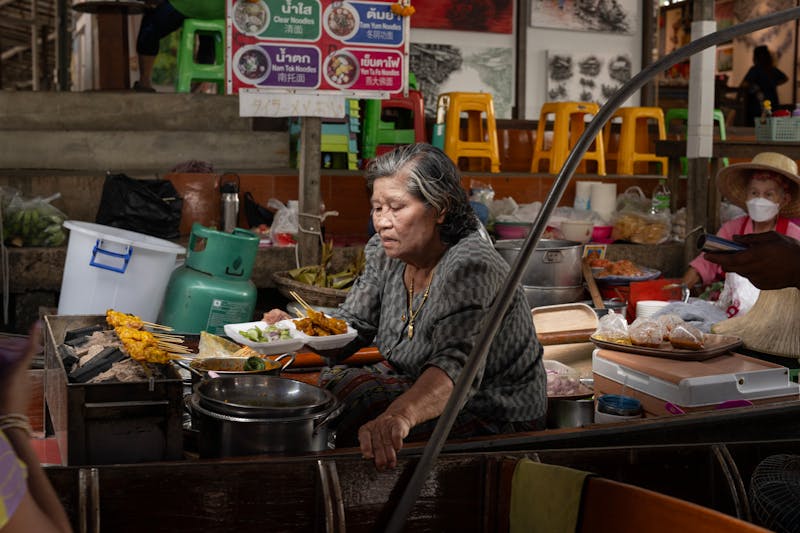
The Essential Street Food Stalls
T&K Seafood — The Legendary Charcoal Grill
No visit to Yaowarat is complete without a stop at T&K Seafood, arguably the most iconic establishment on the entire strip. Recognisable by its distinctive green-balcony frontage and staff clad in matching green polo shirts, T&K has been drawing crowds for decades with its exceptional charcoal-grilled seafood. The restaurant spills onto the pavement each evening, where fresh prawns, whole fish, and succulent crab are cooked over blazing charcoal right before your eyes.
Located at 49–51 Soi Phadung Dao, the restaurant operates from 4:30 PM until 2:00 AM. Expect to pay between 200 and 350 THB per person for most dishes, though premium crab plates can exceed 500 THB. The atmosphere is electric — diners jostle for plastic stools, smoke rises from the charcoal grills, and the clatter of woks provides the evening’s soundtrack. For the best experience, arrive before 7:00 PM to avoid the longest queues.
Jek Pui Curry Rice — A 70-Year Legacy
Tucked away on Mangkon Road, near the ornate Wat Leng Noei Yi temple, Jek Pui Curry Rice has been serving aromatic coconut milk-based curries for over 70 years. This legendary stall gained international recognition after being featured on Netflix’s Street Food Asia series, and for good reason. The rich, deeply flavoured curries — from fragrant chicken green curry to their signature Lou Mei (caramelised pork) — are served from traditional copper pots arranged on a street-side table.
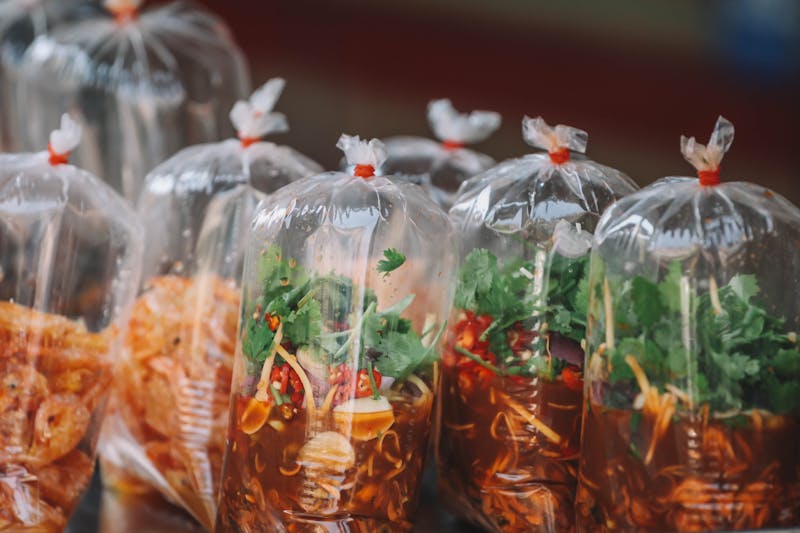
What makes Jek Pui truly unique is the “musical chairs” experience. There are no tables — only red plastic stools arranged in tight rows. Diners are expected to yield their seats promptly once finished, creating a constant, good-natured rotation of hungry patrons. A regular portion costs just 40 THB, whilst the larger piset size is 60 THB. The stall opens at 3:00 PM and closes at 7:30 PM daily, so plan your visit accordingly. It is roughly a 10-minute walk from MRT Wat Mangkon station.
Nai Ek Roll Noodles — Michelin-Recognised Heritage
Nai Ek Roll Noodles began as a humble pushcart over 50 years ago before establishing a permanent shop at 442 Yaowarat Road, Soi 9, in 1989. The stall’s signature guay jub — rolled rice noodle soup swimming in a peppery broth with crispy pork belly, sliced pork, offal, and boiled egg — has earned consecutive Michelin Bib Gourmand awards in 2018 and 2019.
What distinguishes Nai Ek from other guay jub vendors is the addition of their signature crispy pork, which adds a satisfying crunch to each spoonful of the rich, white pepper-laden broth. Three bowl sizes are available at 50, 80, and 100 THB respectively, and the stall operates from 8:00 AM until midnight daily — making it one of Yaowarat’s few options for a proper daytime meal as well.
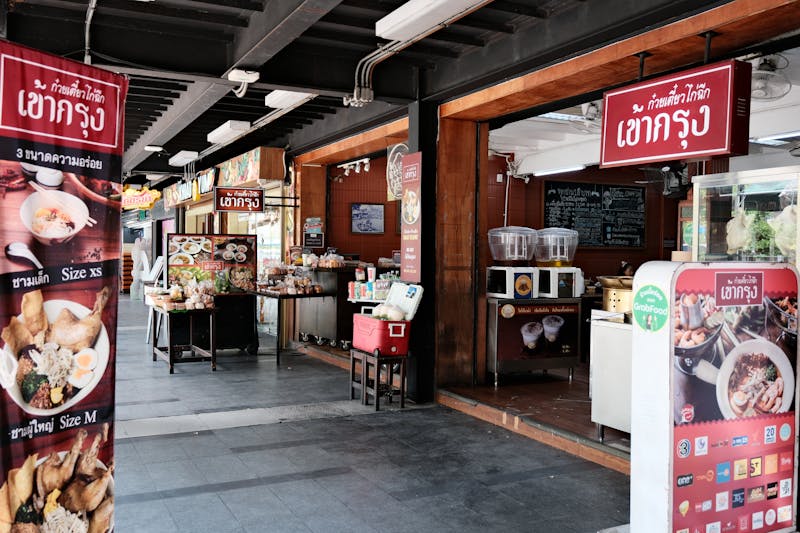
Guay Jub Ouan Pochana — The Michelin Bib Gourmand Favourite
Another guay jub institution, Guay Jub Ouan Pochana has been operating for over 50 years from its spot in front of the historic China Town Rama Cinema. The stall has earned a Michelin Bib Gourmand award for its deeply satisfying peppery clear broth, tender rolled rice noodles, and generous portions of crispy pork belly.
At just 50 THB for a medium bowl and 100 THB for a large, it represents outstanding value. The stall opens at 6:00 PM and serves until 3:00 AM, making it an ideal late-night stop after exploring the rest of the market. The walk from MRT Hua Lamphong takes approximately 10 minutes.
Lim Lao Ngow — The Bouncing Fish Ball Legend
With a legacy spanning more than 60 years and an extraordinary nine consecutive Michelin Bib Gourmand awards (2018–2026), Lim Lao Ngow is a Yaowarat institution. The family business, now in its third generation, is famous for its “bouncing” fish balls — so named because they are made entirely from fresh fish without any flour, giving them a uniquely springy, almost elastic texture.
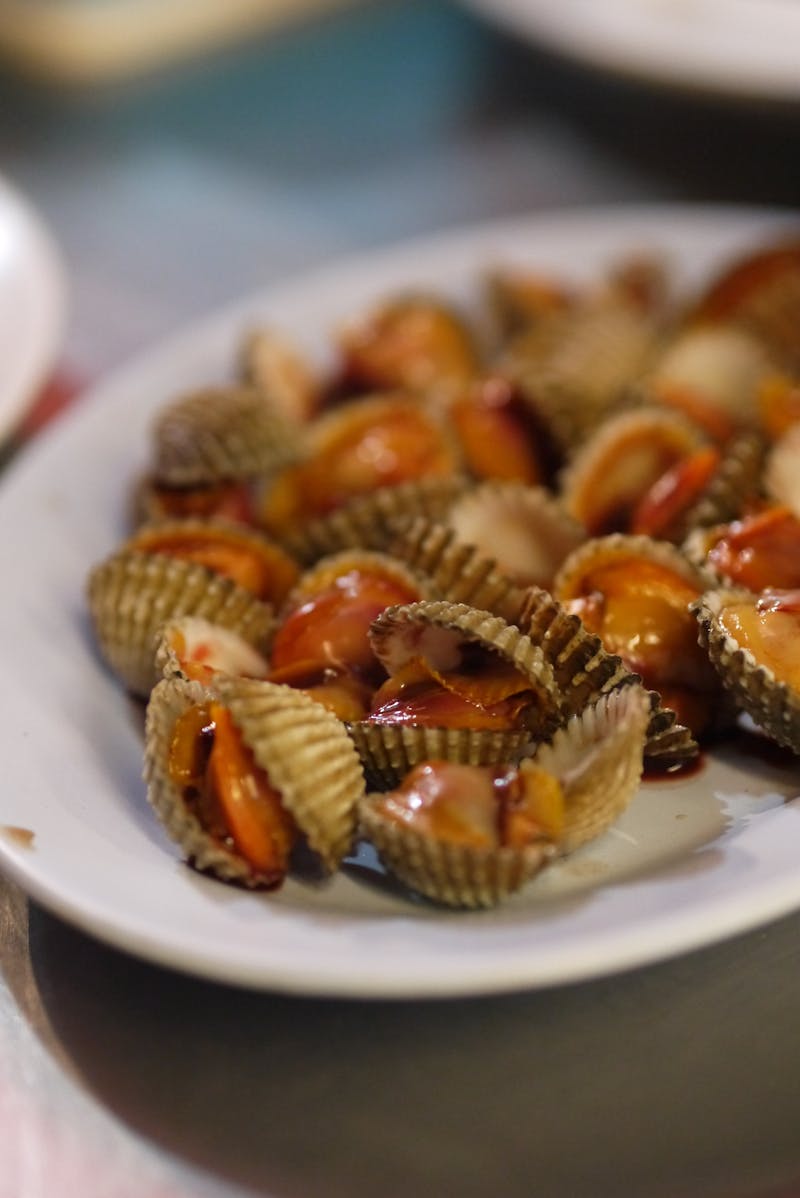
The original stall on Song Sawat Road remains the best location, though modern branches have opened in shopping malls across Bangkok. The fish ball noodle soup, complemented by delicate wontons and fresh Chinese-style noodles, is a masterclass in simplicity and quality. It is a short walk from the main Yaowarat strip, down towards the Chao Phraya River.
Pa Tong Go Savoey — The Perfect Chinese Doughnut
Established in 1968, Pa Tong Go Savoey at 56 Yaowarat Road has been perfecting pa tong go — Thai-style fried dough sticks — for nearly six decades. The doughnuts are freshly made throughout service, emerging from the fryer with a crispy golden exterior and impossibly soft, fluffy interior. They are traditionally served with pandan custard or condensed milk for dipping.
A small set of five pieces costs approximately 50 THB. The stall holds a Michelin Plate recognition and opens at 5:30 PM, serving until 11:30 PM or until sold out (closed Mondays). Queues begin forming before opening, so arrive early for the freshest batch.
Practical Guide for Visitors
Getting There
The most convenient route is via the MRT Blue Line to Wat Mangkon Station (BL29), which drops you directly into the heart of Chinatown, steps from Yaowarat Road and the magnificent Wat Mangkon Kamalawat temple. Alternatively, Hua Lamphong Station is approximately a 15-minute walk to the north. For a scenic approach, take the BTS Silom Line to Saphan Taksin, walk to Sathorn Pier, and catch the Orange Flag Chao Phraya Express Boat to Ratchawong Pier — a 15-minute river journey costing just 16 THB.
When to Visit
The street food market comes alive around 5:00 PM, with peak hours between 8:00 PM and 10:00 PM. Arriving at 6:30 PM offers the ideal balance — most vendors are open, but the heaviest crowds have not yet descended. For a more relaxed experience, visit after 10:00 PM when the atmosphere becomes considerably calmer. The best months are November through February, when Bangkok’s cooler weather makes walking the streets far more comfortable.
Tips for First-Time Visitors
Bring cash — most street stalls accept only Thai Baht, though some modern vendors now offer PromptPay QR code payments. Wear comfortable walking shoes, as the pavements can be uneven and slippery. Carry hand sanitiser and wet wipes, although most vendors provide napkins. English is spoken minimally at traditional stalls, so downloading a translation app or learning a few basic Thai food terms can be helpful — though pointing at dishes and using photographs works perfectly well.
The golden rule of Yaowarat is to eat small and eat often. With portions intentionally modest at most stalls, the local approach is to sample dishes from multiple vendors across the evening rather than committing to a single large meal. Budget between 150 and 300 THB per person for a satisfying evening of grazing, though premium seafood at T&K will require a larger allocation.
Beyond the Main Road
Whilst Yaowarat Road itself is the main attraction, the surrounding sois (side streets) reward exploration. Sampeng Lane Market offers a fascinating wholesale shopping experience, Song Sawat Road hosts excellent dining alternatives including the original Lim Lao Ngow, and Soi 9 provides quieter options away from the main strip. Do not miss Wat Mangkon Kamalawat — the largest and most important Chinese Buddhist temple in Bangkok — which is open during the day and provides a cultural complement to the evening’s culinary adventures.
Yaowarat is not merely a place to eat — it is an immersion into a living, breathing cultural heritage that has been simmering for more than two centuries. Whether you are drawn by the Michelin-starred stalls, the intoxicating aromas, or the sheer spectacle of it all, Bangkok’s Chinatown delivers an evening of street food that is, quite simply, without equal in Southeast Asia.