
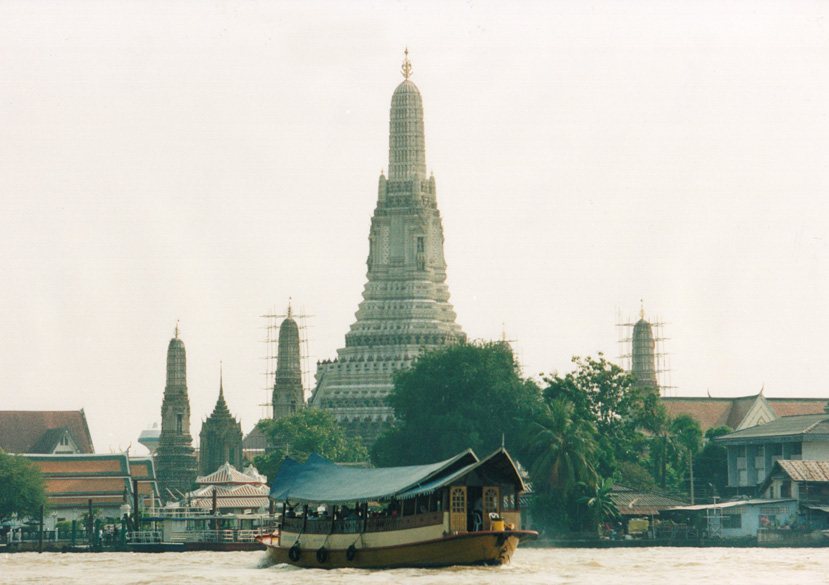
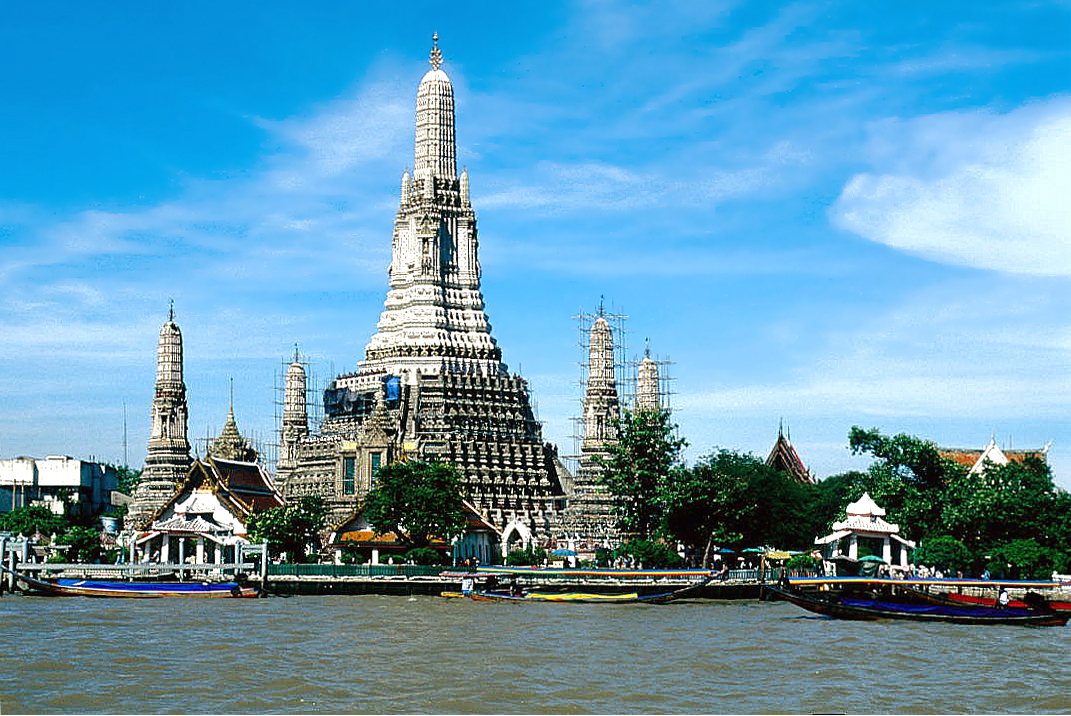
As the first light of morning breaks across the Chao Phraya River, the central prang of Wat Arun Ratchawararam catches the sun and seems to glow from within — a shimmering tower of porcelain and seashells rising 82 metres above the western bank of Bangkok’s great waterway. Named after Aruna, the Hindu god of the dawn, this extraordinary temple is one of the most visually distinctive religious monuments in Southeast Asia, and its silhouette — reproduced on countless postcards, tourism posters, and even the Thai 10-baht coin — has become the very symbol of Bangkok itself.
A History Written in Stone and Porcelain
The temple’s origins predate Bangkok itself. Known originally as Wat Makok (the Temple of the Olive), it was a small, relatively unremarkable temple during the Ayutthaya period. Its fortunes changed dramatically in 1767 when General Taksin, having liberated Siam from Burmese occupation, sailed down the Chao Phraya River and arrived at the temple at dawn. Interpreting his arrival at sunrise as an auspicious sign, Taksin established his new capital of Thonburi on the temple’s doorstep and elevated the modest monastery to royal status, renaming it Wat Chaeng — the Temple of Dawn.
Under King Taksin, the temple briefly housed the Emerald Buddha before Rama I relocated both the capital and the sacred figure to the eastern bank, where the Grand Palace and Wat Phra Kaew stand today. Despite losing its most precious occupant, Wat Arun’s significance only grew. Rama II (1809–1824) began the ambitious project of raising the central prang to its current towering height, and Rama III (1824–1851) completed the decoration — an astonishing process that involved encrusting the entire surface of the tower with thousands upon thousands of pieces of Chinese porcelain, coloured glass, and seashells.
The Architecture: A Khmer-Inspired Masterpiece
The Central Prang
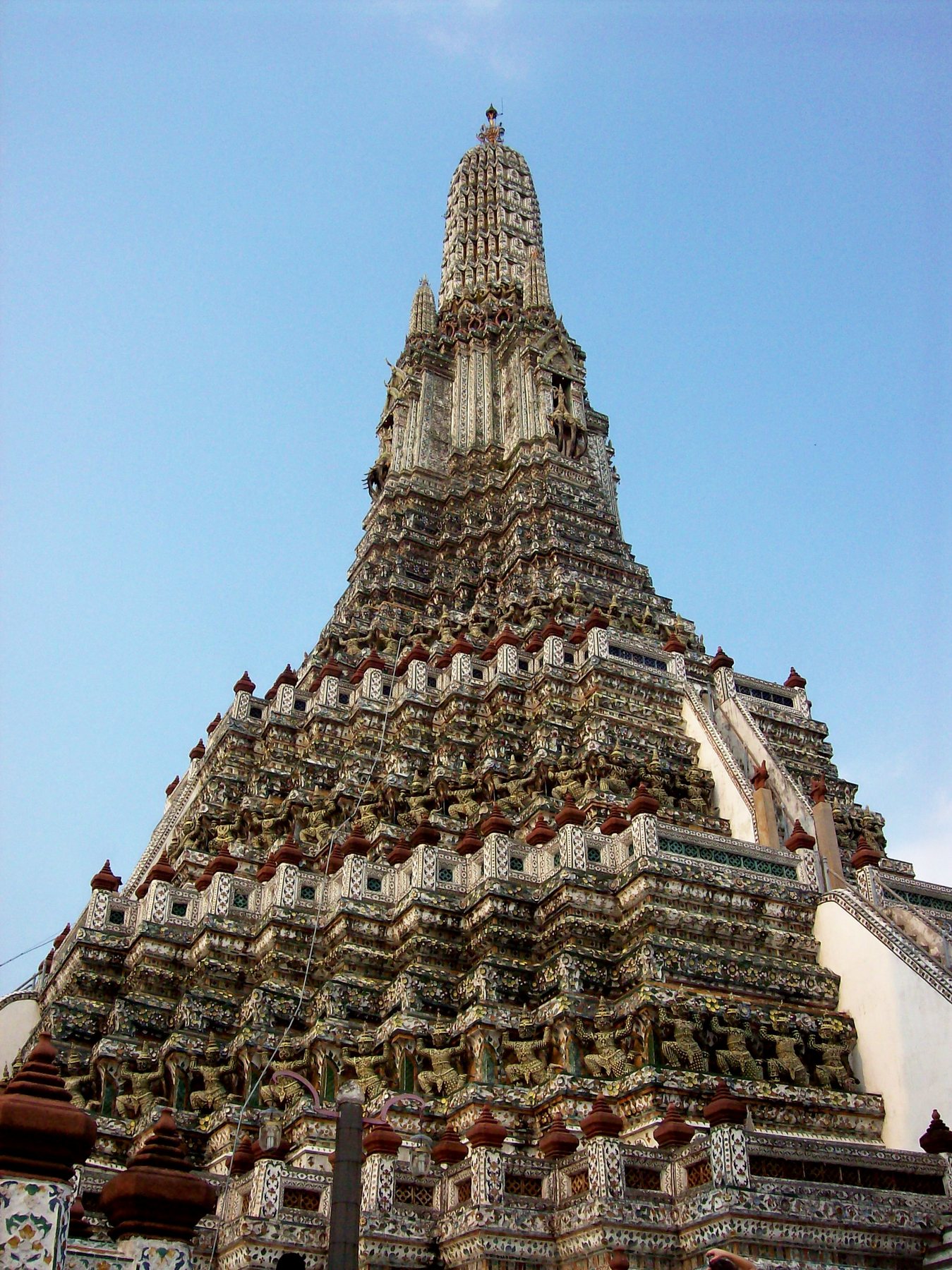
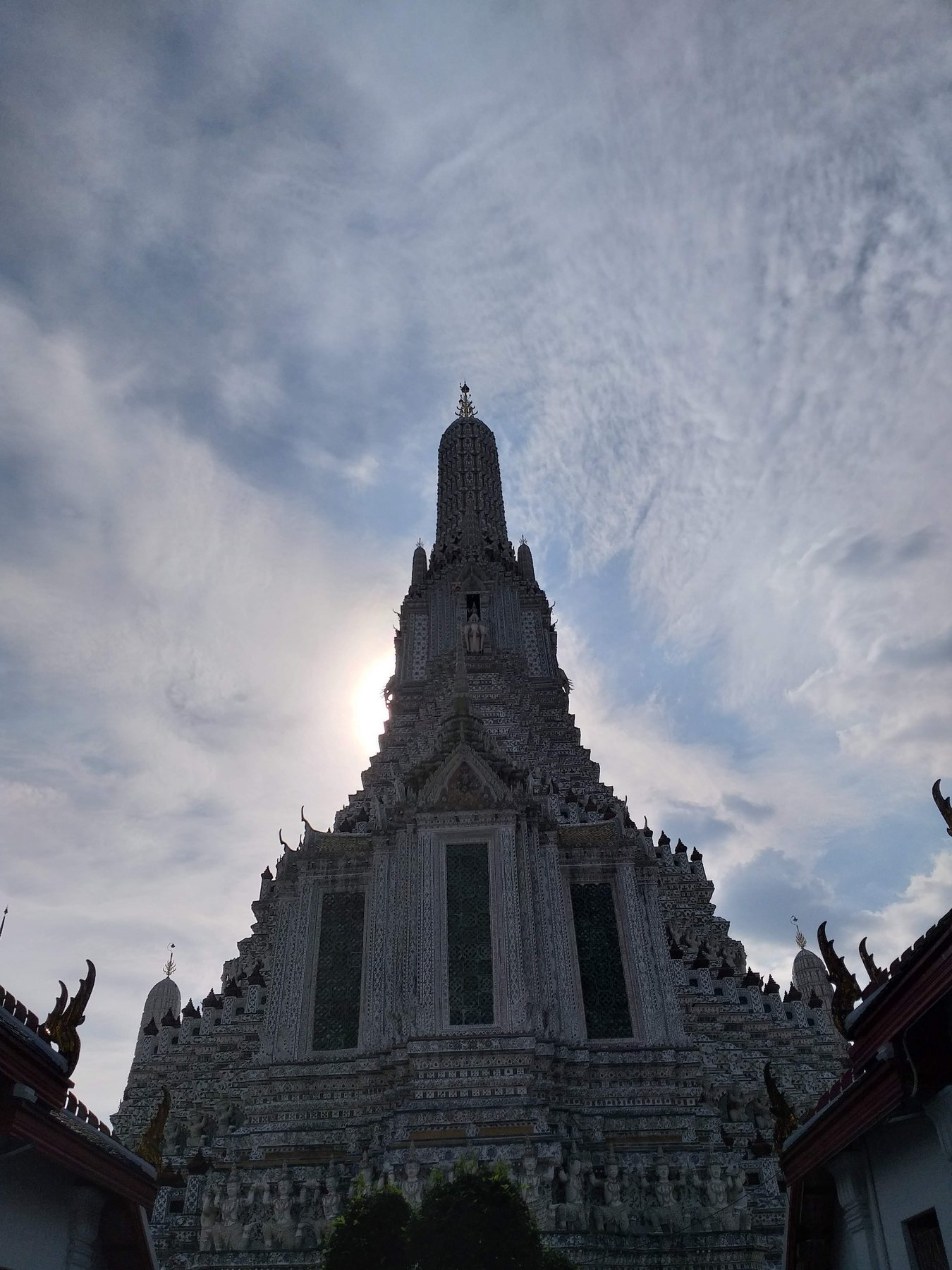
The centrepiece of Wat Arun is its monumental central prang — a Khmer-style tower that rises approximately 82 metres (some sources cite 70–80 metres depending on measurement methodology) from a series of steep, terraced platforms. The prang represents Mount Meru, the centre of the universe in Hindu-Buddhist cosmology, and its soaring verticality is designed to draw the eye — and the spirit — upward toward the heavens.
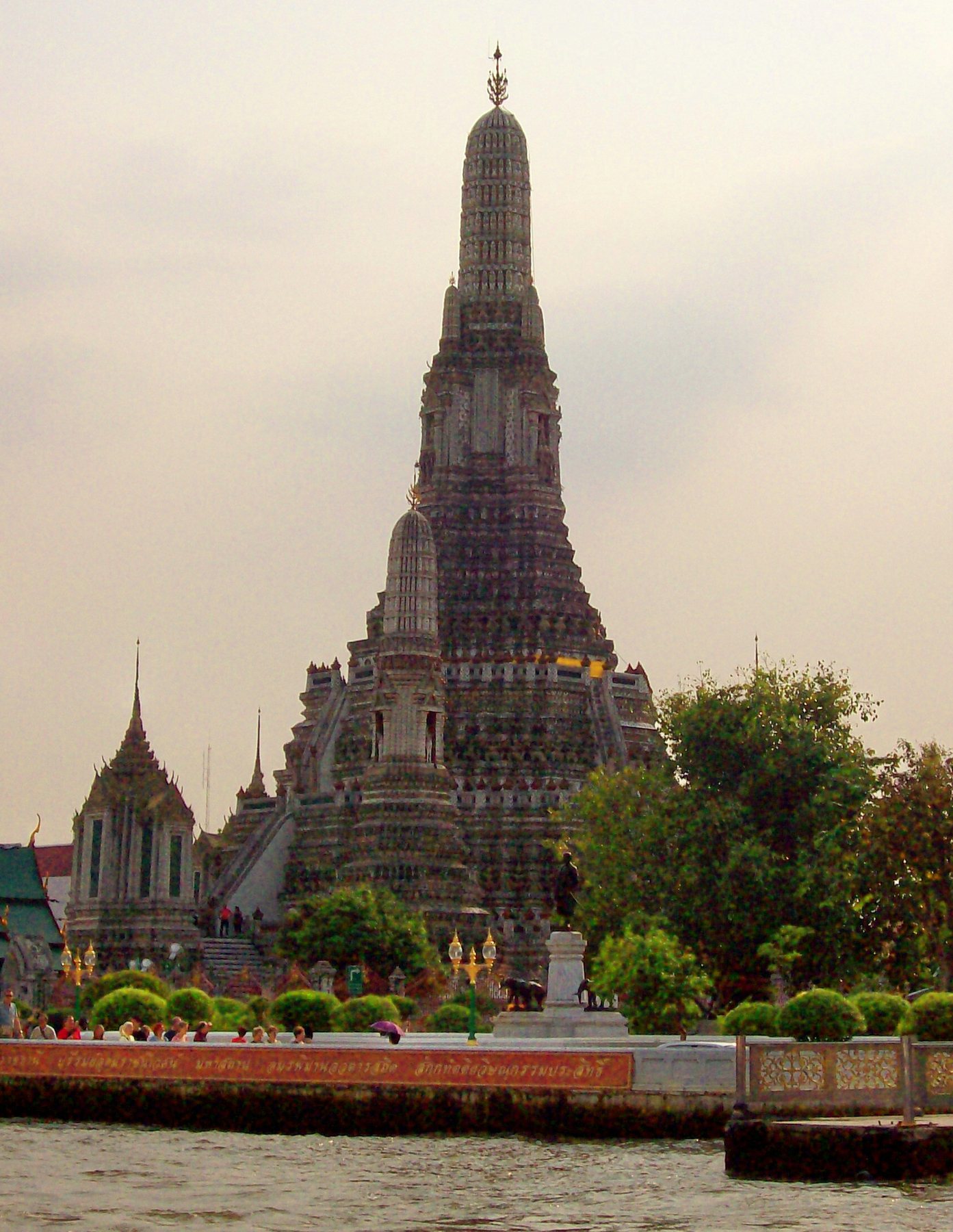
What makes Wat Arun’s prang unique among Thai temples is its extraordinary surface decoration. Every centimetre of the tower is covered in an intricate mosaic of Chinese porcelain shards — fragments of plates, bowls, and vessels that arrived in Thailand as ballast on Chinese trading ships. These shards, combined with pieces of coloured glass and seashells, create patterns of astonishing complexity: floral motifs, mythological figures, and geometric designs that shift and shimmer as the light changes throughout the day.
Visitors can climb the steep, narrow stairways that ascend the prang’s terraced levels to reach viewing platforms at approximately the halfway point. The climb is not for the faint-hearted — the steps are vertiginously steep and deliberately narrow, designed in an era when access was limited to monks and royalty. But the reward is a panoramic view of the Chao Phraya River, the Grand Palace complex glinting on the opposite bank, and the sprawling cityscape of Bangkok stretching to every horizon.
The Four Satellite Prangs
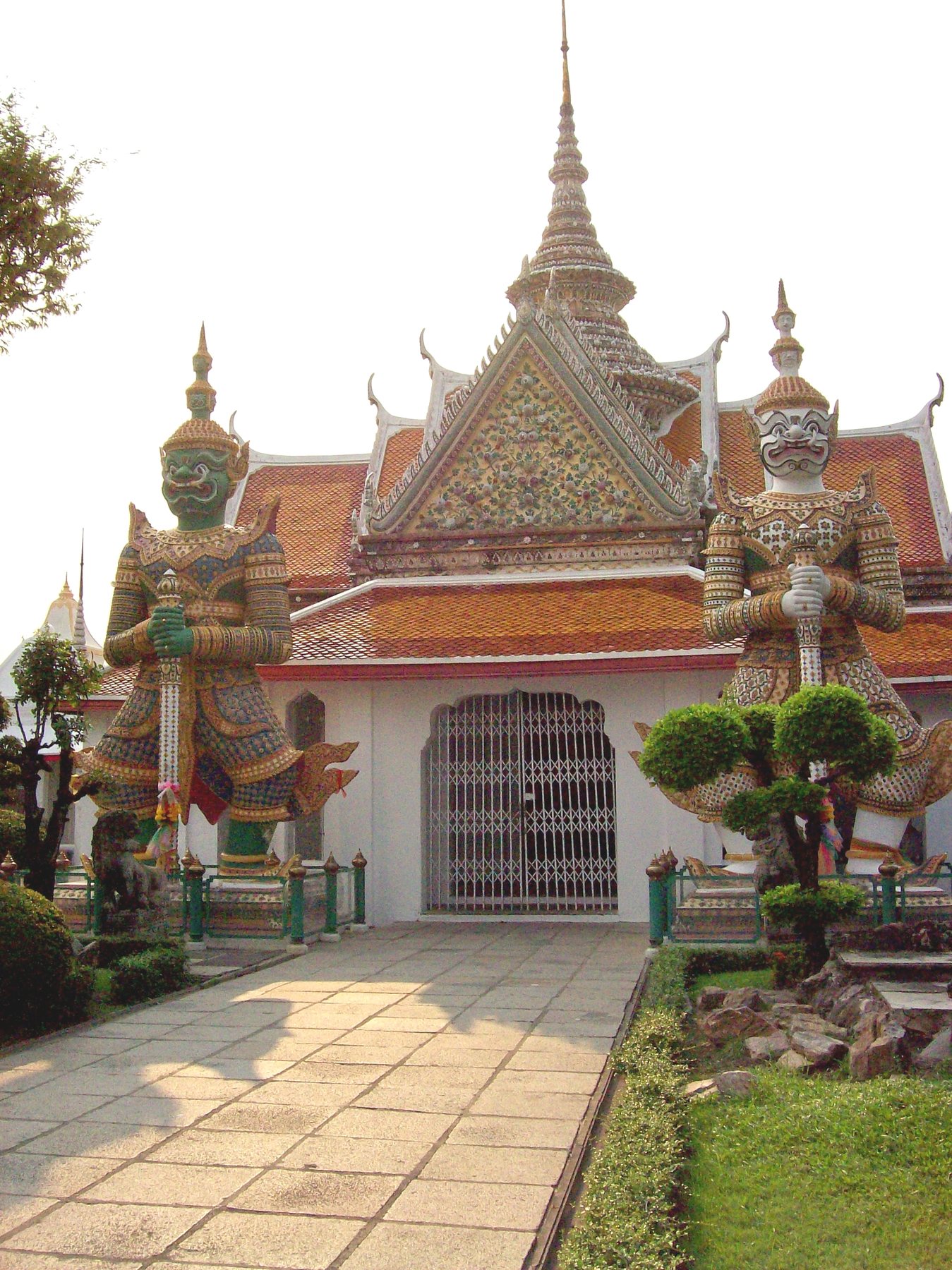
Flanking the central tower at each corner of the elevated platform are four smaller prangs, each standing approximately 15 metres tall and decorated in the same porcelain-mosaic style. These satellite towers represent the four cardinal directions and, in Buddhist cosmology, the four continents that surround Mount Meru. Each is guarded at its base by figures from Thai mythology, including kinnaree (celestial beings) and characters from the Ramakien.
The Ordination Hall and Grounds
Beyond the iconic prang, the temple complex encompasses a beautiful ubosot (ordination hall) housing a principal Buddha image said to have been designed by Rama II himself. The hall’s interior features exquisite murals and gilt decoration, whilst its exterior is supported by a base adorned with Chinese soldier statues — a reminder of the extensive Chinese influence on Thai artistic traditions. The surrounding grounds include peaceful courtyards, additional prayer halls, and quiet cloistered walkways that provide welcome relief from the intensity of the main tower.
The Best Times to Visit
Wat Arun is beautiful at any hour, but certain times of day offer distinctly different experiences. Early morning (8:00–9:00 AM) delivers the softest light and thinnest crowds, ideal for photography and contemplation. Late afternoon (4:00–5:30 PM) bathes the prang in golden hour light that makes the porcelain mosaics seem to catch fire — this is the time for truly spectacular photographs, particularly from the opposite bank of the river near Tha Tien pier.
Sunset and evening bring perhaps the most magical experience of all. As darkness falls, the temple is illuminated by hundreds of spotlights that pick out the detail of the porcelain mosaics against the night sky. Viewing the illuminated temple from a riverside restaurant or a Chao Phraya dinner cruise has become one of Bangkok’s most sought-after evening experiences.
Practical Guide for Visitors
Admission and Hours
Wat Arun is open daily from 8:00 AM to 6:00 PM. Admission is 100 THB for foreign visitors (Thai nationals enter free). The fee includes access to the prang and its climbing platforms, the ordination hall, and the surrounding temple grounds. The modest admission price makes Wat Arun one of Bangkok’s finest cultural bargains.
Getting There
Wat Arun sits on the Thonburi (western) side of the Chao Phraya River, and the most atmospheric approach is by water. Take the cross-river ferry from Tha Tien pier (near Wat Pho) — the brief crossing costs just 4 THB and delivers you directly to the temple’s riverside entrance. Alternatively, the Chao Phraya Express Boat stops at Wat Arun pier (though the cross-river ferry from Tha Tien is more convenient if combining with a Grand Palace visit). By road, taxis can reach the temple via the Phra Pinklao Bridge, though river crossings are strongly recommended for the superior views and experience.
Dress Code and Etiquette
As an active Buddhist temple, Wat Arun requires respectful attire. Shoulders and knees must be covered, and shoes must be removed before entering any enclosed religious building. Wraps and coverings are available for purchase near the entrance for those caught unprepared. Photography is permitted throughout the complex, though visitors should exercise discretion and avoid posing in ways that might be considered disrespectful to the religious context.
Combining with Nearby Attractions
Wat Arun is ideally positioned for a half-day temple circuit. Cross the river to Wat Pho (Temple of the Reclining Buddha), a five-minute ferry ride away, then walk 15 minutes north to the Grand Palace and Wat Phra Kaew. This trio of Bangkok’s most important religious sites can be comfortably visited in a single morning, provided you start early. The Museum of Siam and the charming lanes of the Tha Tien neighbourhood offer excellent lunch options before or after the temple visits.
A Monument That Transcends Time
In a city that reinvents itself with relentless energy, Wat Arun endures as a constant — a reminder of the artistic genius and spiritual devotion that have defined Thai civilisation for centuries. Its porcelain-clad tower, rising from the river’s edge like a vision from another age, continues to inspire the same sense of wonder that it did when Taksin first glimpsed it at dawn more than 250 years ago. Whether seen from across the water at sunset, climbed in the morning light, or illuminated against the evening sky, the Temple of Dawn remains one of the great architectural achievements of Southeast Asia — and one of the finest reasons to visit Bangkok.
Address: 158 Wang Doem Road, Wat Arun, Bangkok Yai, Bangkok 10600
Opening Hours: Daily, 8:00 AM – 6:00 PM
Admission: 100 THB (foreign visitors)
Getting There: Cross-river ferry from Tha Tien pier (4 THB)