

Thailand’s cross-border QR connections allow some travellers to pay participating Thai merchants with a supported app from home, while some Thai users can scan compatible codes abroad. The idea is simple, but availability is corridor-based rather than universal.
A Thai QR symbol does not guarantee that every foreign wallet will work. The sending app, receiving bank, country link, transaction direction, currency conversion and merchant code all need to align before a payment can complete.
What the links do
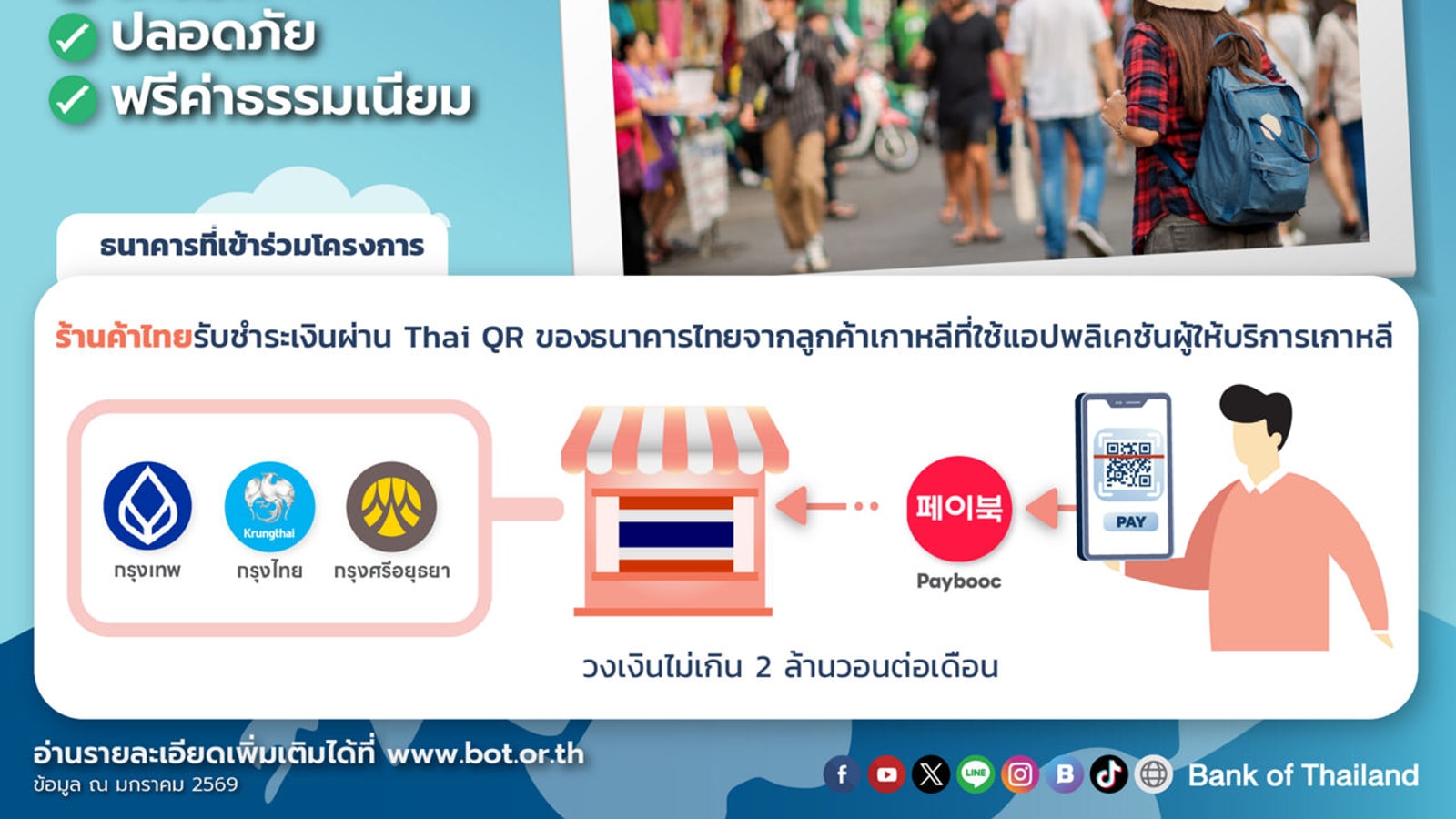
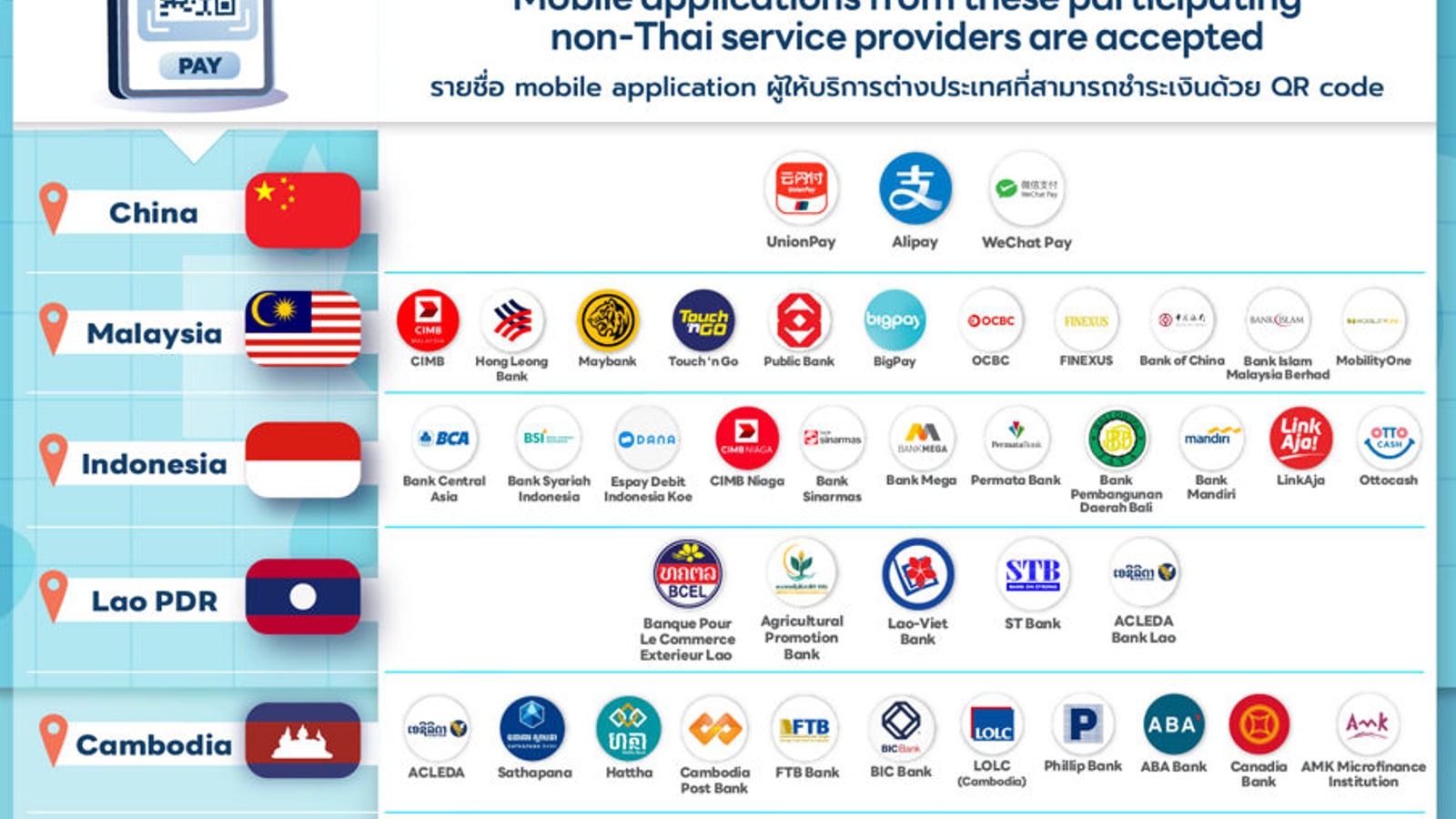
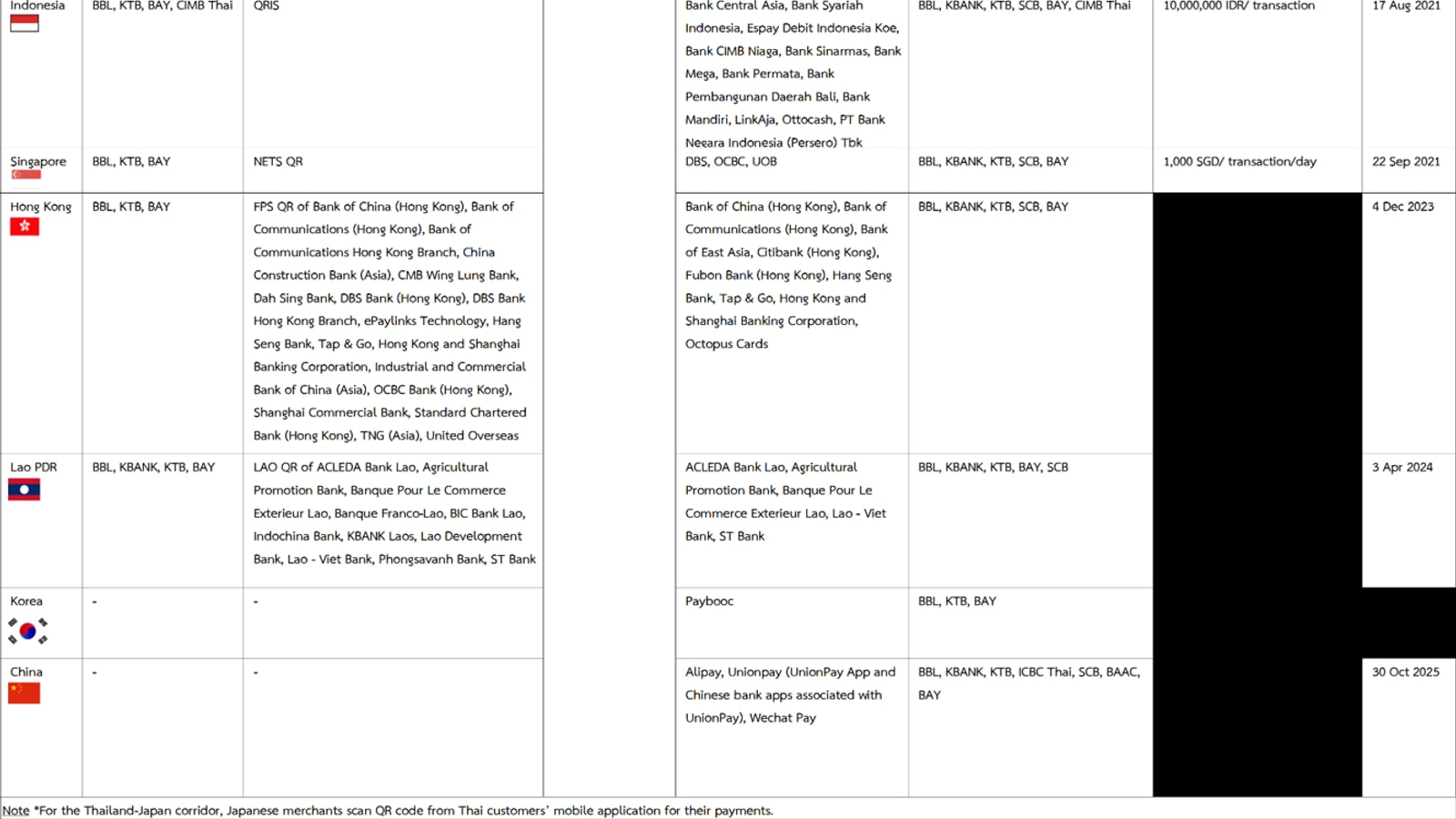
The Bank of Thailand lists QR payment connections involving Cambodia, Japan, Malaysia, Vietnam, Singapore, Indonesia, Hong Kong, Lao PDR and selected inbound links from Korea and China. Capabilities differ across these relationships.
Some corridors support merchant payments in both directions, while others are inbound only or use selected providers. Read your own bank or wallet’s current country list before travelling rather than assuming the central-bank network map equals app access.
Check your app
Open the payment application and look for an international, overseas or cross-border QR feature. Confirm Thailand is supported, the account is eligible and any activation, identity verification or travel setting is complete before reaching the cashier.
An app update may be required. Roaming, data access and device security also matter, so avoid depending on a payment method that you have never opened outside your home network.
At the merchant
Ask for the merchant QR code, scan it from inside the supported app and verify the merchant name and amount. A personal transfer code may behave differently and may not qualify for the cross-border merchant-payment route.
If the amount must be entered manually, compare it with the till before confirming. Thousands separators and decimal presentation can be unfamiliar, so pause rather than correcting an accidental transfer after it has been sent.
Review the exchange rate
The app should show the home-currency amount, exchange rate or both before final confirmation. Read that screen. Convenience does not automatically mean the rate is better than a travel card or cash obtained through another channel.
Consider the complete cost, including any bank, wallet or foreign-exchange markup. For a large purchase, compare payment methods before the transaction. For a small meal, clarity and successful acceptance may be worth more than a tiny rate difference.
Keep proof
Wait for both the app confirmation and the merchant’s acknowledgement. Save the digital receipt or transaction reference until the goods or service have been delivered and the account entry is settled.
If the app shows success but the till does not, do not immediately scan again. Show the reference, ask the merchant to check the receiving account and contact the sending provider if the status remains uncertain.
Transfers are different
Thailand and Singapore also operate the PromptPay-PayNow linkage for eligible person-to-person transfers. Its first-phase daily limit is SGD 1,000 or THB 25,000, which is separate from ordinary merchant QR shopping.
Use the correct function for the intended recipient. A personal transfer may offer fewer purchase protections than a card, while a merchant QR flow creates a clearer commercial record. Never send money to a personal code merely because a seller says it is faster.
Protect the account
Inspect the code for signs of a sticker placed over another QR. Confirm the recipient name in the app, shield authentication, and never hand an unlocked phone to a stranger to complete the transaction.
Use mobile data or a trusted network rather than an unknown public hotspot for sensitive payments. Device lock, app alerts and remote account controls reduce harm if the phone is lost during the trip.
Carry a backup
Cross-border QR is a useful extra, not a reason to abandon cards and cash. A provider outage, unsupported bank, damaged code, low battery or poor signal can block a perfectly legitimate payment.
Keep at least one independent payment method and enough cash for transport or a meal. The resilient traveller does not need every payment rail to work, only a safe alternative when the preferred one does not.
Set sensible app limits before the trip and know how to freeze the account from another device. Travellers who share expenses should avoid passing phones around or mixing personal transfers with merchant payments. A small note recording who paid can prevent confusion without exposing banking screenshots or account details in a group chat.
Keep exploring
Continue with related TFT coverage, browse more Thailand guides and compare the latest TFT recommendations.
Common questions
Can every foreign banking app scan Thai QR codes?
No. The app, country corridor, provider, payment direction and merchant code must all be supported.
Should I scan again if the merchant cannot see the payment?
Not immediately. Check the transaction reference and ask the merchant and sending provider to reconcile the first attempt.